
Trump Backs Down! No Intention to Fire Powell, Plans to Reduce China Tariffs at Appropriate Time

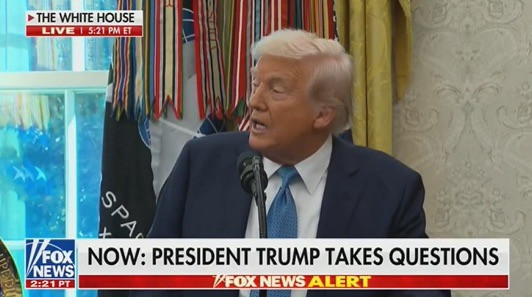
Today, Trump stated that the Federal Reserve should lower interest rates and that he has no intention of dismissing Fed Chairman Powell. Additionally, he mentioned plans to reduce tariffs on China at an appropriate time, though not to zero.
Currently, about 60% of U.S. small and medium-sized businesses' supply chains depend on China, with 40% being irreplaceable (considering the U.S. defense industry's 47% dependence, this isn't surprising). If the tariff war with China continues at its current intensity, widespread bankruptcies among thousands of U.S. companies seem inevitable.
A recent Wall Street Journal report revealed the behind-the-scenes of Trump's 90-day delay on reciprocal tariffs for non-Chinese trading partners. Treasury Secretary Bessent and Commerce Secretary Lutnick arranged a diversionary meeting, sending trade advisor Navarro to a building opposite the White House. Using this window when Navarro couldn't debate in person, they persuaded Trump, who then decided and posted on Truth Social. Bessent immediately left the White House to officially announce to reporters. Navarro learned of the news mid-meeting via his phone. Trade Representative Greer, still at a congressional hearing, was informed by congressmen that his boss had just changed policy.
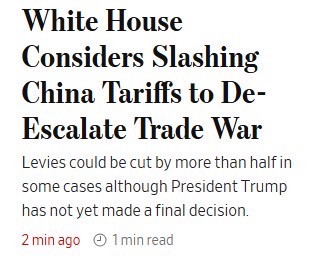
However, this didn't resolve the intensifying tariff war with China, although the electronic semiconductor industry secretly secured exemptions, which were eventually disclosed by industry insiders and reported by media. Trump evidently knows he can't beat China but is seeking a graceful exit. As a businessman, he's flexible and quick to concede when the situation turns unfavorable, readily reversing policies 180 degrees.
Trump's main challenge is that while engaging with China, negotiations with other trade partners can't progress. He hoped for a quick agreement with Japan, but Japan insists on removing all steel, aluminum, and auto tariffs, as well as the 10% basic reciprocal tariff, otherwise refusing to negotiate and content to watch from the sidelines.
Weekend Fox News interviews hinted that other negotiations are less important, and talks with China are crucial and need swift resolution. The latest information suggests the White House has formed an emergency team specifically for China negotiations, excluding the openly anti-China Navarro and the pro-China Musk. The speed of achieving mutual tariff reductions depends on the negotiation process.
One approach could be for both sides to delay reciprocal tariffs by 90 days, giving Trump's team more room to maneuver. Besides demands similar to Japan's, China also faces resolving the 20% tariff imposed under the fentanyl pretext.
Those following U.S.-China trade tensions know that by the time of the Chinese leader's visit to San Francisco for the summit in 2023, most fentanyl precursor exports had already shifted to India. U.S. law enforcement's 2025 assessment report, focusing on 2023 and 2024, will likely clarify this.
If the Trump administration wants to change course, this report could provide a face-saving opportunity. China isn't the only one falsely accused in this issue; Canada has also been unfairly blamed.
It was just an excuse for a tariff war. Now that they want a ceasefire, it's only reasonable for them to come out and clear up the smears themselves.