
The Impact of Trump's Tariff War on Global Economy and Trade: Insights from East Asia

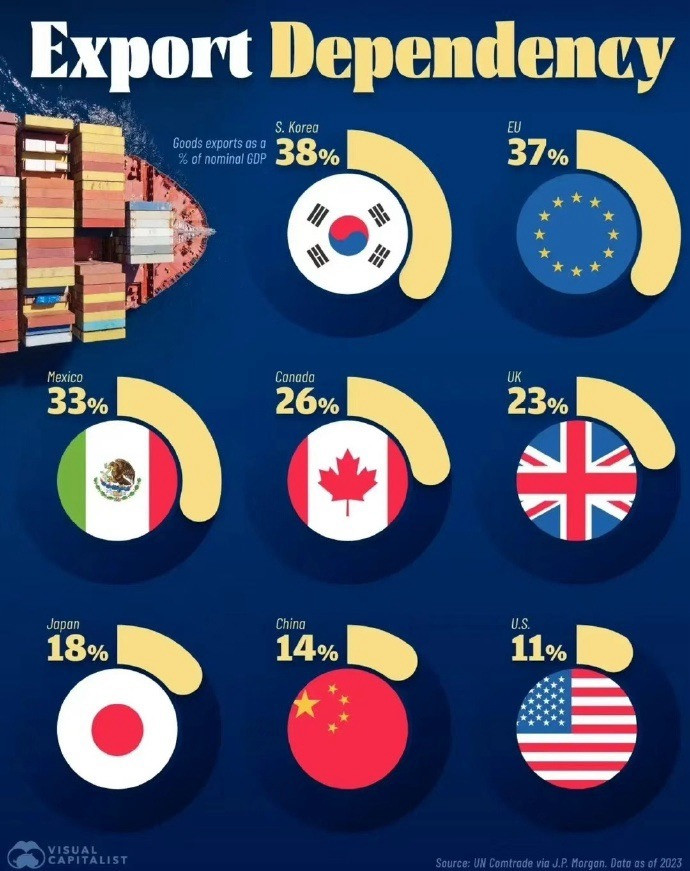
South Korea serves as a leading indicator of the impact of Trump's current tariff war on the global economy and trade. As shown in Figure as below, South Korea, a major industrial country, is the economy most reliant on exports, with exports accounting for as high as 38% of its economy. Apart from reciprocal tariffs, steel - aluminum tariffs, and automobile tariffs, South Korea has also been hit.
Currently, South Korea's semiconductor exports to the United States are still showing good growth. However, the situation may change after the introduction of semiconductor tariffs.
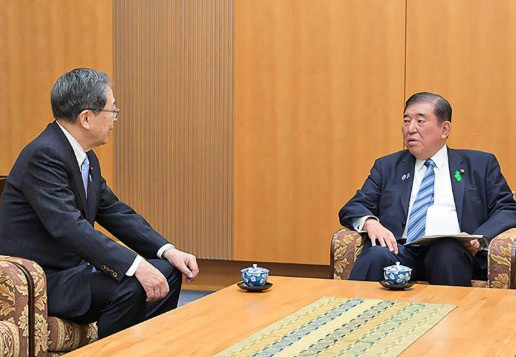
The US - Japan tariff negotiations are currently at a standstill. The leader of Japan's Komeito Party went to China with a personal letter from Ishiba Shigeru for discussions. Meanwhile, the negotiations with South Korea are about to start. Note that South Korea's exports to China are still ranked first, and the decline rate is smaller than that of its exports to the United States. If there are terms unfavorable to China in the negotiations, it is estimated that this part of South Korea's exports to China will also drop significantly.
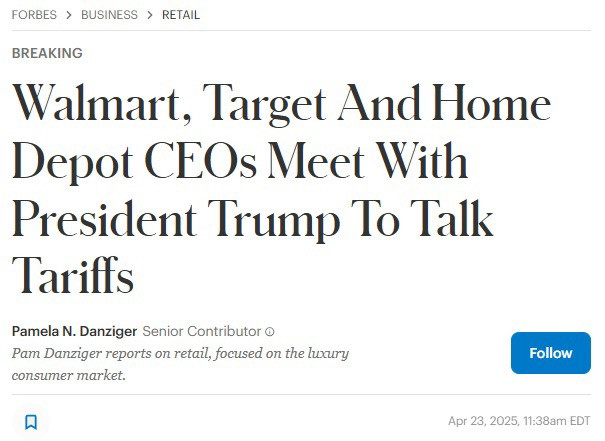
A series of conciliatory remarks about the East from Peter Navarro, the White House spokesperson, to Trump may be partly related to Trump's meeting with the CEOs of several major US retailers, such as Walmart, Target, and Home Depot. It is reported that the bosses told Trump that the shelves in US malls can only be stocked for about two weeks. After that, there will be sharp price increases, panic buying, and empty shelves. Not to mention economic data, social stability may even be at stake.
The bosses might have exaggerated the situation to put pressure on Trump. However, if we triple the time, six weeks to one and a half months might be a more realistic estimate. Another major factor putting pressure on Trump is that $6 trillion of US Treasury bonds need to be refinanced at the end of June.
Currently, international liquid funds are fleeing the United States. Especially in the two - week period starting from April, a large amount of private Japanese funds, including insurance funds, have been selling off US stocks and bonds and returning to Japan, flowing into Japan's government bonds (JGB). The Trump trade team's current greatest expectation is to reach some guiding principle documents. After all, in tariff and trade agreements, the devil is in the details. It may take at least a year, and it is not surprising if the negotiations last for three to five years.
As for the tariff war with China, China's response also needs to be observed. After all, the economic and industrial structures of China and the United States are highly complementary, and there are not many areas of direct competition. Reaching a win - win cooperation is the only correct choice. However, for Trump's vision of "living happily together" to come true, the friendly relationship at the public opinion level must be improved. According to the latest Pew Research Center poll, the proportion of Americans with an unfavorable view of China has dropped from 81% to 77%. Although the figure is still high, at least it shows a downward trend.
This change may be related not only to the reactions on self - media during this trade war but also to the previous "Xiaohongshu phenomenon" and the live - streaming of a certain anchor. It mainly depends on whether the elite class represented by the US Congress and mainstream media still wants to smear China for their own gain.
In fact, for China, increasing domestic demand and reducing the proportion of trade with the United States in the overall economy (for example, reducing it to below 5%) are the goals of self - transformation that must be achieved through this trade war. If the problem is easily solved without bringing about substantial changes, it would be a foolish move. Therefore, China should take advantage of the current "embargo" situation (as Peter Navarro described) to accelerate its self - transformation and not waste this opportunity.
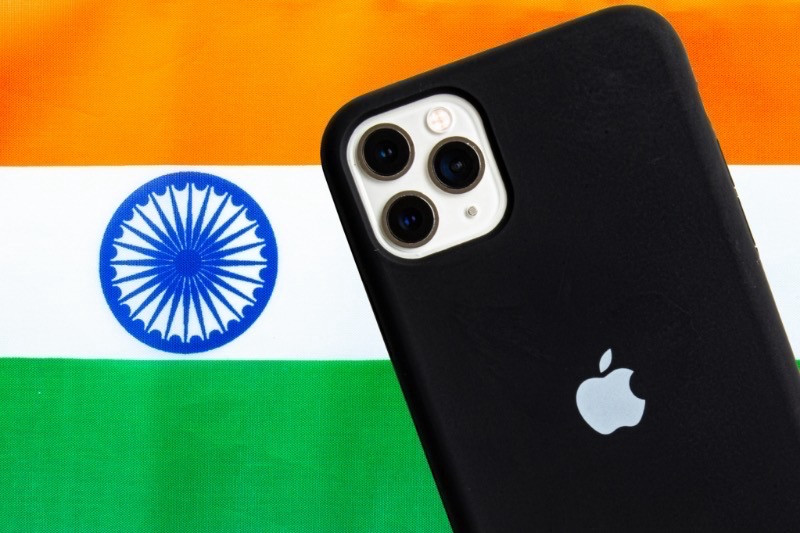
Approximately one - third of China's exports to the United States are processed by US companies, such as Apple. The value contributed by China itself in these exports is relatively small. For example, Apple sells 120 million iPhones in the United States. Currently, the proportion of iPhones manufactured in India is about 6 - 7%. According to the plan by the end of 2025, this proportion is estimated to reach 20%.
In general, it will probably take several years to gradually shift the US market's demand away from China. If Chinese self - owned brands want to transfer through domestic demand or other third - party markets, the scale is only over 100 billion. It is better to endure short - term pain than long - term pain. Although it is impossible to completely eliminate Chinese products from the US market in the end, and the pain may not be as severe as expected, the most taboo thing is to make no changes after the trade war, which is like forgetting the pain once the wound is healed.