
Trump Embraces Tiered Tariffs as a Strategic Weapon Against China

As Donald Trump positions himself for a potential return to the White House, his trade agenda is once again turning sharply toward China. According to senior U.S. officials, two options are being considered: a flat tariff rate of 50–65% on Chinese imports, or a tiered structure that would distinguish between “non-strategic” goods and those deemed crucial to U.S. national interests. Under the latter, the former would face 35% tariffs, while the latter could see rates of 100% or higher.
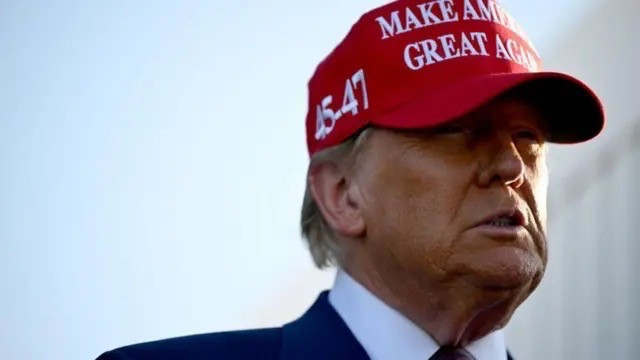
This isn’t just about punishing trade partners. It’s about redefining how the U.S. views global economic relationships — not through the lens of market efficiency, but national security.
Tariffs as a Geopolitical Tool
The idea of a “tiered” tariff system sends a powerful message: trade will now be filtered through a geopolitical framework. The goods labeled as “strategic” — semiconductors, EV components, AI hardware — are the very technologies driving the next industrial era. By imposing 100% tariffs, the U.S. isn’t just trying to level the playing field; it’s trying to slow down competitors and protect domestic dominance.
This approach also introduces uncertainty into supply chains. If companies must now ask not only “Is this cost-effective?” but “Will this be taxed next year at 100%?”, long-term planning becomes far more complex.
Political Risk Now Equals Business Risk
For businesses and investors alike, this signals a structural change. Global sourcing is no longer a purely economic decision — it’s a political one. The U.S. is effectively saying that trade with certain nations, even in civilian sectors, can be reclassified overnight as a national security threat.
Capital will flow accordingly. Countries perceived as “safe” will attract more supply chain investment, regardless of cost. This shift could reshape everything from chip manufacturing to pharmaceutical production.
This Isn’t Just About China
Though the policy is aimed at China, the precedent it sets will ripple far wider. If implemented, this model could be used to justify similar treatment for other nations seen as rivals. It marks a shift away from globalization and toward a more fragmented, bloc-based world economy.
For investors, that means trade policy is no longer background noise. It’s part of the fundamental risk landscape — and needs to be analyzed just as closely as earnings reports or interest rates.