
Good News for Tesla? US Prepare to Relax Autonomous Driving Regulations

The Trump administration has issued new regulations, this time giving the green light to autonomous driving.
On Friday, April 25, media reports indicated that the Trump administration will relax autonomous driving regulations, reducing the previously complex accident reporting process. This is considered the biggest relaxation of US autonomous driving regulations to date. US Transportation Secretary Sean Duffy explicitly stated on Thursday Eastern Time: "As long as you're using autonomous vehicles for 'testing, demonstration, research' - these non-commercial purposes - you can directly skip some compliance procedures."
In short, road testing of autonomous vehicles will be easier and faster in the future. Car companies can more easily conduct experiments and demonstrations, and innovation will no longer be hampered by red tape.
Duffy further explained: "This administration understands that we are in an innovation race, and the stakes have never been higher. Our new framework will cut red tape and move us closer to a nationally uniform standard that fosters innovation and prioritizes safety."
The National Highway Traffic Safety Administration (NHTSA) also promised in an open letter to autonomous vehicle developers: "We will remove unnecessary regulatory barriers that hinder innovation."
This policy change directly addresses Tesla's core demands.
Currently, Tesla has sold over 2 million vehicles with autonomous driving assist features in the US, and the iteration of its FSD (Full Self-Driving) system relies on extensive road testing and data feedback. However, in the past, Tesla's innovation speed was repeatedly limited due to compliance procedures.
This policy aligns perfectly with Musk's plans. Musk's new plan is to launch a Cybercab robotaxi fleet in Austin, Texas, in June this year, with no steering wheel or pedals, relying entirely on autonomous driving.
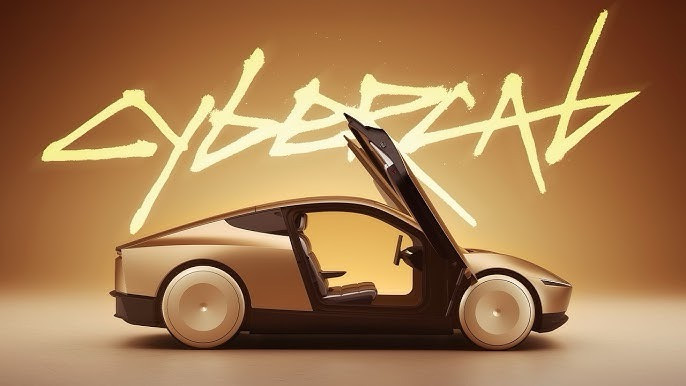
However, the reality is that this vehicle model does not meet the standard vehicle requirements set by NHTSA for road use. So Musk needs to apply for an exemption from NHTSA to legally operate on roads, and historically only one startup company has been granted such an exemption, making it extremely difficult.
Musk believes that each state and city having different autonomous driving regulations is chaotic. He hopes to establish a unified national framework to facilitate large-scale promotion, otherwise just dealing with regulations would lower efficiency.
However, there's always tension between regulation and innovation. Although FSD stands for Full Self-Driving, Tesla's FSD system currently still requires a person to sit in the driver's seat and constantly monitor road conditions. It's not truly autonomous like Google's Waymo taxis that can operate without human intervention.
NHTSA maintains close attention to Tesla, with 8 ongoing investigations, 5 of which are related to Tesla's autonomous driving system. Musk is very dissatisfied with NHTSA's previous crash reporting requirements. Due to the lack of specific federal regulations for autonomous driving, NHTSA relies on this "crash incident reporting" system to investigate Tesla's software defects.
More sensitively, media investigations this month revealed that Musk's "government efficiency department" has done something significant - firing a large number of new NHTSA employees involved in autonomous driving risk assessment. Some insiders are concerned whether Musk is actually weakening regulation under the guise of improving efficiency.