
Ready to Lead an AI 8Army?: Microsoft’s Bold Vision and What Investors Should Watch

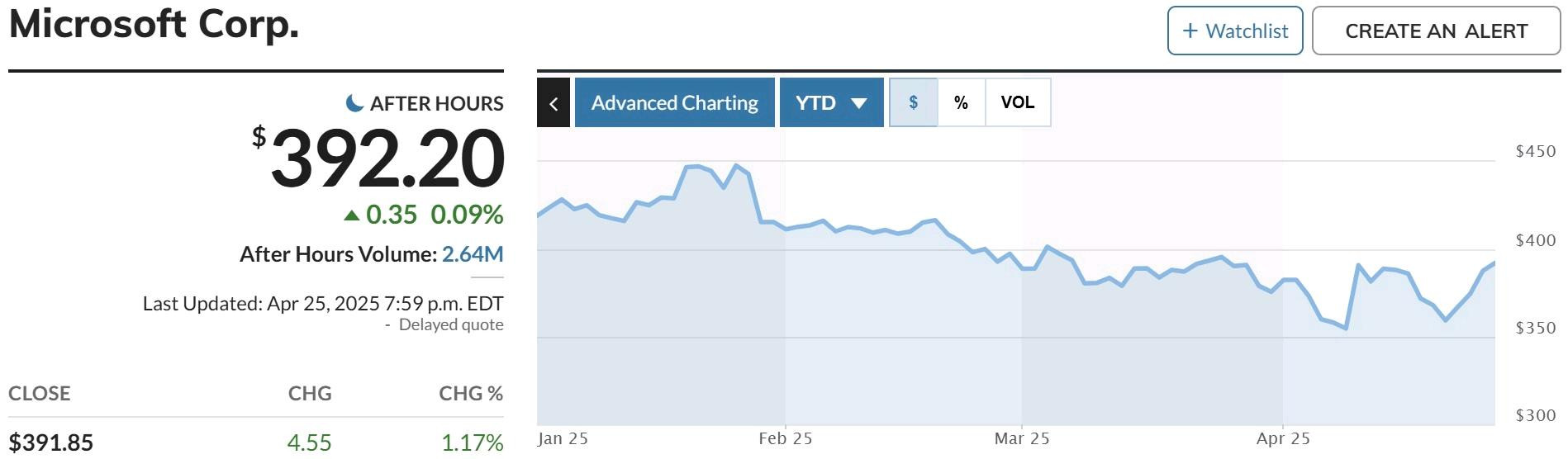
In a startling forecast, $MSFT predicts that within five years, every knowledge worker will become an “agent boss,” directing fleets of AI agents that handle routine tasks. Simultaneously, the tech behemoth is shaking up its sales force to better serve small and mid-market customers in the AI era—and gearing up for a critical Q3( the first calendar quarter of 2025) earnings report on April 30.
What Does It Mean to Be an “Agent Boss”?
$MSFT ’s latest Work Trend Index outlines a three-phase evolution toward what it calls “frontier firms.” First, every employee gains an AI assistant. Next, specialized agents become digital colleagues executing specific tasks. Finally, humans assume the role of chief strategists, delegating end-to-end processes to autonomous AI “workers” while they oversee and refine workflows.

“From the boardroom to the frontline, every worker will need to think like the CEO of an agent-powered startup,” writes Jared Spataro, a $MSFT executive. The promise: frontier firms scale rapidly, operate with unprecedented agility, and generate value faster than traditional organizations. Early adopters, such as McKinsey with Copilot Studio bots scheduling meetings, showcase AI’s potential to elevate productivity by offloading “drudge work.”
Could AI Agents Cost Millions of Jobs?
While $MSFT hails AI agents as liberators from mundane tasks, experts warn of sweeping job displacement. The IMF estimates that 60% of roles in advanced economies face AI exposure, with half at high risk of negative impact. In the UK alone, up to 3 million private-sector jobs could be displaced, though net losses may shrink to the low hundreds of thousands once new AI-centric roles emerge.
Dr. Andrew Rogoyski of the University of Surrey cautions that an overreliance on AI risks eroding institutional knowledge and weakening customer relationships—assets that only humans can nurture. Balancing efficiency gains with talent development and human insight will be critical for organizations.
How Is Microsoft Reinventing Its Sales Strategy?
To meet evolving customer needs, $MSFT plans to lean more heavily on third-party resellers for small and mid-market software sales. Meanwhile, in-house sellers will broaden their expertise—offering a unified portfolio of cloud services, productivity tools, and AI solutions—and receive enhanced technical training focused on generative AI products.

“Our sales organization is evolving to reflect the era of AI,” says a $MSFT spokesperson. This move mirrors peers like Salesforce and Workday, which have offloaded transactions to online marketplaces and partner networks to streamline costs in a tougher selling environment.
What’s Priced Into Q3 Expectations?
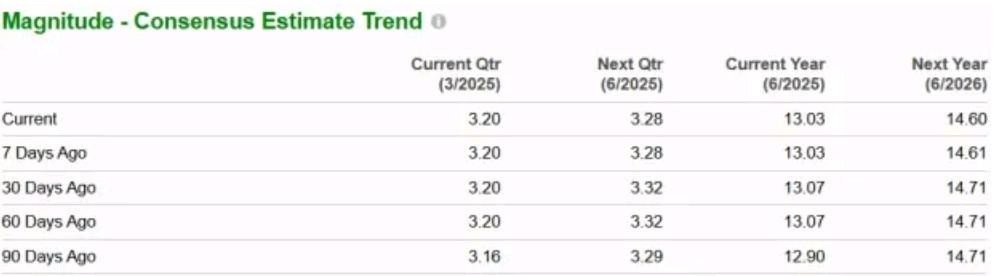
When $MSFT reports its FY 2025 Q3 results on April 30 (after market close), consensus forecasts stand at:
• Revenue: $68.44 billion, up 10.63 % year-over-year
• EPS: $3.22, up 9.39 % year-over-year
Investors will zero in on three key areas:
1. Azure Growth Acceleration
Can Azure ride the AI wave to sustain—or exceed—the mid-30 % growth rates of recent quarters? Morgan Stanley recently trimmed its Azure forecasts slightly but left room for upside if AI demand spikes.
2. Capital Expenditure Discipline
Having earmarked $80 billion for AI-centric data centers this fiscal year, $MSFT has paused or slowed certain projects (notably in Ohio), citing strategic adjustments rather than waning demand. Analysts view these moves as visibility into existing capacity, aided by innovations from partners like NVIDIA.
3. Macroeconomic and Trade Risks
Although digital services escape direct tariffs, broader trade tensions could dampen enterprise IT spending. Investors will look for management’s commentary on how global uncertainty might ripple through licensing renewals and cloud commitments.
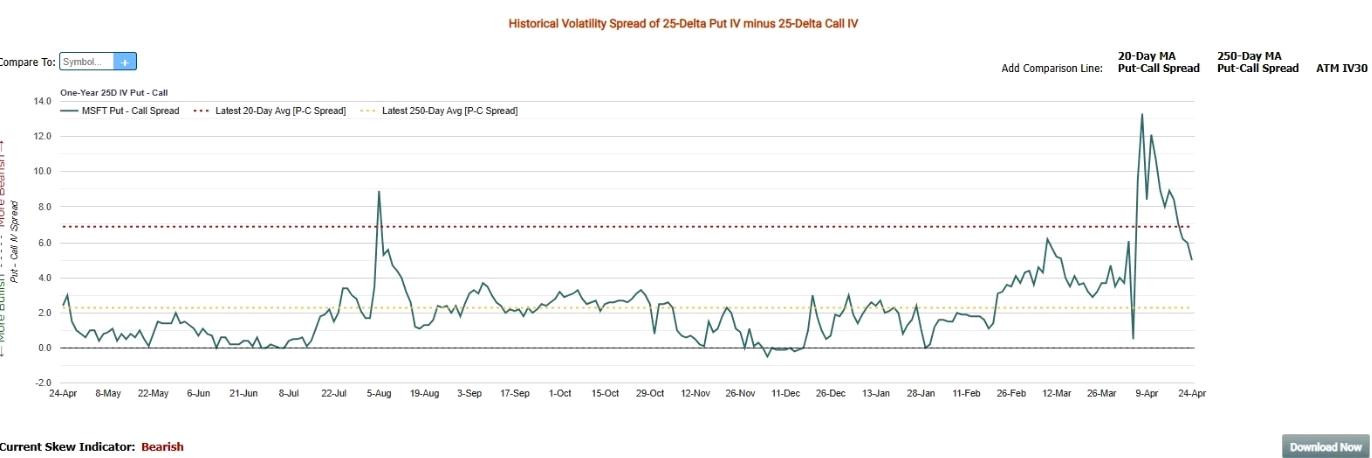
Options markets imply a ±5.15 % swing in share price post-earnings—above the 3.8 % average of the last four quarters—reflecting heightened uncertainty. Historically, shares have slipped seven times in the past twelve reports, with an average move of ±4.3 %.
What Should You Watch on the Call?
• Guidance for FY 2026 CapEx: Will $MSFT maintain its aggressive AI investment stance, or signal a more measured pace akin to Amazon’s GPU depreciation shifts?
• Copilot Adoption Metrics: Any hard data on enterprise uptake of Copilot and AI agents will shape the narrative around future revenue drivers.
• Free Cash Flow Trajectory: With analysts noting that every 1 % cut in CapEx could boost free cash flow by 1.5 %, investors are keen on understanding capital efficiency.
The Bottom Line
$MSFT ’s vision of “agent bosses” and frontier firms paints an ambitious picture of AI-powered workplaces. Its concurrent sales overhaul and imminent Q3 results underscore the real-world steps needed to realize that future. For
employees, customers, and investors alike, the coming weeks will reveal whether this AI revolution delivers on its promise—or whether the human touch remains the company’s most enduring asset.
This content is provided for informational or educational purposes only and does not constitute investment advice.