
Wall Street's "Rebound" Might Just Be a Trap, Gold Faces a Potential Pullback

Shearing sheep
April 27, 2025
GoGPT Summarizes Articles
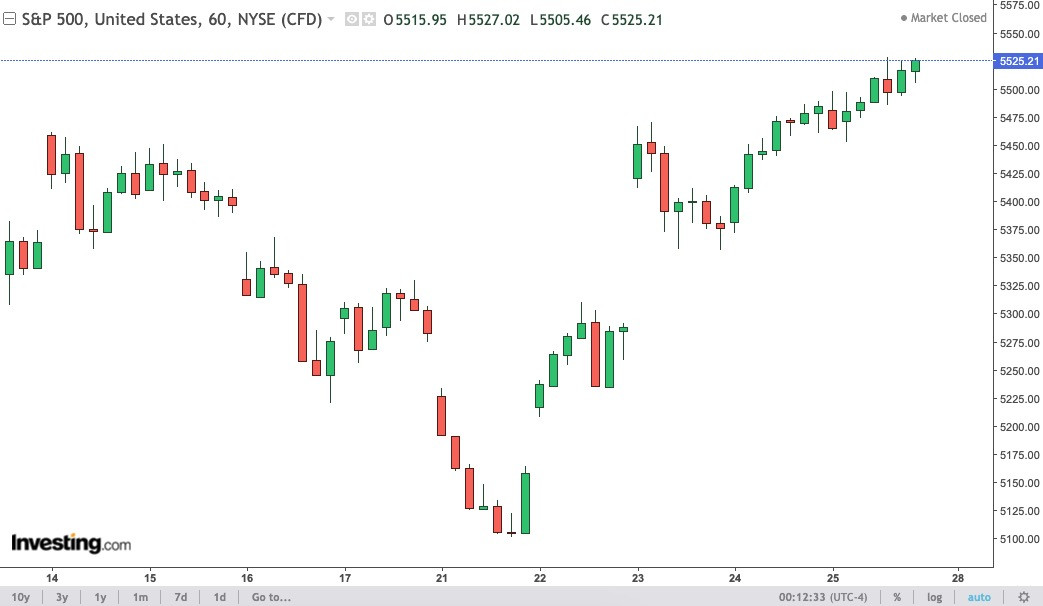
After weeks of brutal selling, U.S. stocks finally managed a four-day winning streak. Tech stocks led the rally, Trump toned down trade tensions a bit, and Fed officials dropped some hints about possible rate cuts.
But before anyone gets too excited...
Bank of America (BofA) says this rebound might not last.
Michael Hartnett, BofA's chief investment strategist, is advising investors to sell into this bounce.
Why? Because uncertainty remains sky-high, and more downside pain could be coming.
In their latest report, Hartnett and his team said they’re still buyers of bonds, international stocks, and gold on dips — but sellers of the S&P 500 and the dollar during rallies.
They also warned that the dollar is in a long-term weakening trend, with capital continuing to flow out of U.S. assets.
In fact, Hartnett laid out three conditions that MUST happen for any sustained stock market rebound:
1. A trade deal – Without one, trade tensions will keep hurting economic growth. (Deutsche Bank also pointed out that the longer tariffs stay, the worse it will be for the economy.)
2. Fed rate cuts – Specifically, cuts that push Treasury yields lower. Right now, yields remain elevated, partly due to the tariff chaos.
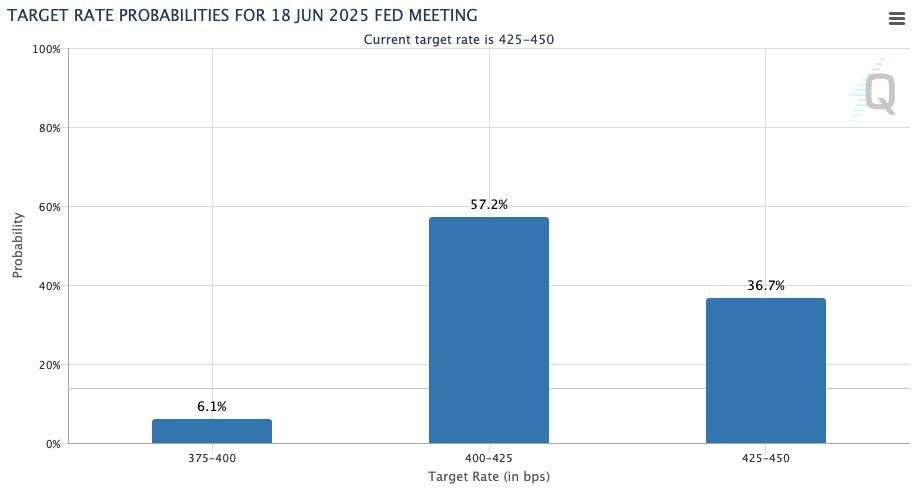
Fed officials hinted last week that they might cut rates this summer if the economy weakens. According to CME's FedWatch tool, markets currently see nearly a 60% chance of a June rate cut.
3. Strong consumer spending – So far, consumers are still holding up, backed by a strong labor market. But if consumer confidence cracks, things could get ugly.
Bottom line from BofA: Unless these three things happen, don’t count on the rally sticking.
Given the current high level of uncertainty, I agree with BofA’s strategy — policy prospects remain unclear, and flexible asset allocation is crucial.
Powell Fires Back at Trump
At a closed-door IMF meeting on April 25, Fed Chair Jerome Powell delivered a fiery defense of central bank independence. Reports said his speech even drew applause from finance ministers and central bankers.
This comes after Trump called Powell a "big loser" and ramped up pressure on the Fed to cut rates. Naturally, Wall Street is getting nervous — fearing political interference could undermine the Fed’s independence.
Several Fed officials quickly jumped in to defend Powell, stressing that independence is key to controlling inflation and supporting long-term growth.
Minneapolis Fed President Neel Kashkari emphasized that monetary policy independence is a cornerstone of U.S. economic success, pushing back against claims that the Fed makes decisions for political reasons.
Chicago Fed President Austan Goolsbee added, "If intervention becomes long-term, it means higher inflation, weaker growth, and higher unemployment — because during tough times, people will be less willing to step up and make hard decisions."
Fed's New Financial Stability Report
Also on April 25, the Fed released its latest Financial Stability Report.
The report showed that 73% of respondents (including economists and investors) now see global trade risks as the biggest threat to stability — more than double the level from last November. Meanwhile, concerns about U.S. government debt have fallen to third place.
Interestingly, most of this survey was conducted before Trump’s announcement of "reciprocal tariffs" — suggesting trade worries could be even higher now.
The Fed also flagged:
- Elevated stock valuations (even after the recent dip)
- High hedge fund leverage
- Growing concerns about U.S. Treasury market liquidity (mentioned by 27% of respondents, up from 17%)
Gold Faces a Potential Pullback
While U.S. stocks have rallied thanks to Trump's softening on tariffs, gold is facing mounting pressure for a pullback. On April 22, gold prices reached an all-time high of $3,500 per ounce.
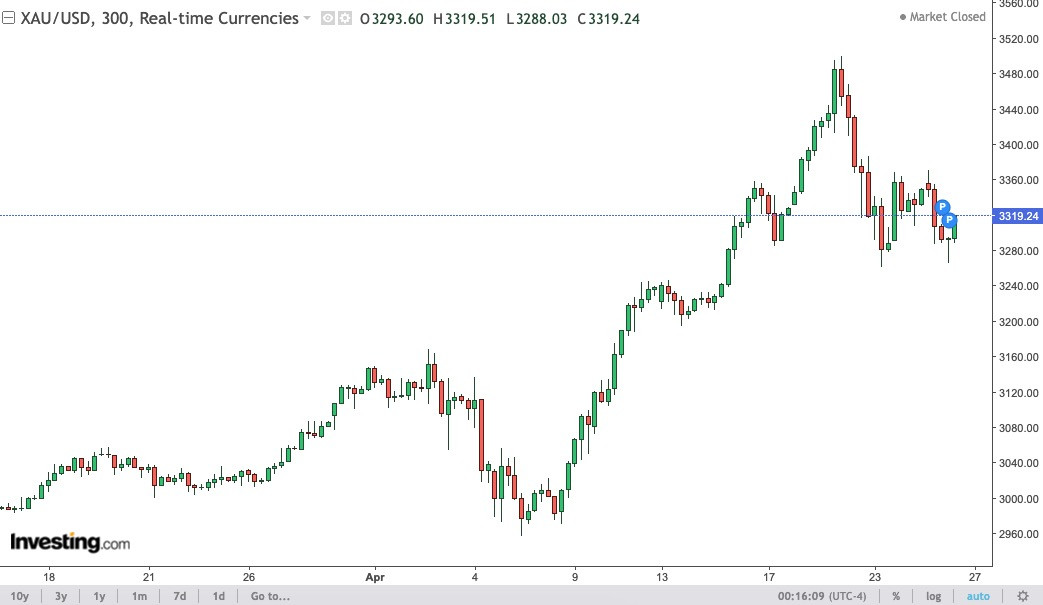
However, Nomura Securities has identified three key indicators suggesting a technical correction may be imminent.
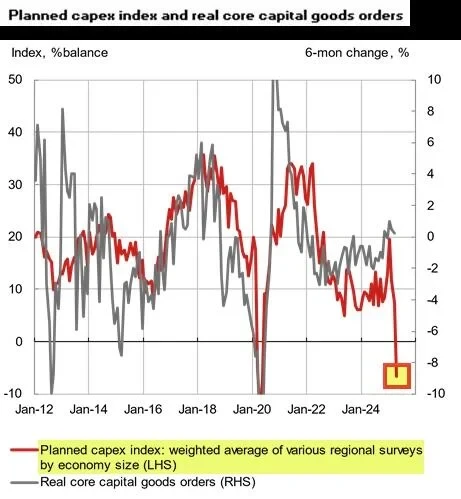
First, Nomura’s Composite Regional Fed Planned Capex Index — a key gauge of business investment intentions — has fallen sharply, signaling a potential slowdown in economic activity. The index just dropped below -4, a level that has historically preceded economic slowdowns. In fact, this indicator has accurately predicted five out of the last six recessions.
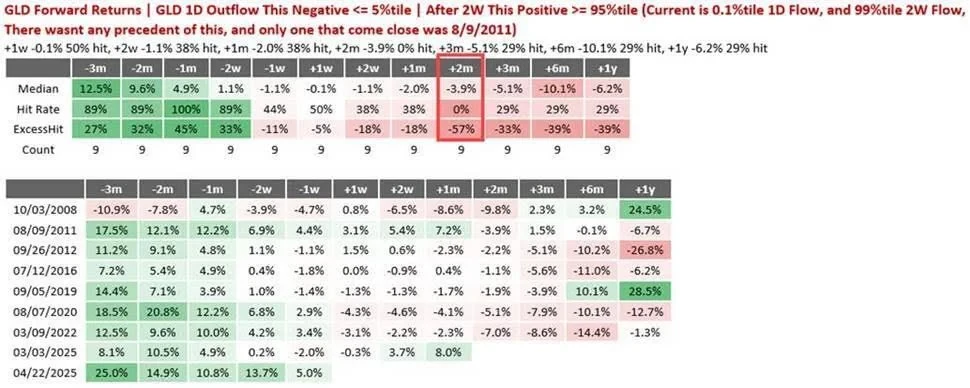
Second, there has been a significant shift in gold ETF flows, with a massive inflow followed by an equally large outflow. Historically, this pattern often precedes a correction in gold prices.
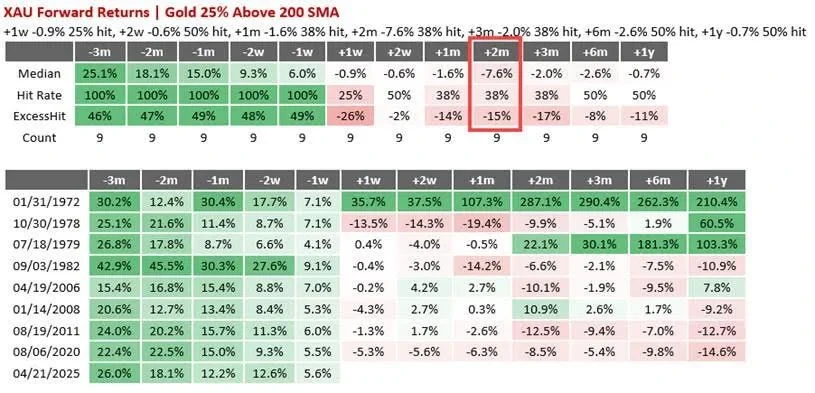
Finally, gold prices are currently trading 25% above their 200-day moving average — an unsustainable deviation from the long-term trend. When gold has historically deviated this far, it tends to snap back, either through consolidation or a sharper correction. The odds of a mean-reversion move are clearly rising.
Conclusion
While the recent rally in the U.S. stock market provides some temporary relief, the underlying fundamentals remain fragile. Investors should stay vigilant and consider the potential risks. The path to a sustained recovery is fraught with challenges, and the three conditions identified by Michael Hartnett are critical. Until these conditions are met, the market is likely to remain volatile and uncertain.
I’m still long-term bullish on gold, but I’d rather wait for a 10-15% correction (or at least a stabilization in ETF flows) before adding exposure. Chasing all-time highs is rarely a winning strategy. #stockmarket #gold #xauusd
#Breaking Macro Events: Market Impact & Analysis#stockmarket#gold#xauusd