
Trump's Next 100 Days: Tax Cuts, Rising Debt, and What It Means for Your Wallet

Shearing sheep
April 28, 2025
GoGPT Summarizes Articles
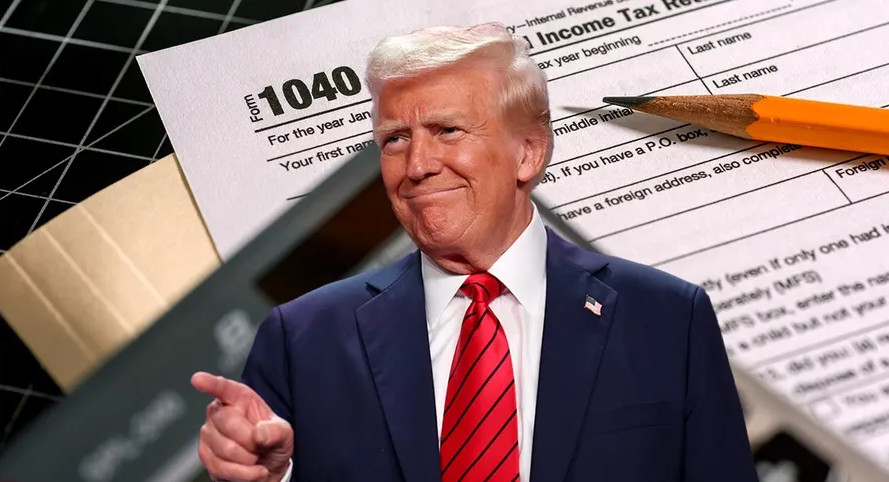
The first 100 days of Trump’s return to the White House have been anything but quiet—tariffs, federal workforce cuts, and foreign policy shifts have dominated headlines.
But now, the real economic battleground shifts to Capitol Hill, where Republicans are pushing a massive tax package that could reshape the financial future of millions of Americans.
Extending the 2017 Tax Cuts
Republicans are currently grappling with a complex tax package that aims to make permanent the lower individual tax rates from Trump's 2017 Tax Cuts and Jobs Act.
This move, while politically popular among some segments, is fraught with economic and fiscal challenges.
The initial tax cuts were a significant boon for the GOP, but extending them comes with a hefty price tag.
According to the Tax Foundation, extending these expired provisions could cost as much as $4.6 trillion, even after accounting for economic growth and interest expenses.
While the House and Senate have each passed budget blueprints, they are miles apart: the House wants $2 trillion in spending cuts to help pay for it, while the Senate is willing to borrow even more—over $5.8 trillion—with barely any cuts.
The Senate's plan, in particular, raises alarm bells. If the Senate version prevails, it could add up to $60 trillion to the national debt by 2055, pushing the U.S. debt-to-GDP ratio above 230%.
Such deficit spending could trigger a debt spiral. Higher national debt tends to push up interest rates, meaning pricier mortgages, car loans, and credit card debt for everyday Americans.
Unlike 2017, when rates were low and the economy still had room to grow, today’s environment is completely different. Post-COVID, demand has already outstripped supply, fueling inflation.
Adding trillions more to the debt pile now could have the opposite effect Trump hopes for: slower growth, higher borrowing costs, and increased pressure on financial markets.
The Impact on Your Wallet
If you’re in the top 1%, the math looks pretty good after the final tax package takes effect. Wealthy households stand to gain around $25,500 on average from the extended tax cuts, according to estimates.
But for most Americans, it’s a very different story.
Between the impact of tariffs (which raise prices on imported goods) and potential Medicaid cuts, families in the bottom 60% could lose an average of $1,870 per year — roughly four months’ worth of groceries.
For the bottom 20%, the losses could climb to over $2,200, a major hit for lower-income households.
At the same time, there’s debate brewing over the SALT cap (the limit on deductions for state and local taxes).
Some House Republicans are pushing for adjustments, especially those representing high-tax states. Changes to the SALT cap would mainly benefit wealthier taxpayers, adding yet another layer of complexity to the final deal.
Market Implications
Beyond taxes, the upcoming package is expected to include a must-pass debt ceiling increase.
The Treasury could run out of borrowing room as soon as July, putting markets on edge. If negotiations drag on, we could see spikes in volatility—or worse, a funding crisis.
And even if a deal is reached, the sheer size of the borrowing could weigh on U.S. Treasury bonds, pushing yields higher and making U.S. debt less attractive to foreign buyers.
As AEI’s Kyle Pomerleau pointed out, "If Congress ends up borrowing another $5 trillion, that's a lot of new supply for debt at a time when demand for Treasurys is waning."
Unlike in 2017, when the economy was recovering from the Great Recession, today’s economic environment is vastly different. The COVID-19 stimulus has already pushed demand to exceed productive capacity, leading to inflation.
Piling more debt onto the current levels could exacerbate these issues, driving up interest rates and increasing the cost of borrowing for Americans.
My Take
There’s no question that extending the 2017 tax cuts would be politically popular among Trump's base. But economically, this feels like a high-wire act without a safety net.
The 2017 cuts happened when the economy needed a boost. Today, inflation is still a lingering concern, rates are already elevated, and fiscal space is much tighter.
Slashing revenues without serious spending reforms could easily backfire, driving up costs for average Americans instead of helping them.
In short: Trump’s tax plans might offer short-term relief for some, but the long-term risks—especially rising interest rates and ballooning debt—are real. #trump
#Breaking Macro Events: Market Impact & Analysis#trump