
Can Meta’s AI Push Make Good on Big Promises?

Meta Platforms announced blockbuster first-quarter results and a jaw-dropping capital-expenditure forecast, all hinging on one bet: artificial intelligence. In Thursday’s after-markets call, CEO Mark Zuckerberg and CFO Susan Li unveiled upbeat revenue growth—16% year-over-year to $42.3 billion—and raised their full-year capex guidance from $60–65 billion to $64–72 billion. That extra $7 billion is earmarked almost entirely for AI infrastructure, signaling Meta’s conviction that sprawling data centers and next-generation models will be the keys to sustained advantage.

But while $META ’s earnings beat Wall Street and ad revenue growth doubled expectations, investors are torn between excitement over soaring AI-driven ad efficiency and anxiety over mounting costs and technical delays. Below, we unpack the highlights, dig into the risks, and ask whether $META ’s all-in AI strategy can really pay off.
Blowout Ad Growth—But at What Cost?
$META ’s ad business remains the engine of growth. Q1 ad revenue rose 10% to $41.4 billion—more than twice the 5% consensus forecast—driven by AI-powered targeting and creative tools that Meta says have boosted click-through rates by 5% and are already used by 30% of advertisers. Mark Zuckerberg credited AI-driven recommendation improvements with lifting daily user engagement across Facebook (up 7%), Instagram (6%) and Threads (35%).
“AI has become core to everything we do,” Zuckerberg said. “Our new tools are already delivering return-on-ad-spend improvements for businesses of all sizes.”
Yet Reality Labs—$META ’s virtual-reality division—posted another quarterly loss ($412 million, down 6%) as headset sales soften. And higher energy, hardware and data-center build costs are already pinching margins. Free cash flow of $10.3 billion beat estimates, but chief financial officer Susan Li warned that capex growth will eclipse gains in operating efficiency this year.
Why the Capex Hike? AI’s Insatiable Appetite
$META ’s new $64–72 billion capex range would mark an 84% increase over last year and bring its spending close to Google’s, despite $META being the smaller company by revenue. Virtually all of the raise is devoted to data centers, servers and networking gear to power increasingly heavy AI workloads.
Li explained the need for speed: “We need to build capacity faster in 2025 and 2026 to support leading AI models and services. Even with this ramp, demand will outpace supply.”
Zuckerberg stressed that both AI “supply and demand are highly unstable,” meaning $META must overbuild to avoid capacity bottlenecks. He predicted that by mid-to-late 2026, AI coding agents will handle a significant portion of the company’s software development—part of a broader vision of AI-run product teams.
Independent Meta AI App: A U.S. Foothold?
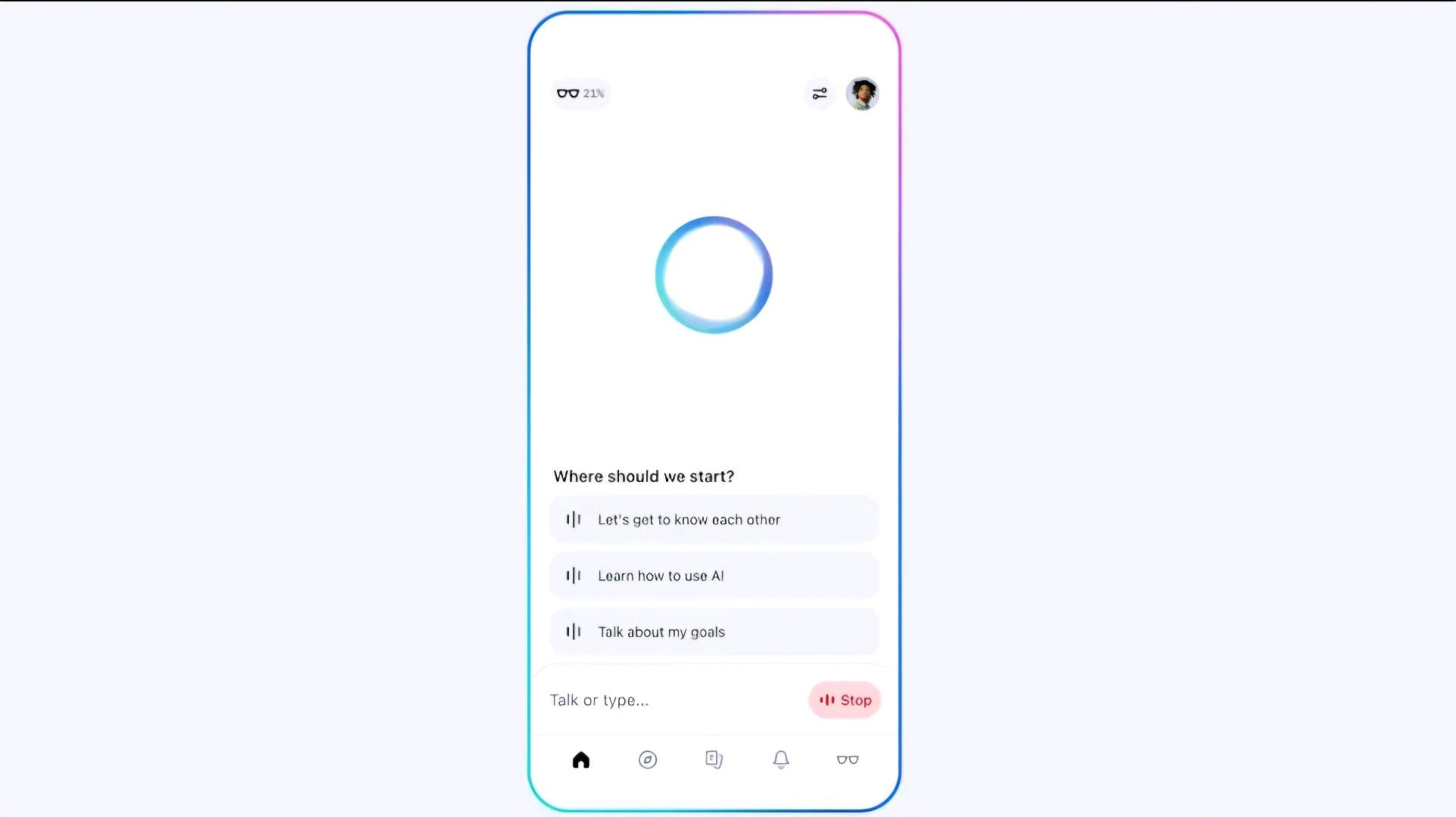
Meta AI, the company’s chat-and-assistant layer, now boasts nearly 1 billion monthly users across WhatsApp, Facebook and other apps. Soon it will launch as a standalone mobile app in the U.S., complete with a premium subscription tier and ad support.

“In America, a standalone app is essential,” Zuckerberg said. “It positions Meta AI as people’s primary personal AI.”
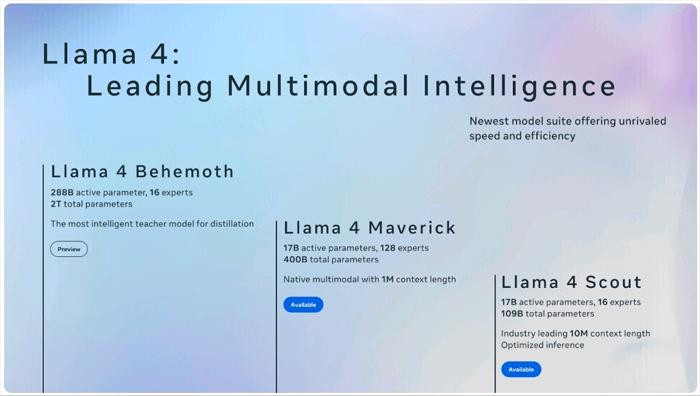
But that rollout comes at a delicate moment. $META ’s promised Llama 4 Behemoth model—touting 2 trillion parameters across a mixture-of-experts architecture—has been delayed repeatedly. At this week’s first LlamaCon, developers were left empty-handed, sparking criticism that Meta has fallen behind peers like OpenAI, Google and Anthropic in delivering production-ready models.
Open-Source Credibility Under Fire
$META has billed its Llama models as “open source,” but advocacy group Open Source Initiative says the licensing terms—prohibiting human-rights abuses, competitive product development and training of models beyond 700 trillion parameters—undercut true openness. Brownstone Research slammed LlamaCon as “all sizzle, no steak,” arguing that $META ’s consumer and developer pitches lack the substance needed to catch up in the fast-moving AI race.
Analysts worry that without a marquee AI breakthrough, $META risks hemorrhaging billions in sunk costs and losing talent to better-positioned rivals. Even Zuckerberg acknowledged that personalization—building AI agents that remember user context across apps—remains aspirational rather than available today.
Regulatory Clouds in Europe
On top of competitive and financial pressures, $META faces tougher rules under the EU’s new Digital Markets Act. Non-compliance could trigger fines up to 20% of annual revenue—around $8 billion based on 2024 figures. Susan Li said the company is in “active discussions” with the European Commission but stressed it’s too early to quantify the final impact.
Europe accounted for 16% of $META ’s ad revenue last year, meaning regulatory changes there could bite significantly if $META must alter how it bundles AI features with its apps.
The Road Ahead: Can AI Deliver ROI?
$META ’s biggest selling point is its massive user base—34 billion app engagements daily across Facebook, Instagram, WhatsApp and more. If AI can meaningfully boost engagement, ad relevance and ecommerce conversions, the payoff could dwarf the investment. Zuckerberg cited test results showing that AI-driven ad ranking and new tools like the GEM recommendation model have already boosted conversion rates faster than ad impressions.
But skeptics point out that AI’s benefits often accrue to first movers and that infrastructure alone doesn’t guarantee differentiated products. Llama delays and licensing snags raise doubts about $META ’s ability to innovate at the cutting edge.
As the company plows an eye-watering $70 billion into capex this year, investors will be watching closely: will AI supercharge $META ’s growth engine, or will the mounting costs and execution risks weigh on profits for years to come?
$META ’s AI play is now unambiguously its biggest strategic bet. With ad dollars on the line and rivals charging ahead, the company’s ability to turn infrastructure into innovation may define its future.
This content is provided for informational or educational purposes only and does not constitute investment advice.