
Investing Globally: What to Expect from the Buffett Conference?

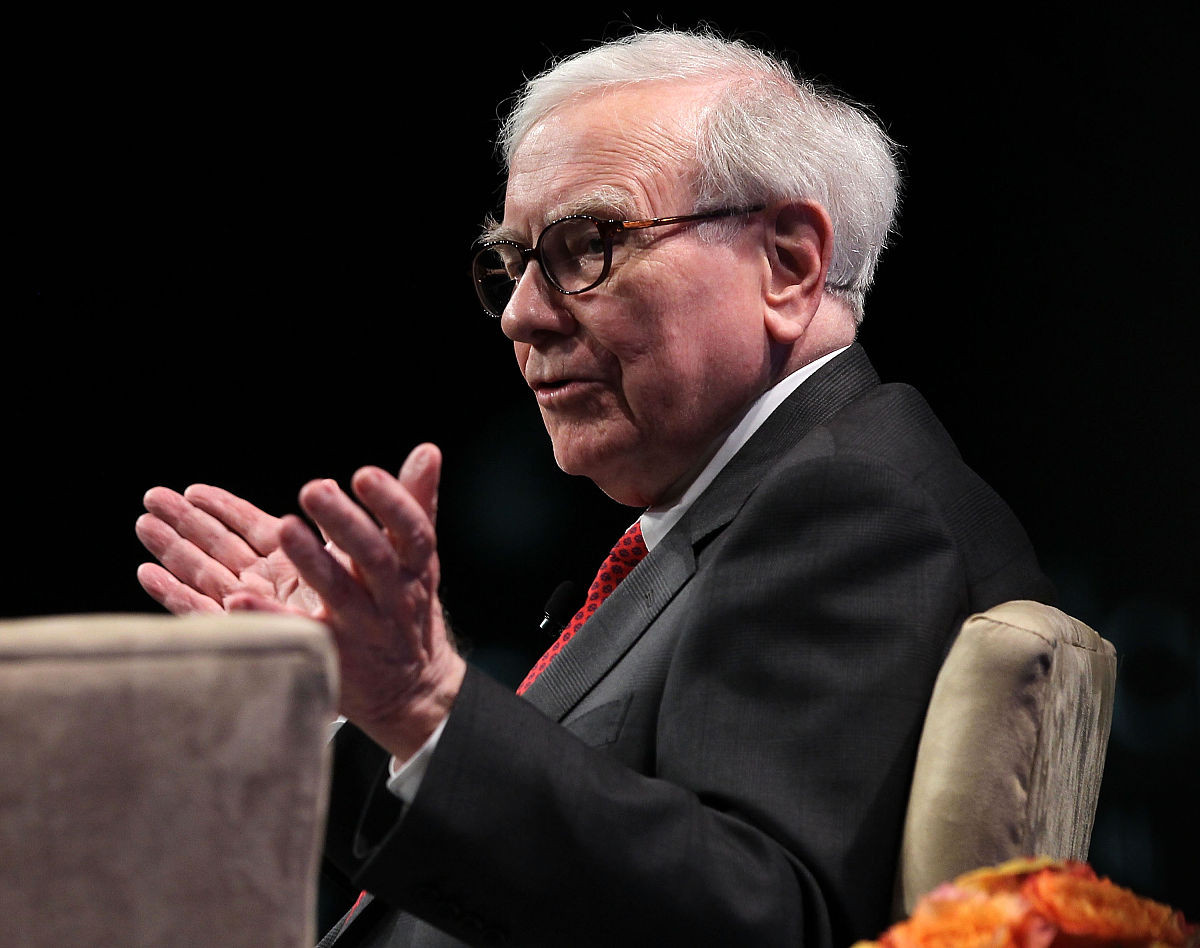
On May 3, local time, The Berkshire Hathaway Annual Shareholders Meeting will be held in Omaha.
This year marks the important milestone of the 60th anniversary of Buffett's acquisition of Berkshire Hathaway. Although Buffett has confirmed his attendance and full participation in the Q&A session, considering that Buffett is already 94 years old, many voices from the outside world speculate that this might be the last time he fully participates in the shareholders meeting.
At this annual meeting, Buffett will be on the same stage with his successor, Abel, and Ajit Jain, the head of the insurance business, to answer shareholders' questions for four and a half hours on a series of topics. Perhaps out of consideration for his age, Buffett has shortened the duration of the Q&A session by about an hour compared to last year, and Abel is expected to take on more of the hosting and answering tasks.
Even so, the biggest focus of investors is still Buffett. In recent years, Buffett has significantly reduced his public appearances. And now, at a time when the radical policies of the Trump administration have caused fluctuations in the global market, this annual meeting is a rare opportunity for investors to listen in detail to his insights.
Highlight 1: Is the "Buffett Era" Coming to an End?
In his annual letter to shareholders in February this year, Buffett said that "before long", his successor, Abel, will take over as CEO. This may also signal the gradual end of the Buffett era. And in the "post-Buffett era", there may be huge changes in the future path of Berkshire Hathaway.
Abel's investment philosophy and leadership style will be put to the test by investors. Compared with Buffett, whether Abel can continue Berkshire's culture of "long-termism" and "focusing on high-quality enterprises" will become the key focus.
Besides,although Abel is likely to assume the position of CEO of the company, Buffett's children, Howard and Susan, may still exert influence on the company's future. In the future, they will control the trust funds that hold Buffett's shares and possess considerable power. It is predicted by the outside world that Howard, who is currently a member of the board of directors, is highly likely to become the chairman of Berkshire Hathaway, while Susan, also a current board member, is likely to remain as a director.
Highlight 2: How Will Buffett Deal with the Massive Cash Reserves?
In recent years, Berkshire Hathaway has been continuously converting its shareholdings into cash. Now, as of March 2025, Berkshire Hathaway's cash reserves have reached $334 billion. This figure not only sets a historical record but is also equivalent to the foreign exchange reserves of the top 20 economies in the world. The proportion of cash in total assets has reached the highest level since 1998.
In fact, when U.S. stocks fluctuated sharply this year due to the uncertainty of the extreme policies of the Trump administration, the stock price of Berkshire Hathaway remained stable. In the first quarter of this year, the S&P 500 Index fell by 4.6%, while the stock price of Berkshire Hathaway soared by 17.3%. This precisely reflects its foresight in decisively reducing its holdings of major stocks such as Apple, Bank of America, and Citigroup in advance.
Now, the market is eagerly looking forward to Buffett explaining at the shareholders meeting the logic behind his ability to foresee risks in advance and reduce his holdings to avoid risks, as well as whether he will initiate ultra-large-scale mergers and acquisitions or stock buybacks.
Highlight 3: What Does He Think of the Radical Policies of the Trump Administration?
In the more than 100 days since U.S. President Trump took office this year, his radical policies and remarks, such as streamlining the government, increasing tariffs, and threatening to annex Greenland and Canada, have already caused significant fluctuations in the global market. At the shareholders meeting, Buffett will inevitably be asked about his attitude towards these issues.
In March this year, Buffett criticized Trump's tariff policy in a rare interview, calling it a "war - like act" and a "hidden tax on consumers", and pointed out that consumers would ultimately bear the brunt of tariffs. In fact, during Trump's first term in office, Buffett also bluntly stated that high tariffs were a "very bad idea", believing that free trade was more conducive to the global economy and the quality of life.
It is worthy of close attention what evaluation Buffett will give to Trump's policies at the shareholders' meeting.
Highlight 4: How Does the "Oracle of Omaha" View the Global Market?
Although Buffett has always emphasized "never bet against the United States", in the face of the valuation bubble of U.S. stocks (the "Buffett Indicator" shows that the ratio of total market value to GDP has exceeded the historical peak of 200%) and the radical tariff policies of the Trump administration, whether Buffett will shift his focus more overseas is also worthy of investors' attention.
Japan is undoubtedly Buffett's most successful overseas battlefield in recent years. By issuing Japanese yen bonds with an interest rate of only 0.25%-0.5% to invest in Japan's five major trading houses (Mitsubishi, Mitsui, etc.), the market value of his holdings in these five major trading houses has increased from $13.8 billion to $23.5 billion.
In his letter to shareholders at the beginning of this year, Buffett said that these enterprises have "rational capital allocation and humble management teams" and he plans to hold them for a long time and increase his holdings moderately, which may imply that Japan remains the core of his Asian strategy.
In addition to Japan, the European market has recently shown characteristics such as low valuation (the price-to-earnings ratio of the STOXX Europe 600 is 23% lower than that of U.S. stocks) and the stable cash flow of some enterprises (such as German industrial giants), which increasingly match Buffett's investment taste and may become his next focus.
Conclusion
The 2025 Berkshire Hathaway Annual Shareholders Meeting is not only a "pilgrimage" event in the investment world but may also mark the end of the Buffett era.
From playing it safe with cash reserves to the reallocation of global assets, from internal contradictions in the United States to the prospects of the global economy, every word of wisdom from Buffett will provide a key guide for the market. And Abel's performance may determine whether Berkshire Hathaway can continue its legend in the post-Buffett era.
But no matter what the questions are-or whether the answers meet their expectations-investors of Berkshire Hathaway may need to cherish this moment in Omaha. This may be their last chance to marvel at the profound insights of the "Oracle of Omaha" and be grateful for his correct investments over the past 60 years.$BRK.A $BRK.B