
Apple’s Q2 Earnings: Solid Numbers, Soaring Buybacks—But Tariffs Cast a Shadow

$AAPL’s Q2 earnings slightly beat expectations, but the mood quickly turned cautious. The company warned that rising tariffs would add $900 million in costs next quarter.
Combined with lukewarm China sales and growing regulatory pressure, Apple’s post-earnings rally was short-lived—shares dropped more than 4% after hours.
The Numbers: Better Than Expected, But Not Spectacular
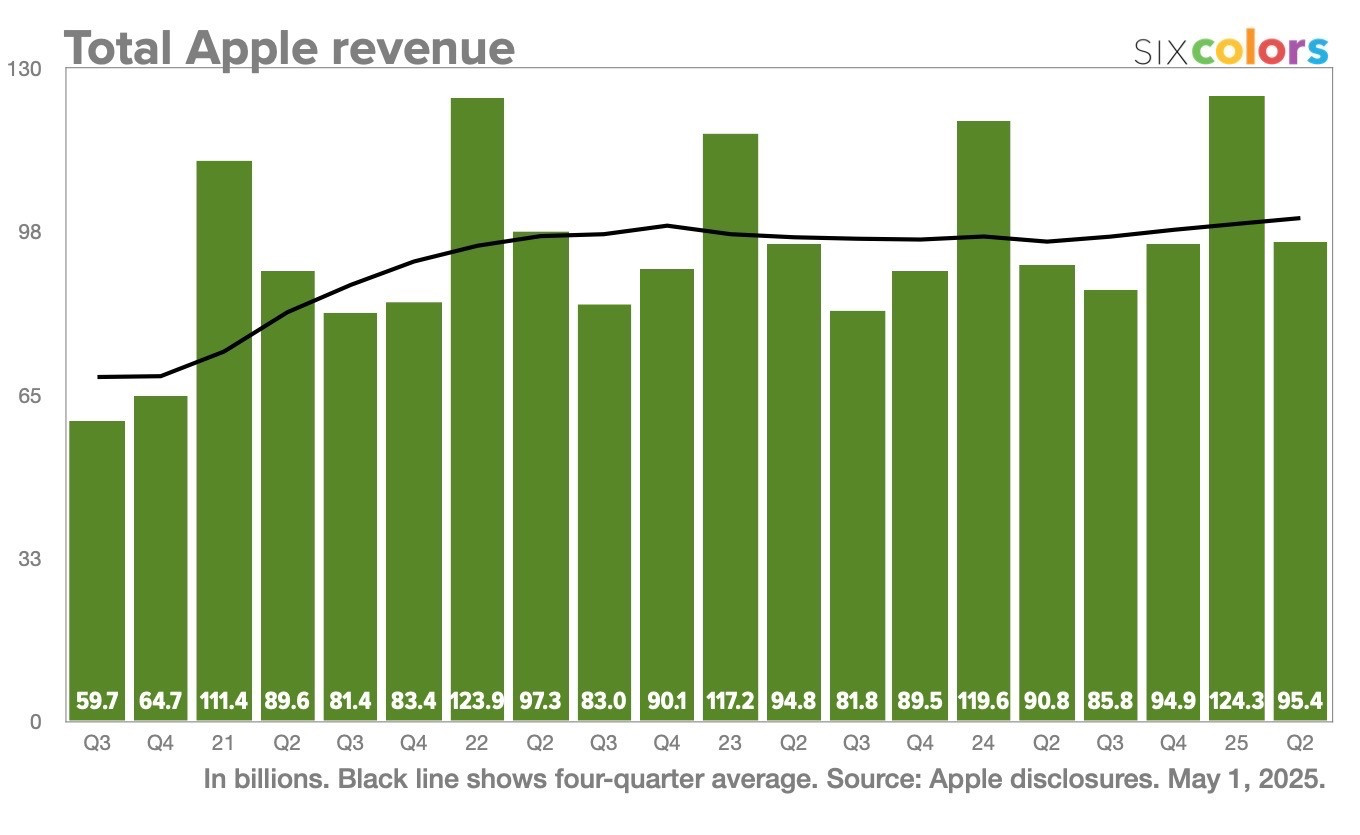
For the March quarter, Apple reported revenue of $95.36 billion, up 5.1% year-over-year and beating Wall Street’s forecast of $94.29 billion. EPS came in at $1.65, ahead of the expected $1.62. Gross profit and operating expenses were both slightly above estimates.
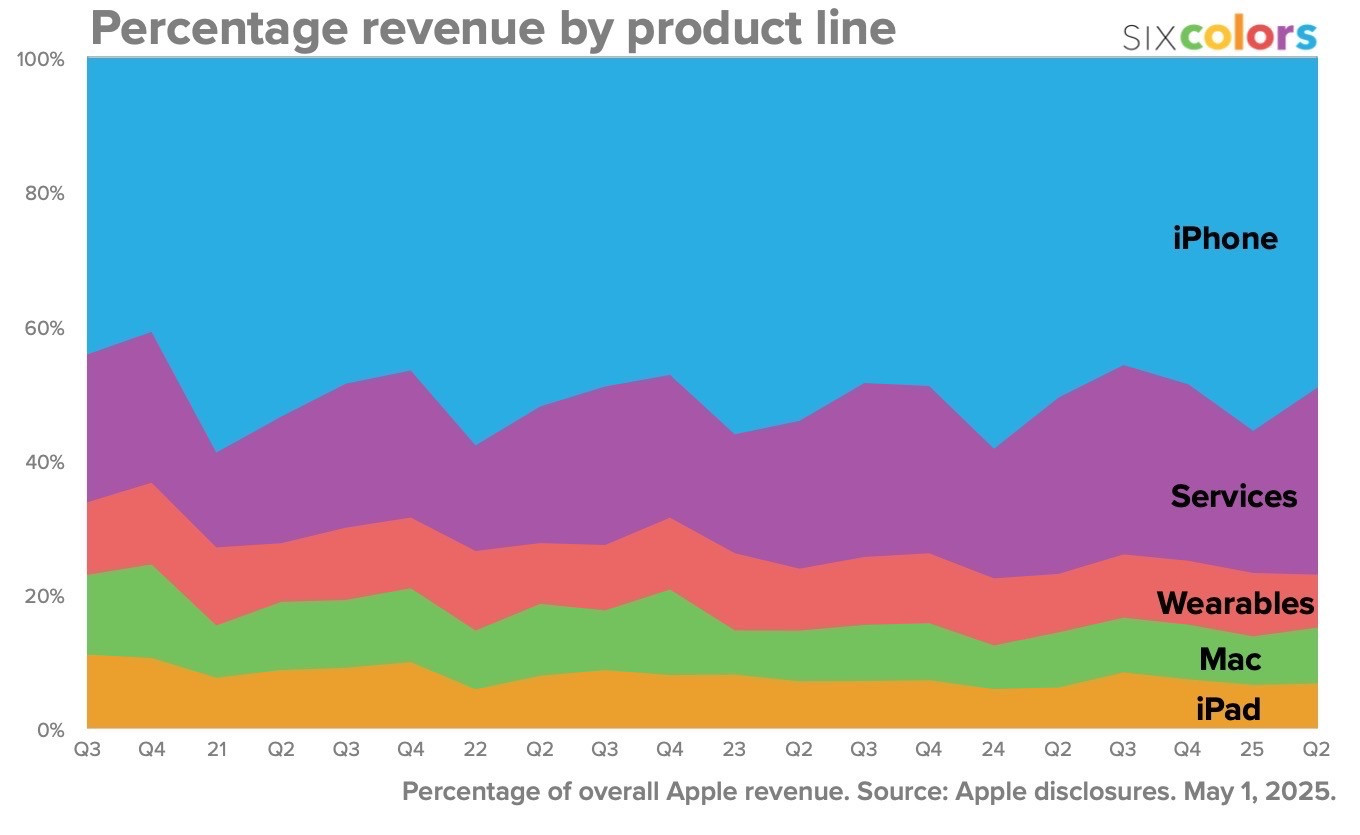
Product revenue hit $68.71 billion, led by a 1.9% gain in iPhone sales and a surprising 15% surge in iPad revenue. Services revenue grew 12% to $26.65 billion, though it came in slightly below expectations.
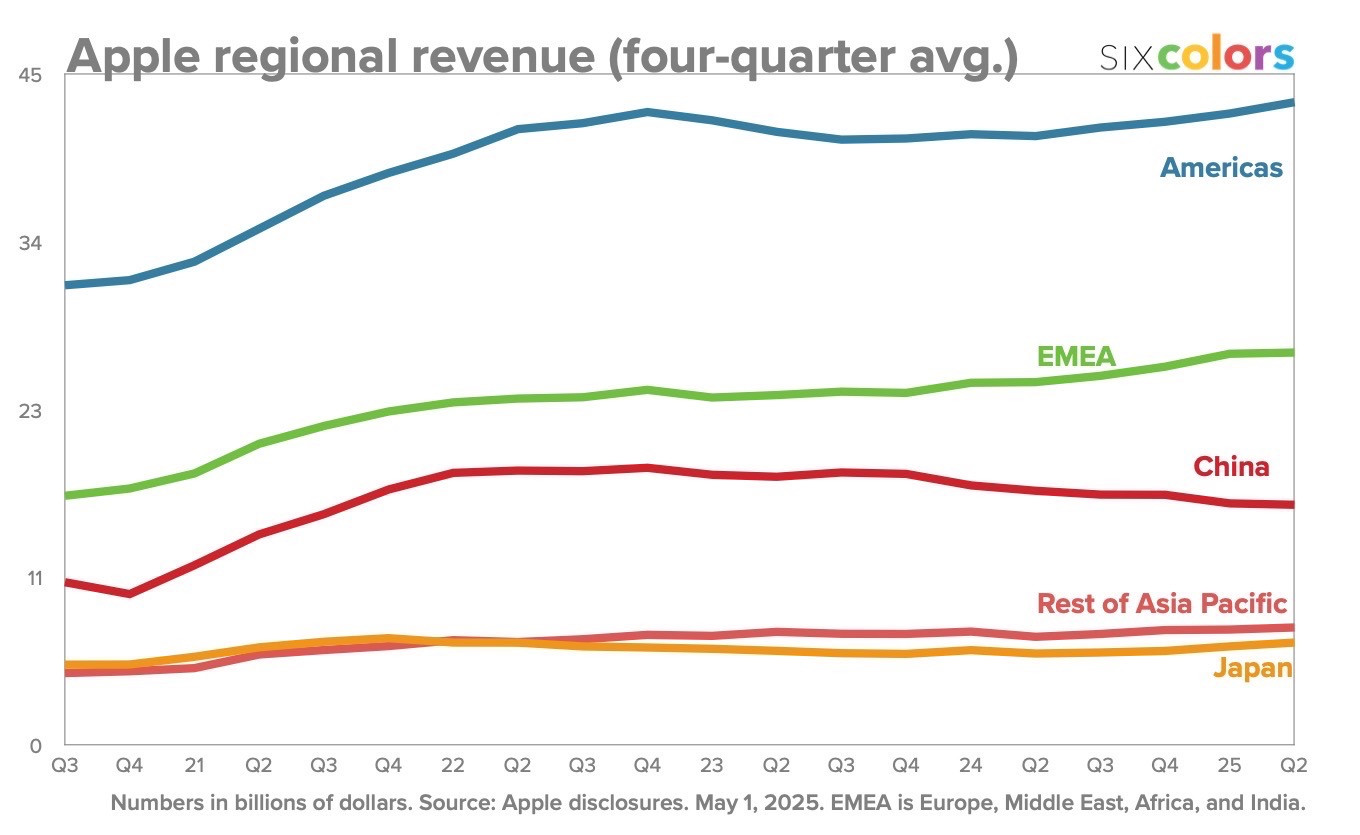
China was the only major region to post a revenue decline, falling 2.3% year-over-year to $16 billion—well below the $16.83 billion forecast. But CEO Tim Cook emphasized that, excluding forex headwinds, sales in China were roughly flat.
Apple also announced a $100 billion stock buyback program and raised its dividend by 4%, signaling confidence in long-term cash flows despite short-term macro pressures.
Q3 Guidance: Tepid Outlook, Tariff Headwinds
Apple expects Q3 revenue to grow in the lower half of a 0%–10% range, which implies roughly 1%–4% year-over-year growth. That’s in line with current Street consensus, but hardly exciting.
What’s more concerning: Apple estimates that tariffs—driven by recent U.S. policy shifts—will inflate Q3 costs by about $900 million. CFO Kevan Parekh said most iPhones sold in the U.S. will be assembled in India, while iPads, Macs, and accessories are increasingly coming out of Vietnam. Clearly, Apple is pushing hard to diversify its supply chain.
Still, Cook was tight-lipped about whether prices will rise. “Nothing to announce today,” he said.
Deeper Issues: China, AI Delays, and Antitrust Woes
While tariff costs are a headline risk, Apple’s deeper challenges are more structural.
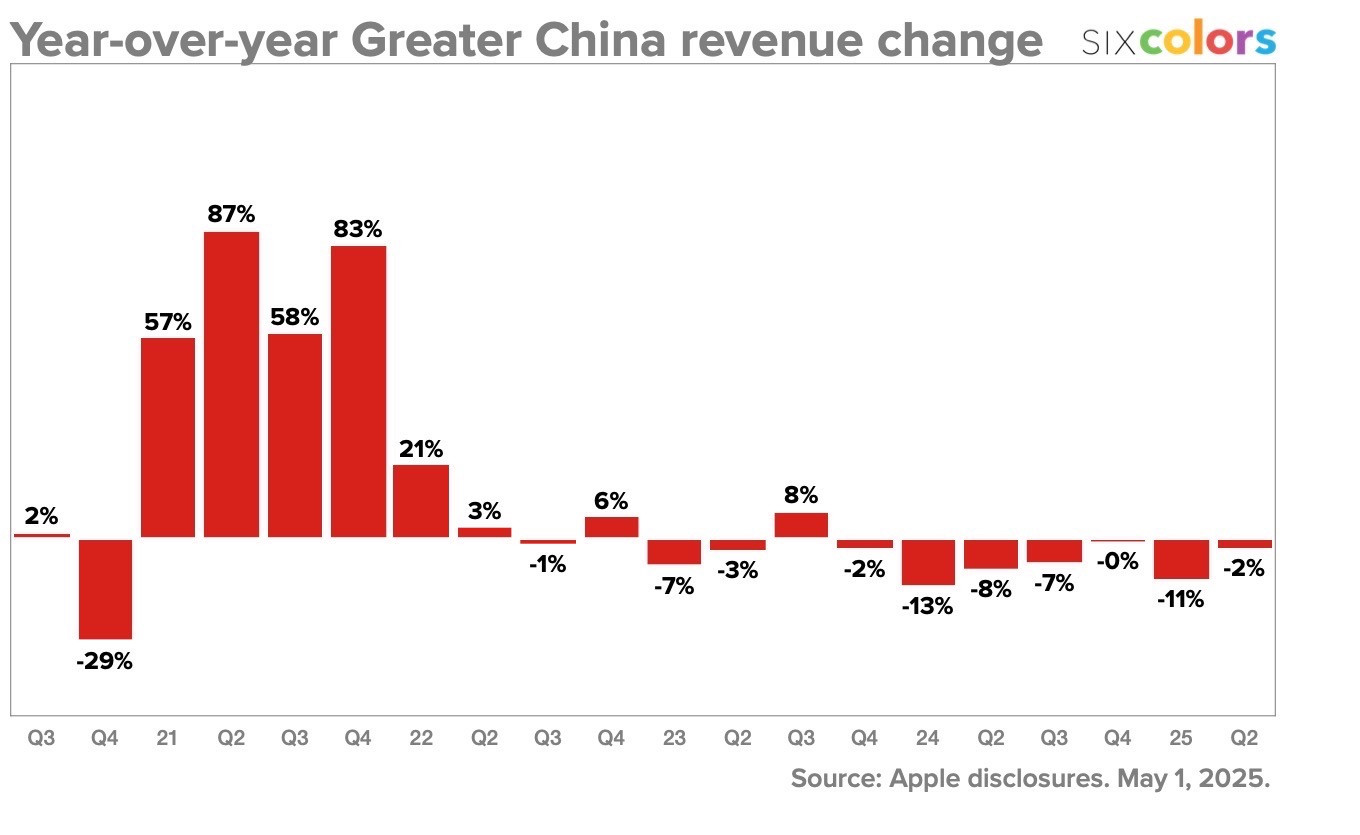
First, China. Despite Cook’s efforts to downplay weakness, Apple is losing ground to domestic rivals like Huawei and Xiaomi, who have closed the hardware gap and are aggressively pricing high-end devices. Apple’s failure to deliver promised AI features only makes things worse—its much-hyped Siri upgrades remain MIA in China. Reports suggest a deal with Alibaba is in place, but there’s no timeline yet.
Second, Apple’s AI gap is becoming more noticeable. While rivals push out generative AI features, Apple is still “working on it.” Cook insists the company is committed to launching “high-quality, personalized Siri” experiences—but hasn’t said when.
Third, regulators are circling. A U.S. federal judge just ruled that Apple must allow third-party payments in the App Store and barred the company from charging commissions on outside purchases. The court even referred the case for criminal contempt investigation—a rare move that adds legal uncertainty to one of Apple’s most profitable businesses.
And let’s not forget the elephant in the room: Google’s $20 billion annual fee to be Safari’s default search engine. If this deal is eventually dismantled by antitrust rulings, Apple could lose a quarter of its operating profits.
My Take: Solid Quarter, But Storm Clouds Are Building
On paper, this was a strong quarter. EPS rose, cash flow was solid, and Apple flexed its buyback muscle. But beneath the surface, the story gets murkier.
Tariff costs are real—and growing. Apple may dodge some of the impact with India and Vietnam production, but it’s unlikely to offset all of it without raising prices or accepting thinner margins.
The China issue is more worrying. A 2.3% decline in a soft quarter isn’t dramatic, but the trend matters. Local players are not only catching up—they’re pulling ahead in AI, pricing, and local ecosystem integration. Apple’s brand halo alone won’t keep Chinese consumers loyal forever.
The regulatory threats are also serious. The App Store ruling, in particular, could erode Apple’s control over its ecosystem and open the door to revenue leakage. And if Google’s search deal is struck down, Apple loses a massive passive income stream.
In short, Apple is still a financial fortress—but the moat is shrinking. Investors should be asking: how much longer can Apple maintain premium pricing and profit margins in a world where supply chains are fractured, AI is the new battleground, and regulators want to tear down its walled garden?