
Amazon Reports Solid Earnings, Flags Slower Growth and Trade Headwinds

$AMZN’s Q1 2025 earnings report came in stronger than expected on the surface — with solid profits and another record-high operating margin. But underneath that, there were a few warning signs: AWS growth slowed, guidance for Q2 profits fell short of expectations, and for the first time, Amazon explicitly cited tariffs as a potential risk to its outlook.
Revenue Growth Slows, But Profitability Hits New Highs
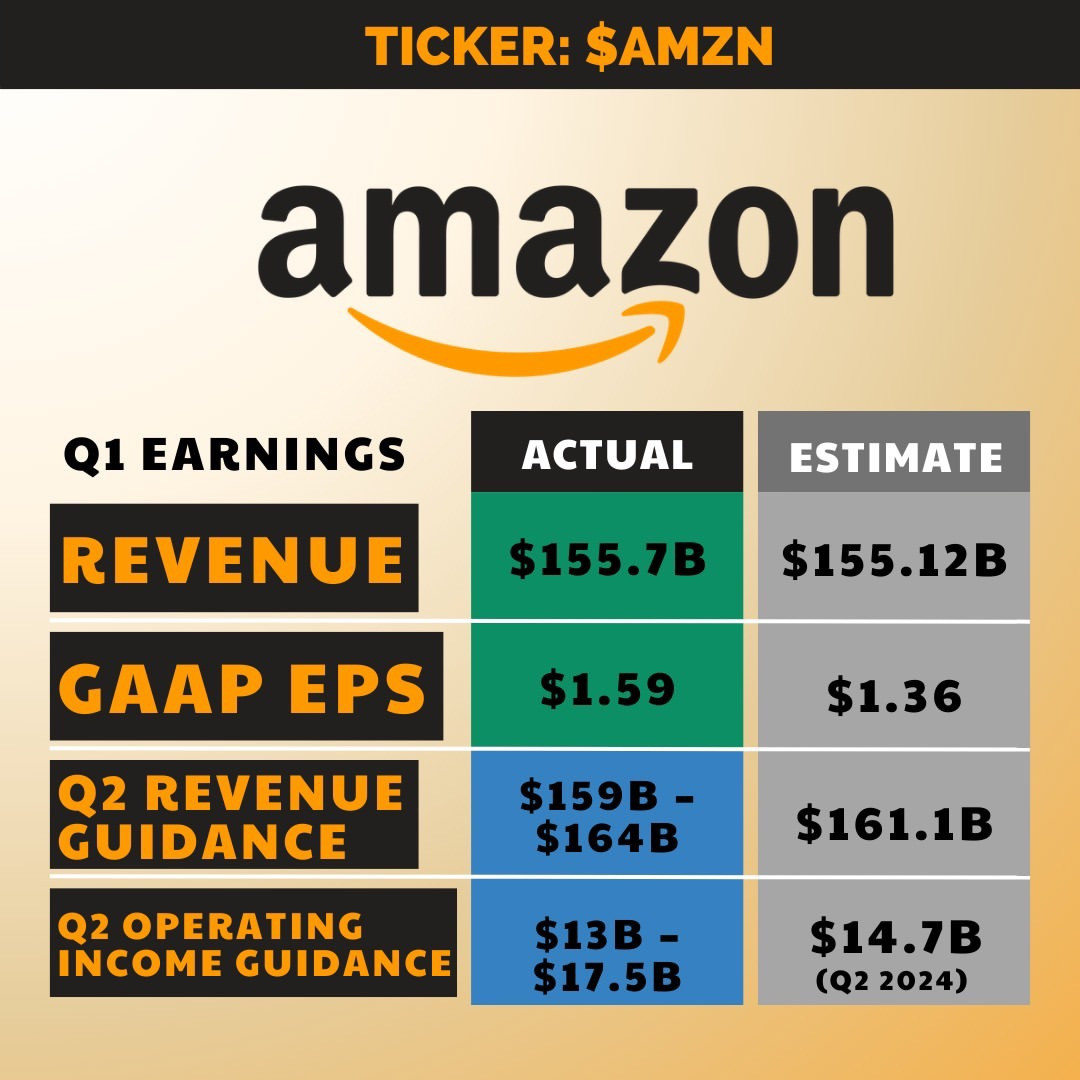
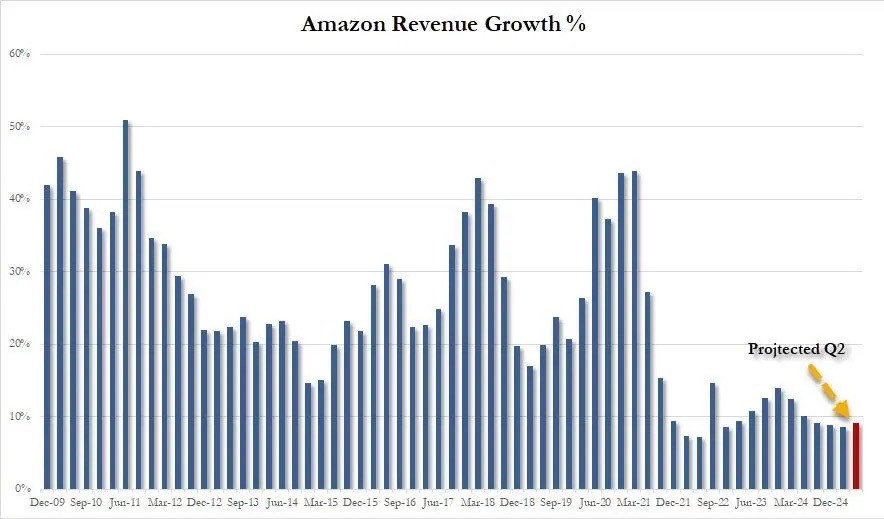
In Q1 2025, Amazon reported net sales of $155.7 billion, up 8.6% year-over-year — its slowest pace in two years, but still slightly ahead of consensus estimates ($155.2 billion). EPS came in at $1.59, up over 60% year-over-year, and well above analyst forecasts.
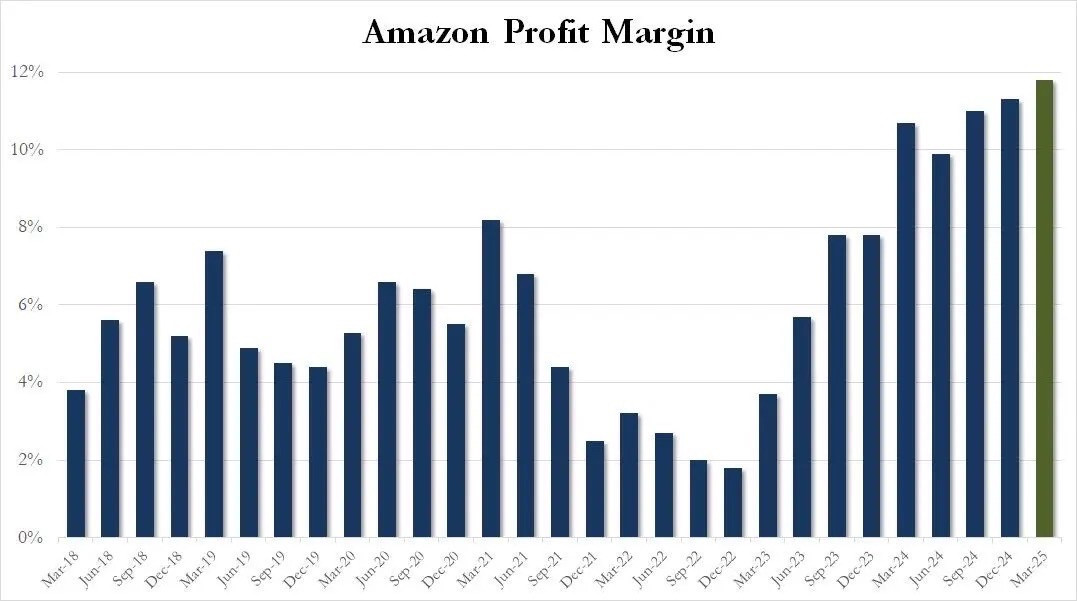
Operating income rose 20.2% year-over-year to $18.41 billion, also beating expectations. This pushed Amazon’s operating margin to 11.8% — the highest in company history. The margin improvement shows Amazon’s continued focus on cost efficiency and operating discipline.
AWS Revenue Declines Quarter-on-Quarter, But Margins Stay Strong
Amazon Web Services (AWS), the company’s cloud infrastructure business, posted revenue growth of 16.9% year-over-year — slightly below estimates and, more notably, down from the previous quarter. This marked the first sequential decline in AWS revenue in two years.
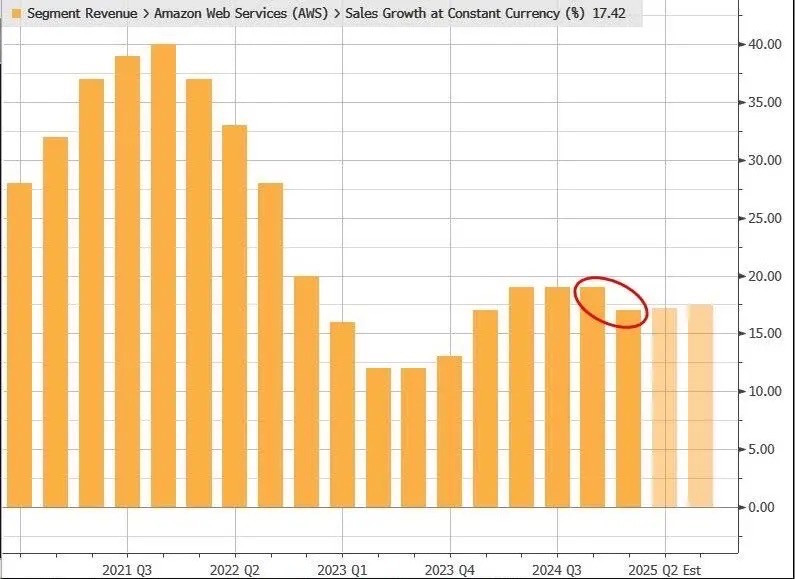
However, AWS operating margin climbed to 39.45%, beating expectations and signaling that even as top-line growth slows, the business remains highly profitable. It continues to be Amazon’s most important cash engine, contributing significantly to overall earnings.
Q2 Guidance Disappoints, Tariffs Flagged as a New Risk
Amazon guided Q2 net sales between $159 billion and $164 billion — roughly in line with Wall Street forecasts. But operating income guidance of $13 billion to $17.5 billion fell short of analyst expectations ($17.8 billion at the midpoint), with the lower end of the range raising eyebrows.
What stood out most was a new and notable disclaimer: Amazon stated the Q2 outlook “does not assume the impact of any new tariffs that may be implemented after May 1,” and explicitly mentioned “tariffs and trade policies” as potential headwinds. This is the first time such a warning appeared in the company’s forward-looking statements.
Analysis: Why the Sudden Shift in Tone?
The numbers themselves — especially profits — still look solid. But Amazon’s cautious Q2 outlook and the mention of trade risks suggest a shift in tone, especially from a company that rarely issues broad macro warnings.
Digging deeper, the concern seems to be around the Trump administration’s escalating tariff agenda. Amazon’s retail business heavily depends on Chinese-made goods. If tariffs rise, the cost of goods sold could increase, squeezing margins and potentially weakening Amazon’s core value proposition: competitive pricing.
At the same time, AWS’s decelerating growth hints at a broader trend — global enterprise demand for cloud services is normalizing after years of rapid expansion. Clients are becoming more cost-conscious, and growth may become harder to come by.
Amazon has done an impressive job tightening costs and improving efficiency. That’s how it has managed to maintain record margins even as revenue growth slows. But if Q2 brings a combination of tariff-related cost pressures, sluggish top-line growth, and continued AWS deceleration, investors may begin to reassess Amazon’s valuation multiple.
Latest Development: China May Consider Talks on U.S. Tariffs
In a new twist, several media outlets reported today that China is “considering” restarting trade talks with the U.S., particularly around tariffs. While no formal discussions have been confirmed yet, and the situation remains fluid, markets are paying close attention.
For Amazon, any easing of tariff tensions could help stabilize its retail cost structure, especially for goods sourced from China. If talks progress, this might offset some of the pessimism embedded in Amazon’s Q2 guidance.
Still, it’s important to note that the potential for talks is just that — a possibility. As of now, there’s no concrete policy shift. So while markets might react positively in the short term, it’s too early to factor in a meaningful change to Amazon’s fundamentals.
Via
Amazon’s Q1 report shows the company still runs a lean and profitable business. But its weaker Q2 profit guidance, coupled with AWS softness and a new tariff warning, signals that external risks are starting to creep into the picture.
Final Thoughts
If trade tensions ease, Amazon could regain some short-term momentum. But in the near term, investors may need to brace for volatility — and a reevaluation of just how bulletproof Amazon’s growth story really is.