
Retail Investors Lead the Charge in April's Market Bounce, But Will It Last?

In April, U.S. stocks saw a significant rebound, with $SPX recovering half of its losses for the year. But who exactly was behind this powerful market resurgence? The answer might surprise you: retail investors and mutual funds, not hedge funds or CTA (Commodity Trading Advisor) funds. While individual investors and long-term fund managers eagerly capitalized on the market’s pullback, hedge funds and trend-following strategies took a cautious approach, still waiting for lower volatility before making bold moves. Let’s dive into the key players and the strategies that are shaping the current market.
Did Retail Investors Really Set Record-Breaking Purchases in April?
Retail investors were the major force driving the market’s rebound in April. According to data from JPMorgan, retail investors poured a record $40 billion into the market during the month, making it the largest single-month inflow ever recorded. This is a clear sign that retail traders, particularly those with a long-term view, are taking advantage of market dips to add to their portfolios.
While retail investors made their moves, mutual funds also saw notable inflows. These funds, typically slower to react to market fluctuations, increased their positions in April, capitalizing on the opportunity to buy the dip. Barclays strategist Emmanuel Cau noted that mutual funds were particularly drawn to the "Trump put option" effect—meaning the expectation that government intervention may follow any major stock market drops caused by political policies, especially those driven by the Trump administration.
Interestingly, this "Trump put option" appears to have worked to some extent, as the uncertainty around U.S. policy has decreased, and volatility has been somewhat contained. However, despite the drop in uncertainty, the VIX (Volatility Index) and VSTOXX remain above 20, indicating that significant market pressure remains. So while the outlook has improved, caution is still warranted.
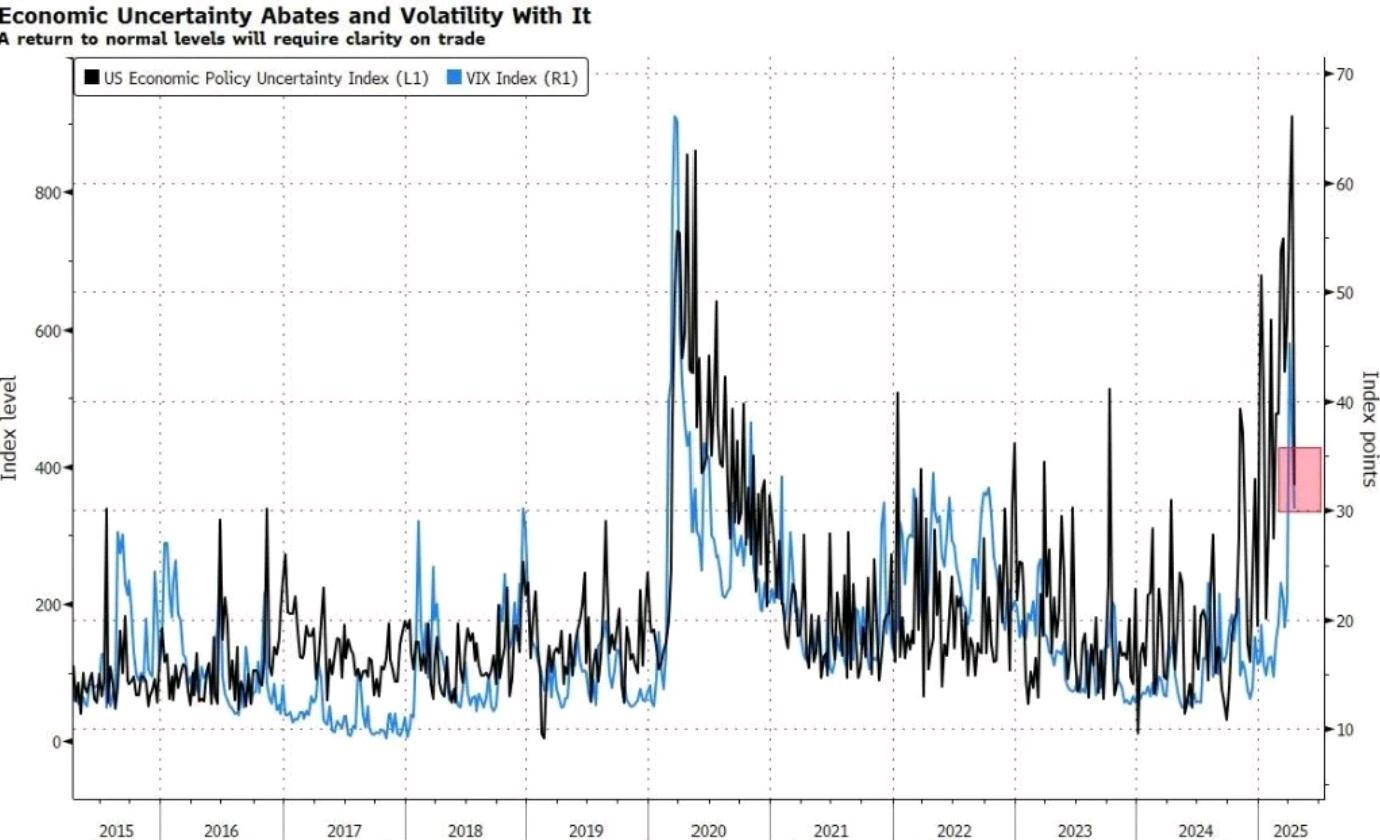
Hedge Funds and CTA Funds Stay on the Sidelines
Unlike the active retail and mutual fund investors, hedge funds and CTA funds remained cautious in April. Even as the market bounced back in the latter half of the month, these institutional investors kept their exposure to risk assets low. Barclays' Cau highlighted that systemic funds, like hedge funds, are unlikely to significantly increase their stock positions unless volatility drops further. "Market sentiment remains bearish," Cau noted, "and until volatility continues to decrease, systemic funds are unlikely to ramp up their stock buying."
UBS's derivatives strategist, Nicolas Le Roux, was slightly more optimistic, however. He pointed out that while the overall market sentiment is still very bearish, the strong price rebound has shifted the technical outlook in a more favorable direction. Le Roux believes that this improving technical picture could prompt CTA funds to begin re-entering the stock market in May, with estimates suggesting potential buying of $20-$25 billion over the next two weeks.
The Role of Options in the Current Market
As the market rebounds, many investors are turning to options as a tool to capitalize on the potential for further gains. This shift highlights how some are hedging their bets and positioning for continued upside in the market, especially in major tech stocks.
Bank of America’s derivatives team, led by Lars Naeckter, recently noted that large-cap tech stocks have seen significant price rallies, which could signal the return of U.S. tech dominance. To capture this opportunity, the team recommends buying short-term, low-cost call options on the Nasdaq 100 ETF (QQQ). They also see upside potential in European stocks, particularly the Euro Stoxx 50 and bank stocks, which are seen as having room to move up from their year-to-date highs.
Despite the market’s positive technical improvements, the broader macroeconomic environment remains uncertain. Tariff negotiations continue to loom over the market, and the overall market sentiment remains clouded by the unpredictability of U.S. policy. High policy uncertainty and the potential effects of tariffs are creating a challenging backdrop for investors, especially those with a more cautious outlook.
The Outlook: Are We Ready for a Sustained Rally?
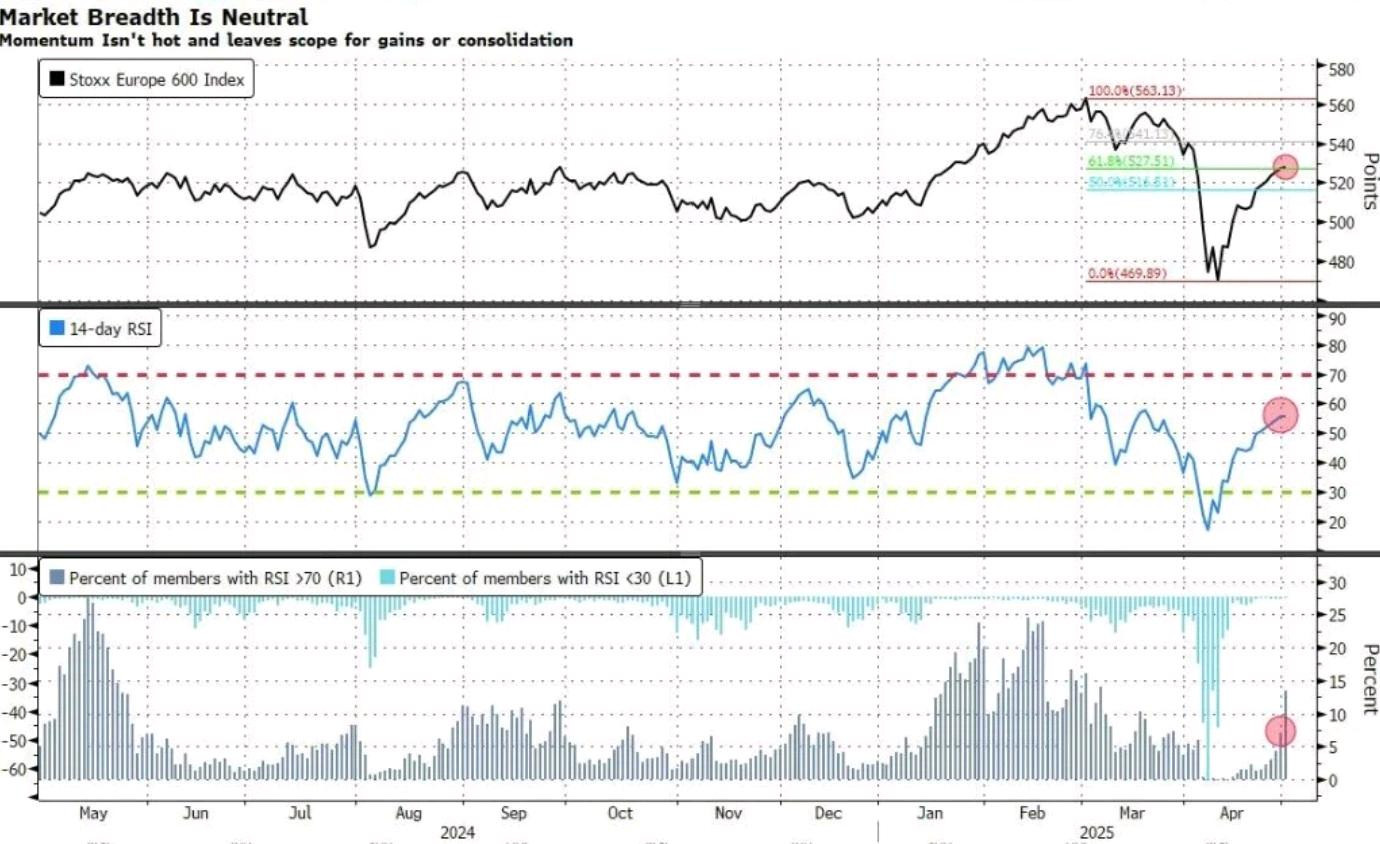
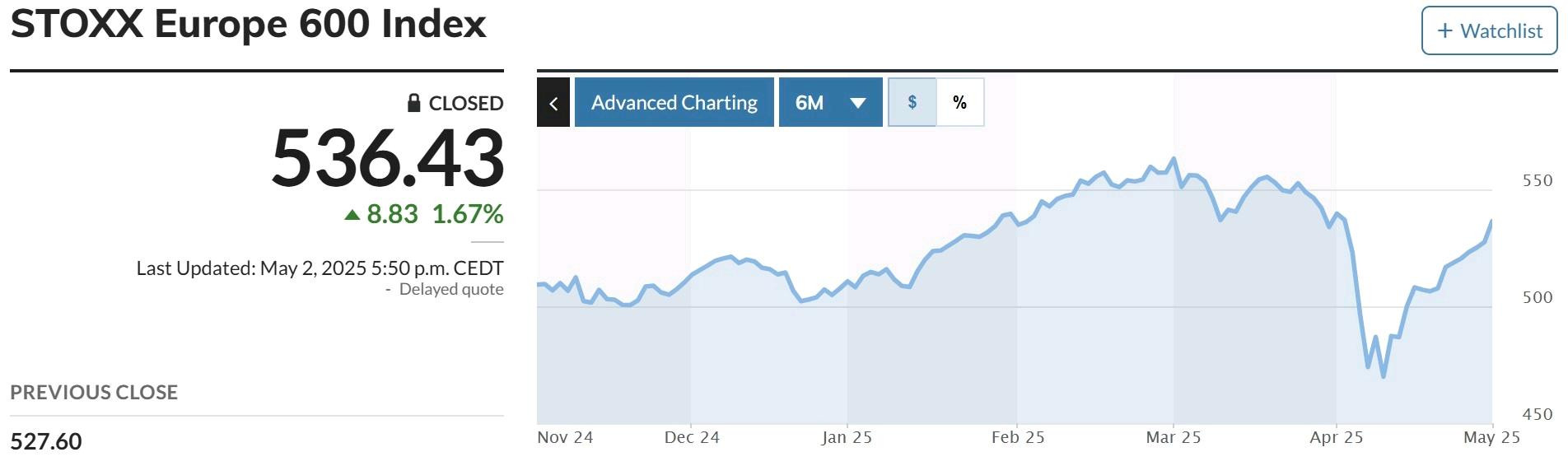
With the current mix of optimism and caution, the outlook for the market remains complex. On the positive side, the market breadth has recovered from extreme oversold levels to a more neutral position in just two weeks, and technical indicators are improving. Major indices have seen powerful rebounds, with $SPX recovering half of its losses and the Euro Stoxx 600 regaining more than 60% of its losses since March.
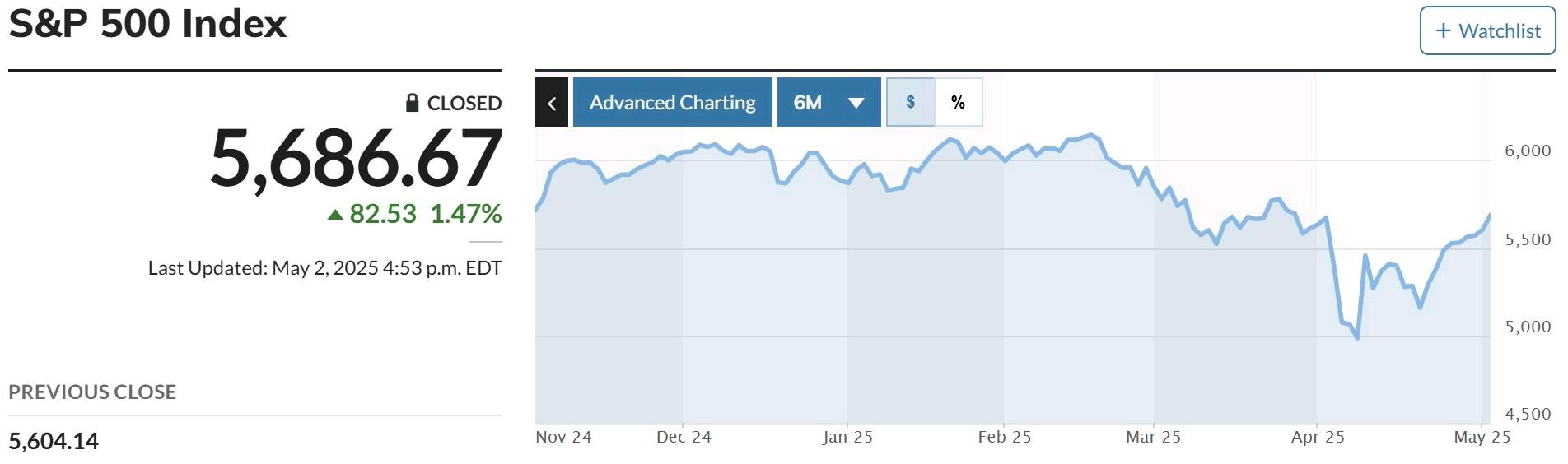
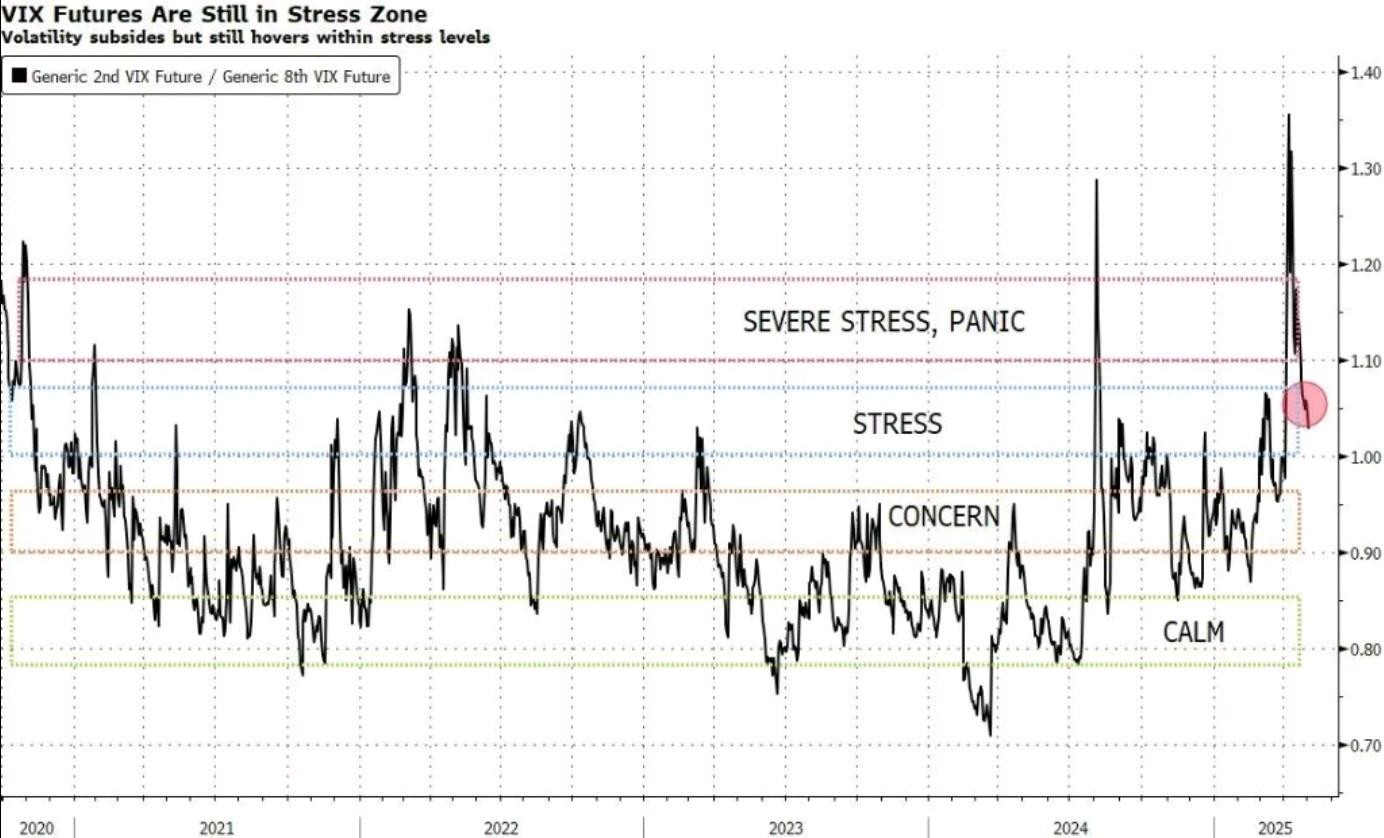
However, caution remains. The VIX and VSTOXX indices, while off their highs, are still above the crucial 20-level, signaling that market stress is far from gone. The futures curve for the VIX also shows that while the market may have moved past its "panic" phase, it’s still in a "pressure zone."
Looking ahead, the key to whether this rally will sustain lies in macroeconomic developments, particularly in relation to tariffs and government policy. If policy uncertainty eases and volatility continues to fall, we could see more investors, including hedge funds and CTA funds, jump back into the market.
Goldman Sachs strategist Christian Mueller-Glissmann emphasized that short-term macro momentum is crucial for the direction of risk assets. While high policy uncertainty and tariffs point to downside risks in the short term, he believes that with low positioning and pervasive pessimism, there could still be room for the market to continue its recovery, provided the macro momentum doesn’t deteriorate.
Conclusion: Retail Investors Drive the Action, but Caution Still Reigns
April’s market rally was largely driven by retail investors and mutual funds, with hedge funds and CTA funds staying on the sidelines due to ongoing volatility concerns. While the technical outlook has improved, significant macroeconomic risks remain, particularly with trade tensions and U.S. policy uncertainty. As we look ahead, the next major factors to watch will be tariff negotiations, CPI data, and the continued evolution of market volatility. Investors should stay alert to these dynamics as they could determine whether the current rebound has legs or if it’s just a temporary correction.
This content is provided for informational or educational purposes only and does not constitute investment advice.