
Did Trump Just Score a Win? Ukraine Might Be the Real Winner
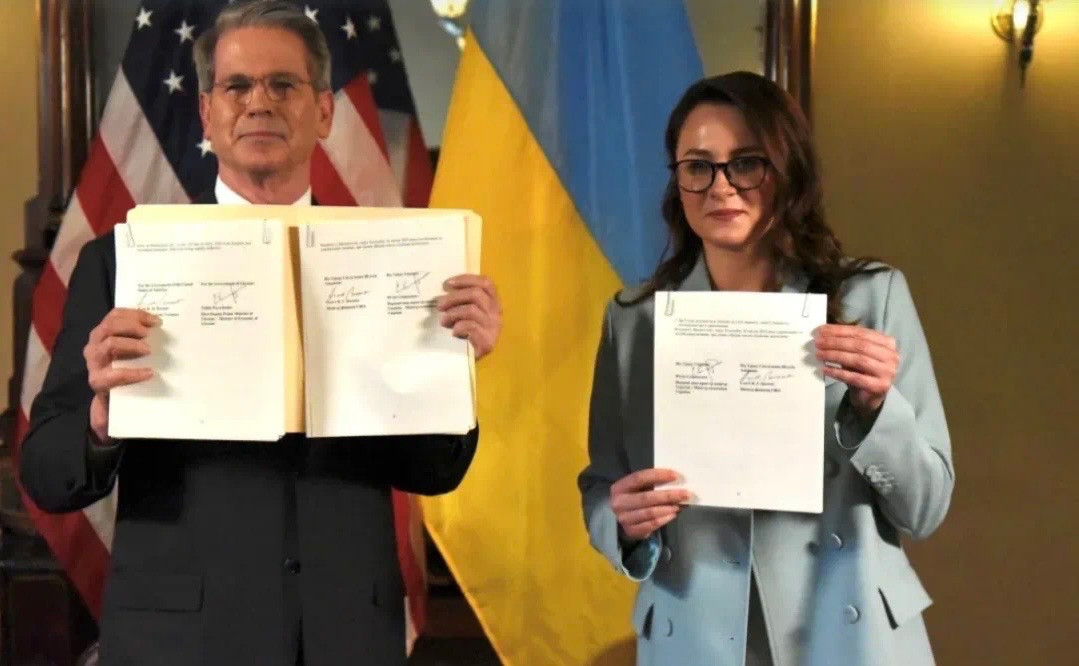
In early May, Trump finally announced some “good news”: a U.S.-Ukraine mineral agreement had been signed. He claimed this was a crucial step in freeing America from its dependence on Chinese rare earths—and a major achievement of his term.
But a closer look at the deal and its background reveals something different: this “victory” is more of a political performance, and the real beneficiary might not be the U.S., but Ukraine.
Why Are Rare Earths So Important?
Despite the name, “rare earths” aren’t exactly rare. The issue lies in their scattered distribution and the difficulty of extraction and processing. Still, they are essential to modern industry, used in everything from smartphones and wind turbines to missiles, fighter jets, and even chip manufacturing. In high-performance military equipment, they’re practically irreplaceable.
The U.S. isn’t short on rare earth resources. Take Mountain Pass in California—it’s the world’s second-largest rare earth mine after Bayan Obo in China. But here’s the catch: what the U.S. lacks is the capability to refine and separate rare earths. Over 90% of global rare earth processing happens in China. So even if the U.S. extracts the minerals, without China’s facilities, they’re just high-grade sand.
Why Can’t the U.S. Build Its Own Rare Earth Supply Chain?
Rare earth refining isn’t just about tech—it’s about having a complete industrial ecosystem. China’s rare earth sector is an extension of its broader industrial base. During processes like steelmaking and aluminum production, by-products like gallium, indium, and rare earths are also extracted, which keeps costs down. For the U.S. to independently build such a chain would take over a decade and cost a fortune. It would also need to rebuild supply chains, infrastructure, and talent pipelines—making it economically uncompetitive with China.
It’s like this: China makes tofu and gets bean dregs as a bonus. The U.S. would have to grow soybeans, build a mill, and in the end, no one even wants the tofu—and the bean dregs are just a loss.
So What’s Actually in the U.S.-Ukraine Deal?
Back to the agreement. Zelensky agreed to sign a “rare earth cooperation deal” with the U.S., which on the surface appears to grant America access to Ukrainian resources and help build an independent supply chain. But the fine print tells a different story: all mineral resources remain under Ukrainian ownership; mining sites are to be designated by the Ukrainian government; key energy companies will remain state-owned. Even the much-publicized $350 billion aid “debt” Trump wanted Ukraine to repay? Not mentioned.
What does this mean? Trump failed to strong-arm Ukraine into a “resources-for-debt” deal. Instead, he walked away with virtually nothing of substance. The agreement was essentially a photo-op gift from Zelensky—giving Trump something to boast about while offering no tangible benefit to the U.S.
Why Is Trump So Desperate for a “Win”?
It’s been over 100 days since Trump took office, and he still lacks concrete accomplishments. No ceasefire in the Russia-Ukraine war, cooling relations with Europe, Australia, and Canada due to trade disputes, and no real continuation of Biden’s decoupling strategy with China—because China simply ignored him. The only thing left to trumpet is this “mineral deal” with Ukraine.
So he exaggerated it into a milestone achievement to “solve the rare earth bottleneck,” trying to reassure both supporters and markets. But as we’ve discussed, even if Ukraine has rare earths, no one’s mining them on a war-torn front line. And if they are mined, they still need to be processed in China. America’s real problem isn’t “having the minerals,” but “having the ability to turn them into products.”
What Does Japan’s “Pushback” Reveal?
Beyond Ukraine, another key development: Japan is now openly resisting the U.S. Faced with Trump’s demand to cut a $63 billion trade surplus and boost imports of American energy and food, Japan not only struggled to comply—but was told it would face an extra 10% tariff even if it did.
Japan pushed back. Finance Minister Shunichi Kato hinted that Japan’s over $1 trillion in U.S. Treasury holdings could become a bargaining chip. If the U.S. keeps pressuring Japan, a sell-off isn’t off the table. And Japan is one of America’s biggest creditors. If it actually dumps Treasuries, markets would panic, and the Fed’s interest rate strategy could be thrown into chaos.
When even Japan—America’s most loyal ally—is fighting back, it’s clear Trump’s “extortion-style diplomacy” is losing its edge.
Conclusion: Did Trump Really Win?
This so-called “mineral victory” is more like a desperate self-consolation. Zelensky staged a show to give Trump something to brag about—but the deal offers no real substance. The U.S. still can’t bypass China’s refining power, other countries are growing more wary of Trump’s tactics, and even Japan is ready to flip the table.
Trump himself is caught in a vicious cycle: the fewer achievements he has, the more he needs to manufacture “wins.” The more he tries to win, the more impatient he becomes. That impatience breeds mistakes, making true victories even harder to come by.