
Is the Swiss Franc Still a Safe Haven?

In the hierarchy of global safe-haven assets, the Swiss franc doesn’t always top the list—but it rarely gets ignored. Whenever market stress starts to rise, the franc tends to quietly re-emerge on traders’ radar. While U.S. Treasuries and gold often steal the spotlight, the Swiss franc has long played the role of a low-profile yet trusted refuge. But what exactly makes it a “safe haven”—and does it still deserve that title today?
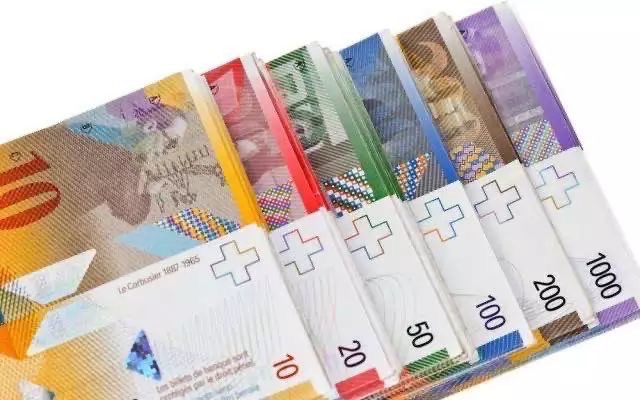
Why Has the Swiss Franc Been Considered a Safe-Haven Currency?
The franc’s reputation as a haven rests on three key pillars: Swiss neutrality, economic stability, and a unique financial system.

First, Switzerland’s neutrality. Since the Congress of Vienna in 1815, the country has maintained a stance of political non-alignment. In times of geopolitical turmoil, capital tends to flow toward politically insulated countries like Switzerland—places unlikely to be drawn into conflict.
Second, the strength of its economy. Switzerland is known for low deficits, low inflation, and a long-standing commitment to conservative monetary policy. Its central bank, the Swiss National Bank (SNB), operates independently and places a strong emphasis on price stability. Unlike the aggressive monetary easing seen elsewhere, the SNB has historically taken a more restrained approach.
Third, the structure of its financial system. For decades, Swiss banking secrecy laws attracted vast offshore wealth. Though these rules have softened in recent years, Switzerland still houses large amounts of high-net-worth capital. The franc also used to be backed by gold—up to 40% of its reserves were in gold until that requirement was lifted in 1999. These factors have shaped a long-standing perception of the franc as a “hard currency.”
How Has the Franc’s Safe-Haven Status Played Out in the Past?
The franc’s haven role isn’t just theoretical—it’s been stress-tested again and again through global crises.

When the U.S. abandoned the gold standard in 1971 and inflation surged, the Swiss franc stood out with its lower inflation and strong gold backing. From 1978 to 1985, the U.S. dollar fell more than 50% against the franc.
During the Chernobyl disaster (1986), after 9/11 (2001), during the Eurozone debt crisis (from 2010 onward), and in the early days of the Russia-Ukraine war (2022), the franc was a go-to currency for fleeing capital. In fact, the franc often appreciated so sharply in these periods that the SNB had to intervene to curb its rise.
Perhaps the most dramatic moment came in 2015, when the SNB unexpectedly scrapped its cap of 1.20 on the euro-franc exchange rate. The franc surged nearly 30% in a single day. While the shock rattled global markets, it also reaffirmed the belief that the franc holds value when things fall apart.
But Does the Swiss Franc Still Deserve Its Haven Status?
That said, the franc’s image as a bulletproof haven isn’t what it used to be.
Over the past decade, Swiss monetary policy has been ultra-loose, with interest rates dipping into negative territory for years. That turned the franc into something of a funding currency for carry trades—hardly a role befitting a defensive asset.
Moreover, Switzerland’s economy is heavily dependent on the Eurozone, with over 50% of its exports going to euro-area countries. This tight coupling makes the franc behave more like a satellite of the euro than a truly independent safe haven.
Another complication: the SNB actively intervenes in the forex market, often quite aggressively. It’s been flagged multiple times by the U.S. Treasury as a currency manipulator watchlist candidate. Since 2022, with the Fed hiking rates rapidly, the franc has lost some of its interest-rate edge, making its performance less predictable during periods of risk-off sentiment.
Then there’s the erosion of Switzerland’s banking secrecy, under pressure from international regulators. As those traditional strengths fade, global capital isn’t as drawn to the franc as it once was. Instead, it increasingly flows toward dollar assets, short-term Treasuries, and even gold ETFs when the going gets rough.
Still a Safe-Haven—But Not the First Pick
To sum up: the Swiss franc still carries the DNA of a haven currency—neutral, stable, and backed by a disciplined central bank. But it’s no longer the go-to lifeboat it once was.
Today, it functions more as a tactical hedge within the European currency complex. It’s a useful tool for gauging Eurozone risk or hedging against euro volatility. Think of it as a “premium euro” rather than a global safe-haven equivalent to the dollar or gold.
If interest rates normalize, the Eurozone stumbles again, or geopolitical fragmentation deepens, the franc could stage a comeback. But as a private investor, I see it more as a situational asset—something to use strategically, not something to bet the house on.