
Amazon Just Got Dragged Into a Political Storm — and It’s Not Just About Tariffs Anymore

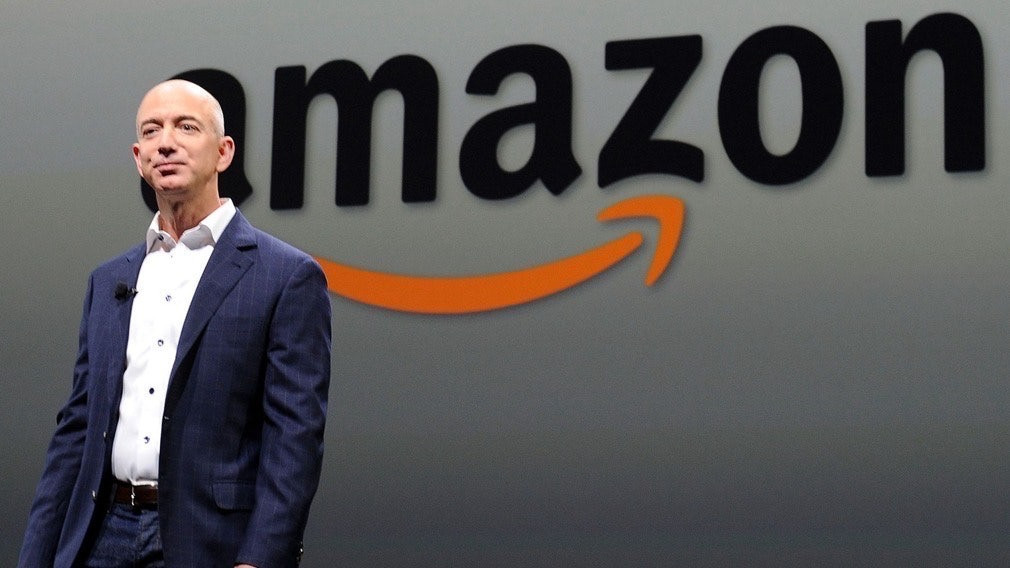
Jeff Bezos, the world’s 7th richest man, just got publicly called out by the White House — accused of being “friendly with China.” Why? Because Amazon $AMZN , the largest e-commerce platform in the U.S., is now caught in the middle of a tariff war it didn’t see coming.
145% Tariff, No Warning
Trump’s administration recently slapped massive new tariffs on Chinese imports — some as high as 145%. But you should know, around 70% of the goods on Amazon come from China.
And here’s the wild part: the policy landed without any warning. No transition period, no heads-up to Amazon. The White House’s stance is like “You’re a trillion-dollar platform. Figure it out.”
But in reality, switching supply chains isn’t flipping a switch. Product listings, logistics, seller contracts — these things are deeply integrated. Within weeks, Amazon began showing signs of stress: stockouts and price hikes.
Sellers had no choice but to keep sourcing from China and pass the extra cost to consumers. Prices spiked across categories, but buyers had nowhere else to go. Even sellers who wanted to keep prices steady simply ran out of inventory.
Amazon Tried to Deflect — But Stepped on a Landmine
Faced with rising backlash, Amazon reportedly considered a move: What if we showed the tariff amount on product pages? That way, buyers would see the real reason behind higher prices.
The idea leaked to the media before it was even finalized. Headlines exploded:
“Amazon may list tariffs alongside product prices.”
That single sentence lit a fuse in D.C.
The White House Response: This Is “Political Hostility”
Within hours, a White House spokesperson held up Bezos’ photo and accused him of having past “cooperative ties” with China — painting the tariff transparency idea as a political act of defiance, possibly even “pro-China.”
Just like that, Bezos wasn’t just a business leader — he was thrust into the center of a geopolitical controversy.
This isn’t the first time Trump has gone after him. Back in 2020, he accused Bezos-owned The Washington Post of spreading “fake news.” Now, with a second term underway, the attacks are back — this time through Amazon’s ties to China.
Amazon Tries to Do Damage Control — But Investors Are Spooked
Amazon immediately released a statement:
“We never approved displaying tariff amounts. We’re not doing it. We won’t be doing it.”
But the damage was done. The market had already reacted.
And here’s the detail I find most telling: the Trump team didn’t just criticize Amazon — they directly named Bezos and highlighted Amazon’s deep supply-chain reliance on China. It’s tempting to call this political retaliation.
The Real Problem: Amazon’s China Dependency
According to Amazon’s 2024 financial disclosures, over 70% of its third-party marketplace products are tied to Chinese manufacturing. That’s no surprise — China still leads in speed, cost-efficiency, and product quality.
But that’s exactly where Amazon is now vulnerable. Tariffs are pushing prices up 15% to 30%. Theoretically, that cost could be passed to consumers. In practice? Not so easy:
• SHEIN, Temu, and Walmart are undercutting Amazon on price
• Sellers are bleeding margins or shutting down altogether
• Amazon itself is offering discounts to keep traffic from dropping
That leaves Amazon stuck: raise prices and risk losing users, or hold prices and eat into profits.
Investment View: Short-Term Pain, Long-Term Value?
From an investor’s lens, I don’t see Amazon as a broken company — just one under pressure.
Its core strengths remain:
• The strongest logistics network in North America
• A sticky Prime membership ecosystem
• And most important, AWS — Amazon Web Services, the profit engine.
That said, this tariff shock will likely drag down margins in its retail segment for several quarters. The “scale wins” playbook doesn’t work when 70% of your goods just got way more expensive.
If we see user churn or weakening revenue growth in upcoming quarters, the stock may face more downside.
My Personal View
• A 20–25% stock pullback from recent highs seems fair, maybe even an entry opportunity — if AWS performance holds steady
• The real test isn’t Trump’s rhetoric. It’s whether Amazon can build a second supply chain — one less dependent on China
AWS Is the Moat — And the Valuation Anchor
Amazon’s stock has increasingly been priced like two businesses:
• AWS, which deserves a Microsoft-style valuation
• E-commerce, which is far more exposed to trade wars, inflation, and consumer sentiment
Unless there’s a global crackdown on cloud data sovereignty — which is still a fringe idea — AWS remains relatively insulated.
Amazon may not be the biggest casualty of this trade war, but it’s certainly the most visible.
Its massive scale makes it slow to pivot, and its valuation demands top performance. That’s why markets are watching it so closely.