
Private and Listed Infrastructure: Building a Complete Portfolio – Reports Decoded

Kevin Insights
May 9, 2025
GoGPT Summarizes Articles
In the evolving landscape of investment strategies, the infrastructure asset class has been steadily gaining prominence. A recent report titled "Private and Listed Infrastructure: The Case for a Complete Portfolio" by Cohen & Steers provides compelling insights into why both listed and private infrastructure should be key components of a diversified investment strategy. This analysis dispels common misconceptions and underscores the strategic benefits of integrating these two asset types.
The Economic Landscape and Infrastructure Demand
The current global economic environment—marked by elevated interest rates, persistent inflation, and subdued growth—has created favorable conditions for infrastructure investments. The report estimates that approximately $94 trillion in infrastructure investment will be required by 2040 to meet global demands. Key drivers include the digital transformation of economies, the modernization of aging infrastructure, increased energy needs driven by artificial intelligence, and the impacts of deglobalization.
These long-term trends are attracting growing interest from institutional investors. According to Mercer’s Large Asset Owner Barometer, infrastructure is the asset class most likely to see increased allocations.
Historical Performance and Misconceptions
A notable insight from the report challenges the assumption that private infrastructure consistently outperforms listed infrastructure. From 2004 to 2021, the annualized return for listed infrastructure was 9.3%, compared to 9.4% for private infrastructure—demonstrating near parity in long-term performance.
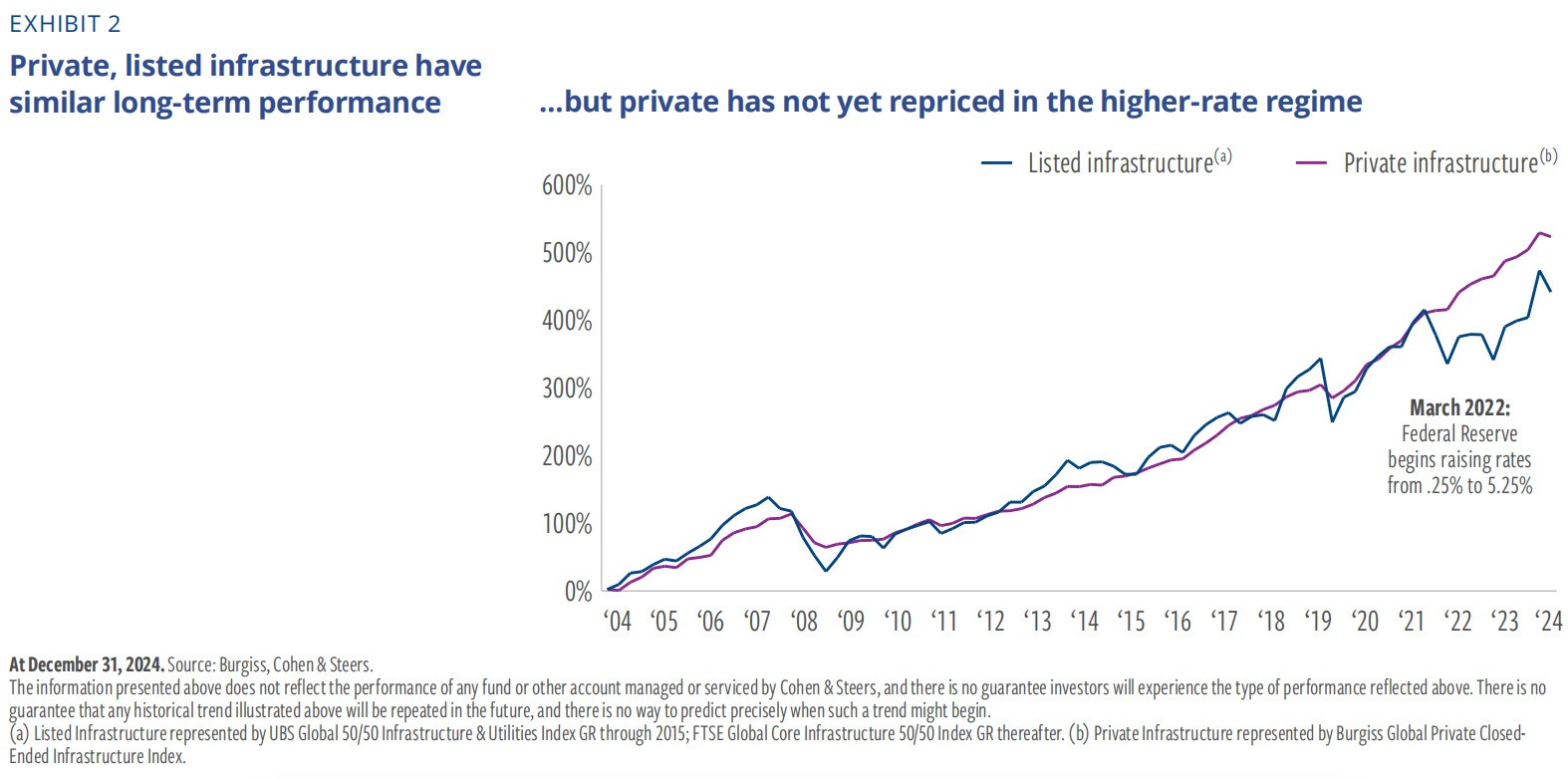
The recent divergence in returns since 2022—with private infrastructure delivering cumulative returns of 30.3% versus 9.2% for listed—is explained not by structural differences, but by valuation timing. Listed markets quickly priced in higher interest rates, while private market valuations adjusted more slowly due to appraisal-based methodologies. Similar patterns were observed following the 2008 financial crisis, and history suggests the valuation gap is likely to close over time.
Listed infrastructure is currently trading at a 10% discount to global equities, compared to a historical average premium of 9%—presenting a potential buying opportunity.
Volatility and Valuation Analysis
The perception that private infrastructure carries lower volatility is largely attributed to appraisal-based valuation lags. Once these are adjusted, statistical analyses reveal that the underlying volatility of private infrastructure is similar to that of listed infrastructure over longer periods.
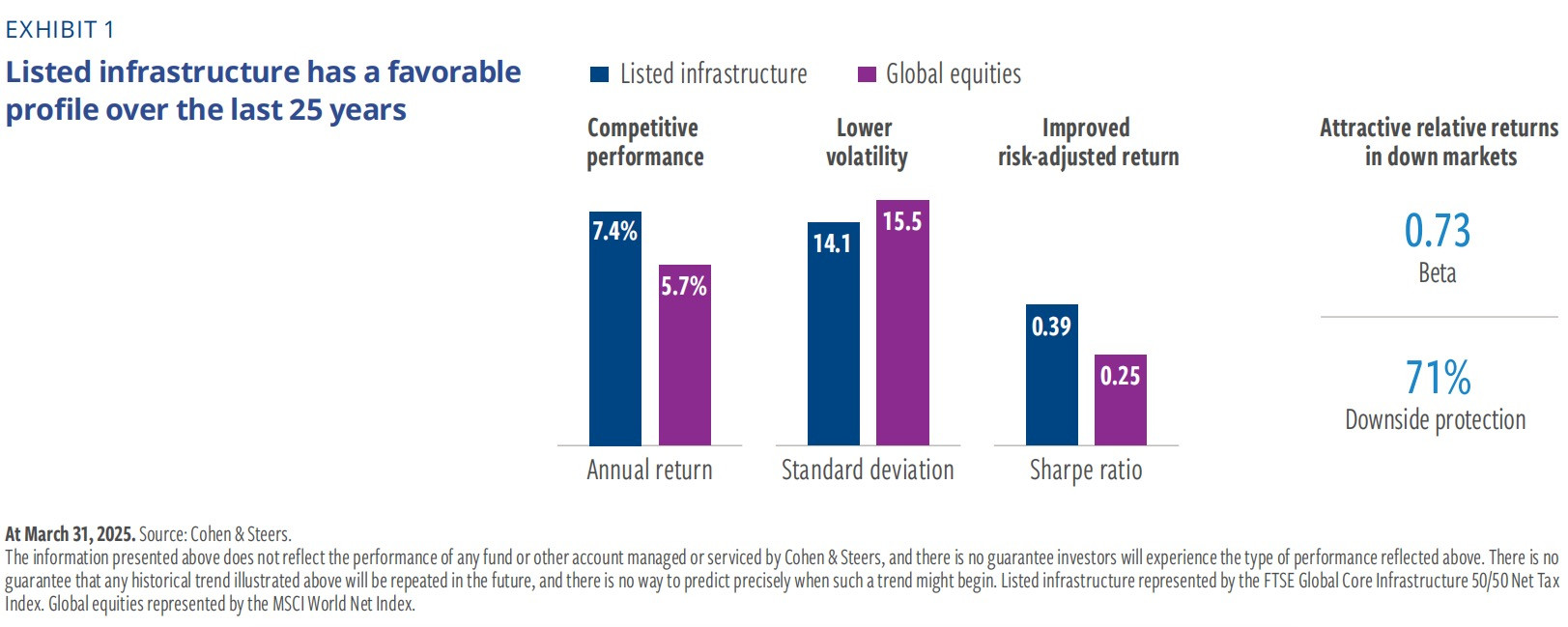
Listed infrastructure also offers relatively attractive risk-adjusted returns. Historically, it has exhibited lower volatility than global equities (14.1% vs. 15.5% standard deviation) and has demonstrated defensive characteristics, with a downside capture ratio of just 71% during market downturns.
Sector and Geographic Diversification
Both private and listed infrastructure provide broad exposure, yet with differing concentrations:
-
Geographically, private infrastructure is skewed toward Europe (57%), while listed infrastructure is weighted more heavily toward North America (60%).
-
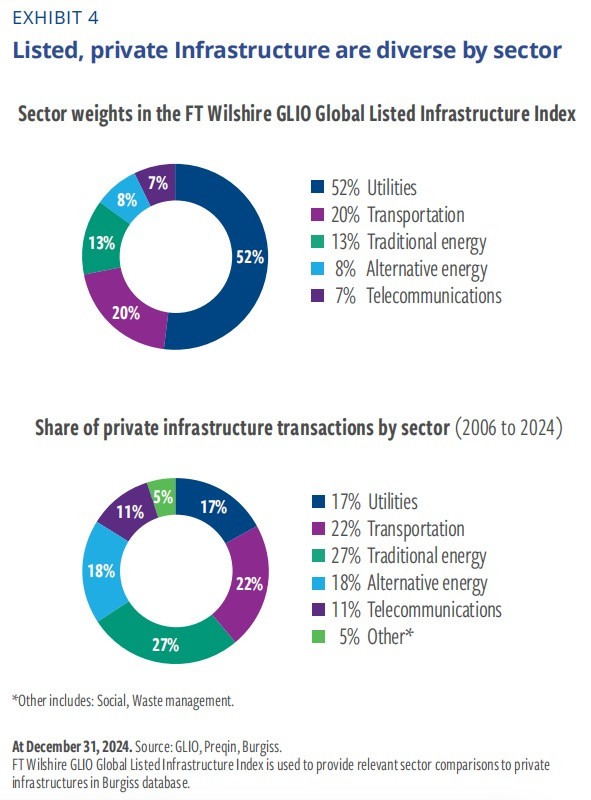
Sector-wise, private infrastructure is dominated by energy (49% of deals), while listed infrastructure features greater exposure to utilities (52%), along with transportation and other sectors.
This divergence highlights the complementary nature of the two formats, reinforcing the case for combined exposure.
Dry Powder and Capital Deployment
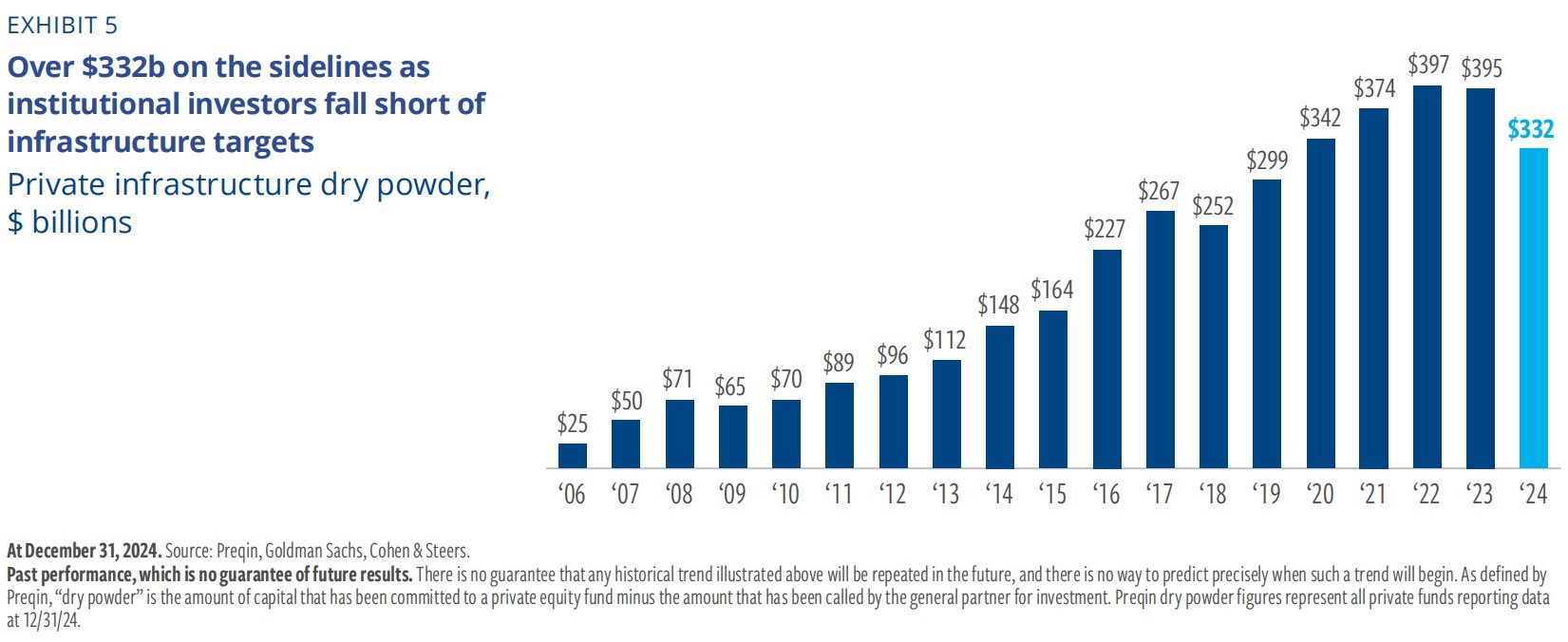
Private infrastructure funds are facing challenges deploying capital, with approximately $332 billion in dry powder—committed capital that remains uninvested. This dynamic underscores the opportunity for listed infrastructure to serve as a viable alternative, offering immediate liquidity and access.
Moreover, listed companies have increasingly engaged in "asset recycling," selling assets to private investors at significant premiums—an average of 31%—which, in turn, provides valuation support for the listed segment.
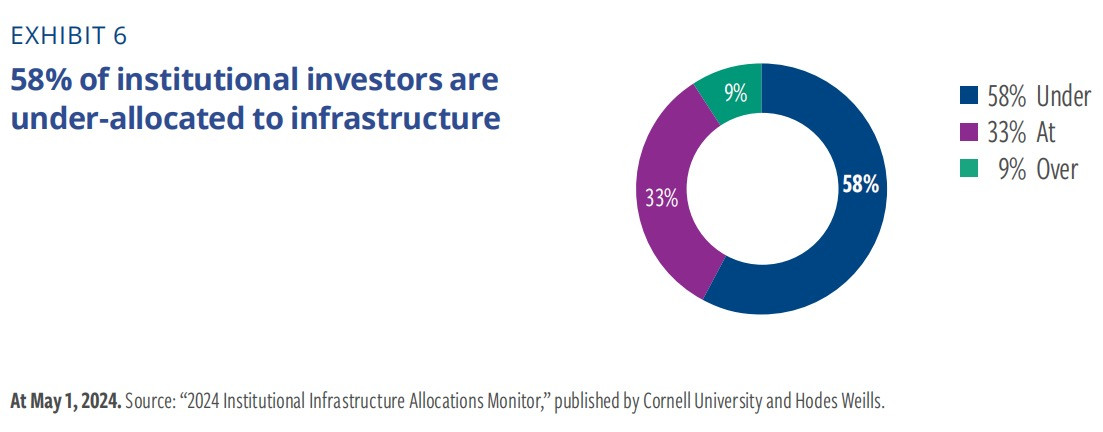
58% of institutional investors are currently under-allocated to infrastructure. Listed infrastructure offers a solution, given its:
-
Favorable valuation entry point
-
High liquidity and broader diversification
-
Comparable long-term returns with potentially lower fee structures
Conclusion
The rationale for a blended infrastructure portfolio—incorporating both listed and private investments—is compelling. The macroeconomic backdrop, growing infrastructure demand, and historical performance data all reinforce the strategic merit of diversification within the asset class.
Rather than viewing listed and private infrastructure as mutually exclusive, investors are increasingly recognizing their complementary roles. As the report succinctly concludes: “Listed infrastructure is the yin to private’s yang.”
#Private Market: Unlocking Potential#privatemarket