
U.S. and U.K. Reach Trade Deal — But 10% Tariffs Are Here to Stay

Shearing sheep
May 9, 2025
GoGPT Summarizes Articles
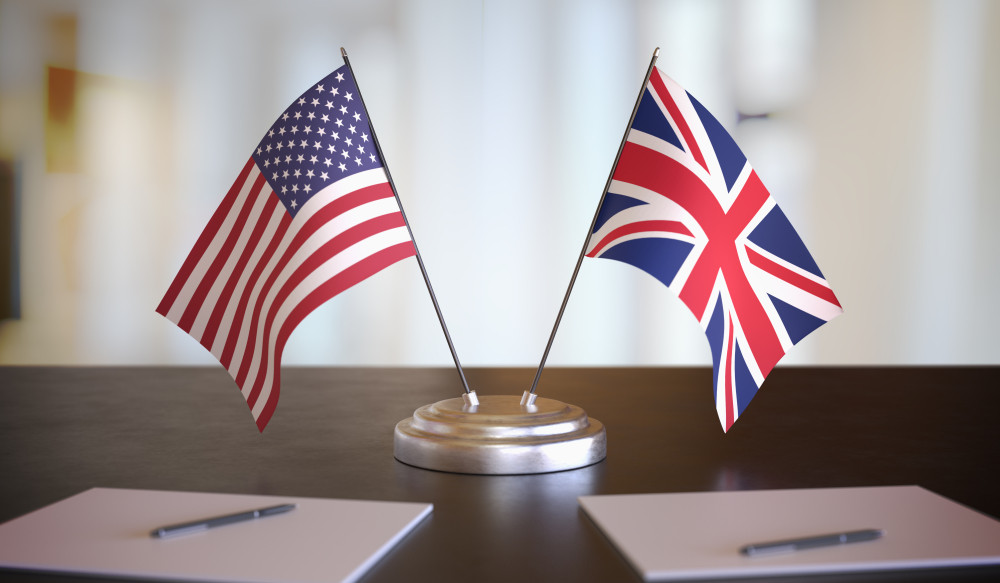
On May 8, 2025, the United States and the United Kingdom announced a new trade agreement aimed at strengthening bilateral economic ties. While the deal was presented as a significant step forward, it maintains a 10% universal U.S. tariff on U.K. goods, a notable increase from the sub-2% average in 2023 .
Analysts caution that this agreement signals a shift in U.S. trade policy under President Donald Trump, establishing a 10% tariff as the new baseline—even for close allies. Additionally, the deal introduces a hybrid model for the automotive sector, combining tariff reductions with import quotas, which may serve as a template for future negotiations with other major exporters such as the European Union, Japan, and South Korea.
Key Terms of the Deal: Limited Relief, Managed Access
The agreement offers some concessions but largely reinforces the U.S.'s protectionist stance:
-
Automobiles: The previous 27.5% tariff on U.K. car exports is reduced to 10% for up to 100,000 vehicles annually. Exports beyond this quota will face the full 27.5% tariff. Given that U.K. exports to the U.S. totaled just over 102,000 vehicles last year, this quota effectively caps British automakers at current levels .
-
Steel and Aluminum: Tariffs on U.K. steel and aluminum, previously at 25%, are eliminated. However, this exemption is contingent upon strict volume caps and monitoring to prevent transshipment from third countries .
-
Agriculture and Digital Trade: The U.S. gains modest access to the U.K. market for certain agricultural products, including beef and ethanol. Both countries agreed to maintain their respective regulations on digital services, leaving more contentious issues unresolved .
Not a Free Trade Deal—A Managed Trade Framework
Rather than removing barriers, the agreement formalizes a new managed-trade model, where market access is contingent on political relationships and security alignment. This structure reflects the "America First" trade policy framework from Trump's first term and suggests that the goal is not tariff elimination but selective tariff use to extract concessions.
Sarah Bianchi, head of U.S. trade policy at Evercore ISI, commented: "This isn't a free trade deal. It's a signal. If a close partner like the U.K.—with a trade deficit and aligned security interests—can't get below 10%, then there's very little hope for bigger exporters like Germany or Japan to do better."
Peter Harrell, a former National Security Council official and senior fellow at the Carnegie Endowment, noted that the deal reflects Trump's preference for bilateralism over multilateralism. He stated that the Trump administration uses Section 232 not just for protection but as leverage, creating a two-tiered system where favored allies get managed access while others face blanket tariffs.
The auto tariff-plus-quota model is particularly significant. Analysts believe it could serve as a blueprint for future talks with the EU, Japan, and South Korea, where U.S. negotiators are expected to push for "voluntary export restraints" or quotas in exchange for tariff reductions.
Broader Implications: Shift Away from WTO Norms
Trade experts emphasize that this managed trade approach marks a sharp departure from World Trade Organization (WTO) principles, where rules—not power—govern trade access.
Jeff Stein, a trade reporter at The Washington Post, commented: "What we're seeing is the collapse of the old post-WTO consensus. This is about deals, not rules. It's about who you are and how much leverage the U.S. has over you."
Stein also highlighted that these bilateral arrangements tend to be more politically driven and less transparent, raising concerns about predictability and fairness in global trade.
Industry Reaction: Relief and Realism
Automakers such as Jaguar Land Rover (JLR), which had suspended U.S. shipments earlier this year amid tariff uncertainty, have resumed exports. JLR, which exports a quarter of its vehicles to the U.S. annually, praised the deal for protecting 250,000 jobs . However, executives remain cautious. A U.K.-based industry lobbyist noted that while "any deal is better than no deal," the agreement underscores how fragile and conditional market access has become under the new U.S. trade posture.
There's also a growing sense that tariffs are no longer just a temporary negotiating tactic but a permanent feature of U.S. trade strategy.
What Comes Next: Japan, South Korea, and the EU
With the U.K. deal finalized, attention now shifts to Washington's next targets. Japan, South Korea, and Germany—each of which exports hundreds of thousands of vehicles annually to the U.S.—are expected to face similar demands: accept quotas, localized production targets, or pay steep tariffs.
An Asia-based trade consultant stated: "The U.K. deal isn't the ceiling—it's the floor. If this is how America treats its closest ally, others should brace for harder terms."
The European Commission has already expressed concern that the U.S. is abandoning WTO mechanisms in favor of "discriminatory bilateral arrangements." Talks between Brussels and Washington are expected to resume this summer, but trust is low and outcomes remain uncertain.
Conclusion: A Trade Deal with Strings Attached
The U.K.-U.S. agreement may offer temporary certainty for British exporters, but it also confirms a deeper, structural shift in American trade policy: tariffs are back, and they're not going anywhere.
In a world increasingly defined by geopolitical rivalry and economic fragmentation, trade deals are no longer just about efficiency—they're about leverage, loyalty, and limits.
#Breaking Macro Events: Market Impact & Analysis