
Is Microsoft’s Billion-Dollar Bet on OpenAI Hitting a Breaking Point?

Key Tensions Emerge After Years of Harmony
The once-celebrated partnership between $MSFT and OpenAI is showing signs of strain, despite more than $13 billion in cumulative investments. In recent weeks, both sides have entered high-stakes negotiations to redefine their collaboration, a move driven by OpenAI’s restructuring into a public benefit corporation and Microsoft’s desire to safeguard access to cutting-edge AI models beyond existing contracts. The result is a complex renegotiation over equity stakes, revenue shares, and exclusive cloud-services rights that could dictate the future of both companies—and the broader AI landscape.
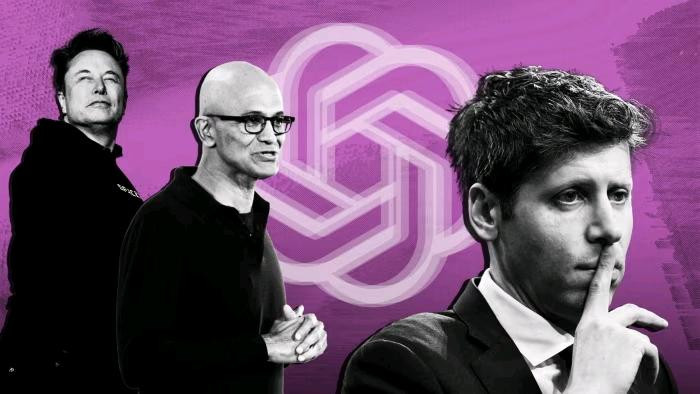
What’s Driving the Rift Between Satya and Sam?
When Satya Nadella and Sam Altman first joined forces in 2018, their rapport was effusive: daily text messages, rapid-fire synchronicity, and a shared vision of democratizing AI. $MSFT ’s initial $1 billion investment granted it exclusive cloud rights and a seat at the AI table; later infusions—$10 billion in early 2023 among them—cemented this bond. But that closeness masked underlying tensions. OpenAI’s appetite for compute power and scaling costs surged beyond $MSFT ’s willingness to underwrite unlimited growth, leading to requests for greater resources that Microsoft now describes as “beyond what we can offer” under the 2019 agreement.
Altman’s push to diversify funding—courting Middle Eastern sovereign wealth funds, teaming up with Nvidia and SoftBank, and even rolling out OpenAI services directly to corporate clients—has irked Microsoft, its exclusive cloud partner. Conversely, $MSFT ’s recruitment of Mustafa Suleyman and the stealth development of its own “MAI” model family signals a strategic pivot away from single-vendor dependence, raising questions about whether $MSFT sees OpenAI more as a competitor than an ally.

Microsoft’s Strategy to Diversify AI Sources
In response to perceived overreliance on OpenAI, $MSFT has quietly broadened its AI supplier ecosystem. The Copilot lineup, once powered exclusively by OpenAI’s GPT-4, is now testing models from Anthropic, xAI, Meta, and even Microsoft’s in-house MAI project. Internal benchmarks reportedly show MAI matching industry leaders, emboldening Microsoft to contemplate replacing OpenAI components in its flagship AI tools. Further, the company has loosened purchase commitments under its cloud agreement and is exploring an API release for MAI later this year—moves designed to reduce supply risk and regain leverage in partnership talks.
Can OpenAI Chart Its Own Free Course?
On the flip side, OpenAI’s shift from a non-profit research lab to a public benefit corporation (PBC) aims to balance social mission with investor returns. Under this structure, a nonprofit board retains control over the PBC, while the for-profit arm can issue equity. This arrangement was critical to securing a $66 billion financing round led by SoftBank, Thrive Capital, and others in late 2024—where $MSFT ’s $5 billion stake no longer dominated the cap table. OpenAI has indicated that this reorganization is necessary to pave the way for a future IPO, targeting revenue leaps from $37 billion last year to over $125 billion in the current fiscal cycle.
Yet this newfound autonomy brings its own challenges. OpenAI’s reliance on third-party data centers remains a vulnerability—particularly as it seeks to build out “Stargate,” its proprietary compute infrastructure, with $300 billion earmarked from SoftBank’s “Interstellar Gate” project by 2030. Meanwhile, governance questions linger: Delaware and California authorities are reviewing whether the PBC model preserves OpenAI’s charitable mission, and legal objections—most notably from Elon Musk—threaten to derail the restructuring. Internally, key technical figures have departed, and recent model releases (like GPT-4o) have failed to recapture the market’s imagination, raising doubts about OpenAI’s capacity to outpace well-funded rivals.
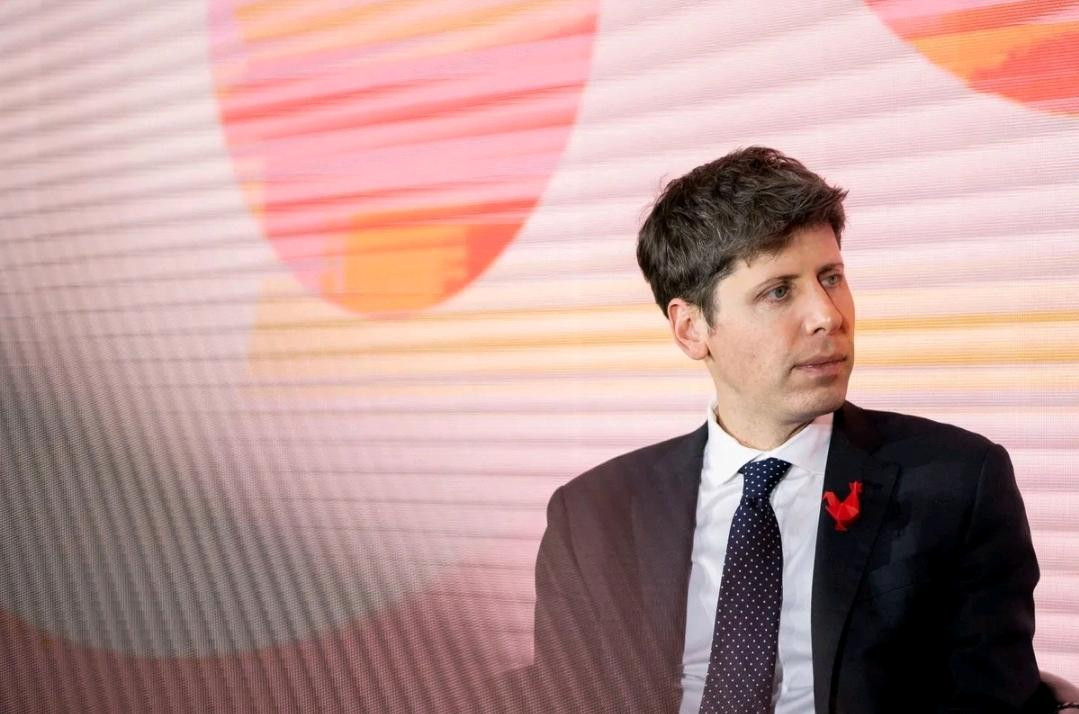
What Lies Ahead for AI’s Power Players?
The renegotiation between $MSFT and OpenAI is more than a corporate spat; it reflects a wider evolution in the AI industry’s power dynamics. Established tech giants seek to hedge their bets by in-sourcing or diversifying AI capabilities, while specialist innovators race to secure capital, talent, and independence. If Microsoft succeeds in securing access to future OpenAI breakthroughs on favorable terms—or effectively supplants them with its MAI models—the company could consolidate its position as the enterprise AI leader. Conversely, if OpenAI’s PBC fully detaches from Microsoft’s infrastructure, it may chart a path toward an IPO that realigns market perceptions and investor expectations.
Ultimately, both parties recognize the stakes: automated intelligence is redefining industries at breakneck speed, and control over the most advanced models carries immense commercial and strategic value. Whether this renegotiation leads to a strengthened partnership, a peaceful separation, or a public showdown will shape not only the fortunes of Microsoft and OpenAI but also the trajectory of AI innovation worldwide.
This content is provided for informational or educational purposes only and does not constitute investment advice.