
U.S.-China Trade Talks Breakthrough: Markets Rally as Tariffs Ease

Shearing sheep
May 12, 2025
GoGPT Summarizes Articles
On May 12, 2025, in a significant development, the U.S. and China released a joint statement following trade talks in Geneva, signaling a potential de-escalation in recent tensions. The agreement, set to take effect by May 14, outlines mutual tariff reductions and a framework for continued negotiations—a move that has already sent global markets soaring.
Key Takeaways from the Joint Statement
1. Tariff Adjustments
-
The U.S. will suspend 24% of the 34% tariffs imposed on Chinese goods (including those from Hong Kong and Macau) for 90 days, keeping the remaining 10%. It will also revoke additional tariffs enacted under Executive Orders 14259 and 14266 (April 8–9, 2025).
-
China will reciprocate by suspending 24% of its 34% tariffs on U.S. goods, retaining the 10%, and canceling retaliatory tariffs under its 2025 Announcements No. 5 and 6. Non-tariff countermeasures introduced since April 2 will also be paused or rolled back.
In plain terms: This temporarily resets tariffs to pre-April 2 levels—suspending the recent hikes but leaving a 10% baseline in place.
2. Ongoing Dialogue
Both sides agreed to establish a consultation mechanism, with China’s Vice Premier He Lifeng, U.S. Treasury Secretary Scott Besant, and Trade Representative Jamison Griller leading talks. Future negotiations may take place in either country or in a neutral location.
In plain terms: They’re not done negotiating—more talks are coming, and tariffs could change again.
Market Reaction
The announcement sparked an immediate rally across asset classes:
-
A50 futures rose 1.56%, while Hong Kong’s Hang Seng Index surged nearly 3%. The Hang Seng Tech Index jumped over 5%.

-
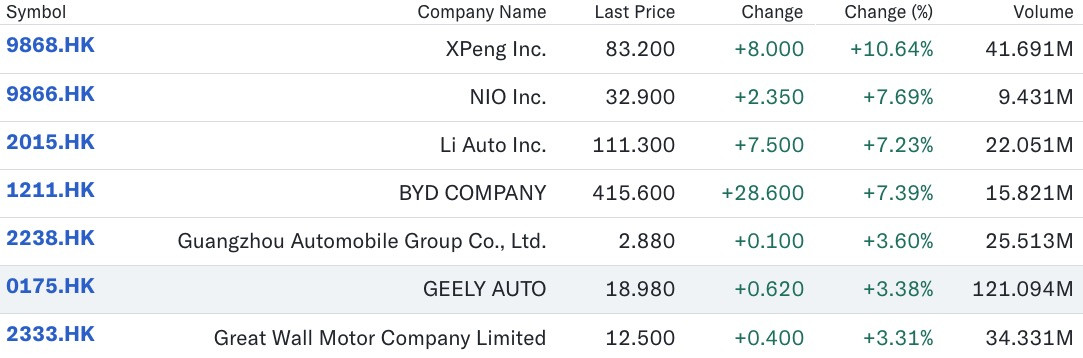
Chinese EV stocks led gains: XPeng (+10%), NIO and Li Auto (+7%), BYD (+7%).
-
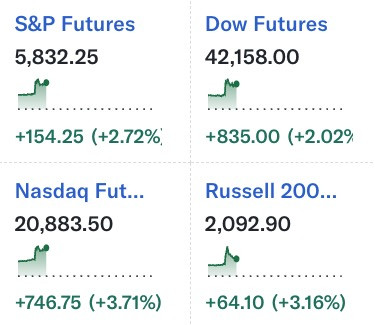
U.S. equity futures surged, with Nasdaq 100 futures climbing 3.7%, reflecting broad-based relief.
Why This Matters
Markets had been bracing for a prolonged standoff. Trump's April 2 announcement of 145% tariffs on Chinese goods triggered sharp selloffs in Chinese equities. Today’s partial rollback—though far from a full reversal—is the first tangible sign of de-escalation.
And it’s not just symbolic. For institutional investors, this move signals that the risk of a full-blown trade war might be easing. Morgan Stanley noted that U.S. hedge funds are beginning to "rotate back" into Chinese equities, adding exposure to both U.S.-listed ADRs and domestic A-shares.
In their latest report, Morgan Stanley highlighted a clear shift in sentiment following the Geneva talks. Interestingly, hedge funds have recently pulled capital from other Asian markets such as Thailand, India, and Australia, while increasing their bets on China.
According to the report, U.S.-based hedge funds have raised long positions in Chinese stocks, anticipating reduced trade friction. The MSCI China Index and CSI 300 were already up 2.4% and 1.9%, respectively, ahead of the announcement.
Though positioning remains well below peak levels, the directional change is notable. As Michael Dyer of M&G Investments observed, “At some point, the risk-reward [in China] becomes compelling... Valuations are low, and investor allocations are light.”
To be clear, this isn’t a trade deal. It’s a pause. Both sides are keeping 10% tariffs in place, preserving leverage. But this is the first joint statement in months—and it lays the groundwork for further talks.
What’s Next?
The 90-day tariff suspension opens a window for continued negotiation—but key questions remain:
-
Sustainability: Is this a tactical pause or a step toward long-term détente?
-
Execution Risk: Domestic pressures—U.S. political rhetoric and China’s economic priorities—could derail progress.
-
Sectoral Impact: Tech, autos, and industrials are poised to benefit most from any sustained easing in tariffs.
Bottom Line
This is a welcome reprieve, but markets will be watching for follow-through. Geneva didn’t deliver a complete breakthrough, but it may be the clearest turning point yet. For long-term investors eyeing U.S.-China relations, this is the strongest signal in months that both sides might be stepping back from the edge—and markets are more than happy to rally on that hope. #usmarket #china
#Global Macro Policy: Central Banks & Governments in Action#usmarket#china