
The Future of AI: From Tools to Outcomes – Key Takeaways from Sequoia’s AI Ascent
Kevin Insights
May 13, 2025
GoGPT Summarizes Articles
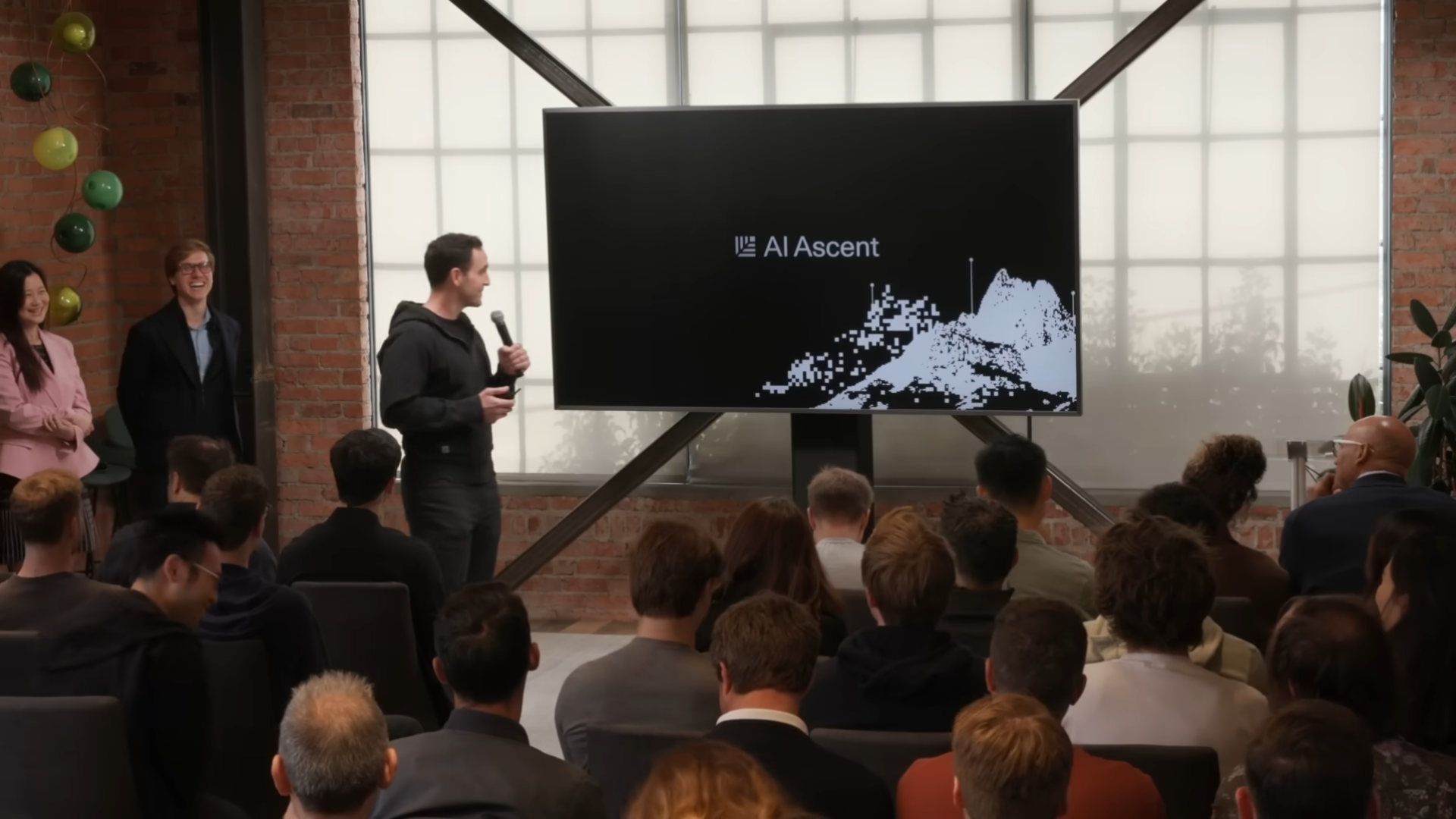
Last week in San Francisco, Sequoia Capital held its third annual AI Ascent 2025 Keynote: AI's Trillion-Dollar Opportunity. For six hours, 150 of the world’s top AI founders zeroed in on a striking consensus:
“The next wave of AI doesn’t sell tools—it sells outcomes.”
Pat Grady, Partner at Sequoia, called this shift a “trillion-dollar opportunity.” OpenAI’s Sam Altman and Google’s Jeff Dean nodded in agreement. NVIDIA’s Jim Fan added:
“When robots pass the physical Turing test, revenue becomes automated cash flow.”
Let’s unpack why this mindset shift is re-charting the course for AI startups—and how it’s reshaping what investors look for.
From Tools to Outcomes: A Paradigm Shift
“We are witnessing a fundamental shift from tool logic to outcome logic,” said Grady at the summit.
Over the past decade, the software business model was straightforward: sell tools to improve productivity. Companies bought SaaS, logged it as a software expense, and measured success by usage metrics.
Now we have a new model: sell business results that directly hit the P&L.
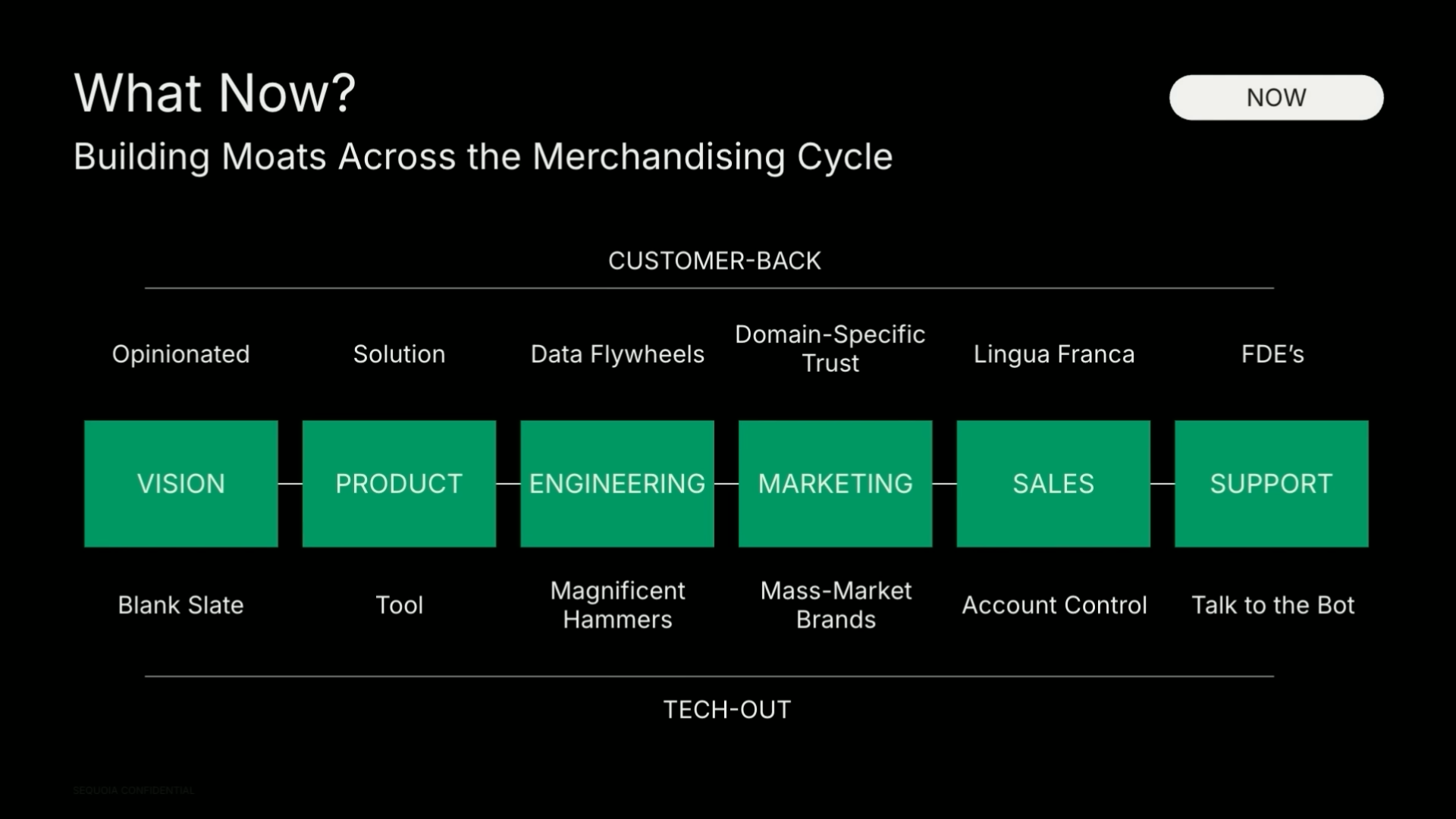
Instead of “CRM software to manage leads,” it’s “an AI rep that closes 20% of your pipeline.” Sequoia describes the evolution as:
Software as a Tool → Software as a Co-worker → Software as an Outcome
A case in point is Sierra, co-founded by Bret Taylor. From day one, they adopted outcome-based pricing. Clients don’t want a million features—they want results: revenue growth, better conversions, and reduced churn.
In other words, AI is no longer eating into the SaaS budget—it’s replacing payroll. If your product delivers quantifiable value, it competes directly with headcount.
The Rise of the “AI OS”
Sam Altman laid out a roadmap that caught everyone’s attention:
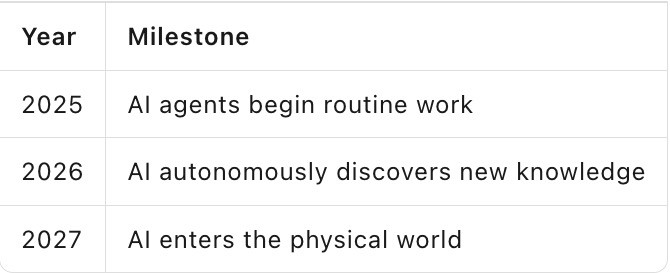
He envisions ChatGPT evolving into a true operating system—not a chat box, not an app, not a plugin—but a universal interface for work, for learning, and for life.
LangChain’s Harrison Chase calls this the “Agent Inbox”—a system-wide bus that triggers collaboration across multiple AI agents. Claude’s Code Interpreter can already autonomously recruit other agents to execute distributed tasks.
The paradigm has shifted: AI no longer waits for prompts. It remembers you, understands your goals, and acts proactively.
Whoever becomes the “first recipient of user intent” will control the next OS layer.
The Agentic Economy Has Arrived
Sequoia’s Konstantine Bets laid out a compelling vision for the Agentic Economy—a world where AI agents act not just as tools, but as autonomous economic actors.
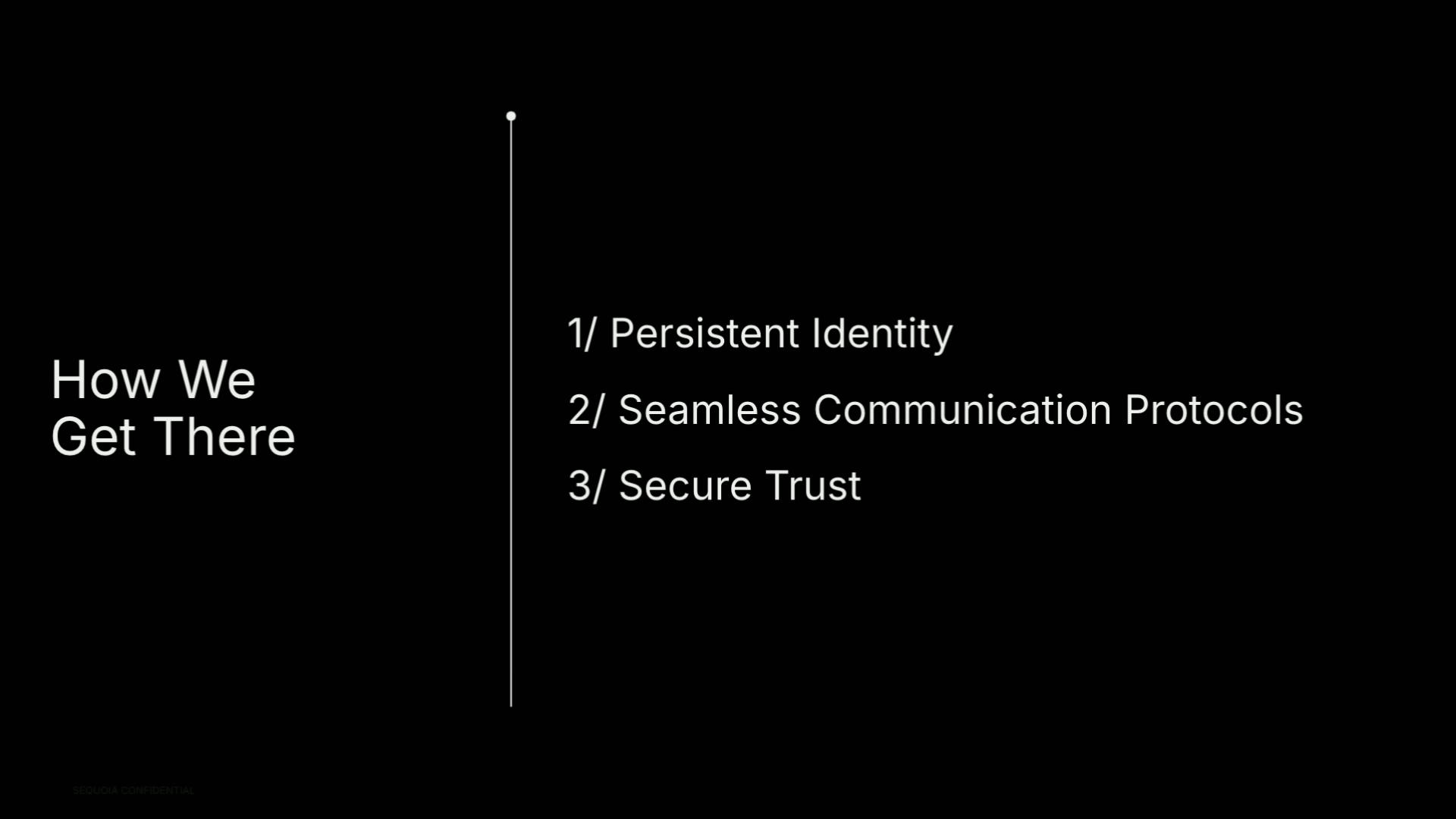
Three pillars define this shift:
1. Persistent Identity – agents that remember context and history.
2. Seamless Communication Protocols – agents that can initiate, iterate, and execute workflows.
3. Secure Trust – agents that function like teammates, not terminals.
When Claude Code independently submits pull requests (PRs) and manages engineering pipelines, it's no longer a "copilot." That’s not a co-pilot—it’s a software engineer with agency.
As Sequoia puts it:
“You’re not just using AI tools—you’re building a network of human-agent symbiosis.”
This isn’t theoretical. Vertical agent ecosystems—like Harvey for legal and OpenEvidence for healthcare—are already gaining traction by understanding domain-specific workflows and owning niche operating systems.
Distribution Physics Have Changed
One of the most powerful moments came from Sequoia partner Sonya Huang:
“People don’t use AI—they delegate to it and expect the task to get done.”
In the mobile internet era, distribution depended on attention, understanding, and adoption. In the AI era, it’s about trust, delegation, and output.
Key Metrics That Matter Now:
-
Task completion rate—not time-on-app
-
Attributable ROI—not feature count
-
Learning velocity—not codebase size
Data Point: ChatGPT’s DAU/MAU ratio now rivals Reddit’s, signaling a shift from “curiosity” to daily dependence.
In short, value no longer lies in user clicks—but in workflow completion.
AI Is Rewiring Organizational DNA
Many founders are still asking: “Our model is strong—why aren’t users sticking?”
Sequoia’s answer: “It’s not the model—it’s the org structure.”
Mike Krieger, CPO at Anthropic, emphasized:
“We’re not focused on making models smarter—we’re focused on making the system usable, controllable, and schedulable.”
At Anthropic, over 70% of production code is now submitted by Claude. But it’s not just about output—it’s about Claude being embedded in a full execution pipeline: reading requirements, writing code, running tests, and handling feedback.
This is the rise of AI-native architecture—where AI is a team member, not a tool.
LangChain’s Agent Graph architecture enables agents to function like microservices—event-driven, fault-tolerant, and observable.
Fireworks AI takes a similar approach, treating inference as a production line—complete with QA, logging, and retries.
Sequoia’s blunt takeaway:
“If you’re still tuning prompts instead of restructuring workflows, you’re behind.”
Why This Matters for PE/VC
This summit wasn’t about flashy demos or lofty visions—it was a realignment of investment theses.
New Diligence Filters:
-
Can this startup deliver outcomes, not just capabilities?
-
Are AI agents embedded into org structures like real contributors?
-
Is there a vertical OS opportunity where domain-specific agents will dominate?
Sequoia’s Prediction:
We’re heading toward the first “One-Person Unicorn”—a founder who uses AI agents to scale an entire organization’s output across R&D, sales, ops, and support.
Final Thought
The trillion-dollar leap in AI won’t come from better chatbots—it will come from systems that function as trusted partners and deliver tangible business outcomes.
As Sam Altman summed it up:
“The question isn’t ‘Can AI do this?’ It’s: ‘How does AI fit into the economic fabric?’”
In this new AI economy, success won’t go to the best model—it’ll go to the company that delivers the best outcomes, fastest.
#Private Market: Unlocking Potential#privatemarket