
U.S. April CPI Preview: Will Stagflation Fears Materialize?

Shearing sheep
May 13, 2025
GoGPT Summarizes Articles
The highly anticipated April CPI report drops tonight at 8:30 PM SGT, and markets are bracing for potential volatility. With lingering uncertainty around tariffs, housing costs, and the Fed’s next move, this release could set the tone for summer trading.
What to Expect
Consensus forecasts suggest:
- Headline CPI: +0.3% MoM, +2.4% YoY
- Core CPI (ex-food/energy): +0.3% MoM, +2.8% YoY
After March’s rare monthly dip—the first since 2020—thanks to lower energy prices, April’s data will be scrutinized for signs of reacceleration. Two key factors stand out:
1. Housing Costs
Shelter inflation has been cooling, with the annual growth rate down to around 4% as of March. Private rent indices have already shown signs of slowing, so if that trend continues into April, it could help ease overall CPI.
2. Tariff Impact
Though the immediate effect may be muted—thanks to preemptive inventory stockpiling by U.S. businesses—analysts believe this is just the calm before the storm. According to economists at Bank of America, the actual impact of recent tariff hikes may not hit consumer prices until inventories are drawn down later this summer.
They’re calling this the “tariff storm” and expect it to build through the second half of the year, potentially pushing core goods inflation sharply higher. Some analysts at BNP Paribas even see core CPI peaking at 4.4% by Q4 2026.
The Tariff Wildcard
The big question: How much will Trump’s trade war weigh on prices? The answer remains murky.
April could be the first time we see early signs of the inflationary impact of renewed trade tensions. UBS analysts suggest that the administration’s first round of tariffs—effective since early February—may already be nudging non-transportation core goods prices higher. If so, April might mark a subtle turning point.
Still, most economists agree the full inflationary bite of tariffs won’t show up for another few months. That’s partly because many of the affected goods are intermediate inputs, not final consumer products. Businesses are absorbing some of the costs for now, either through inventory or margin compression.
That said, with recent developments—like the May 12th U.S.-China Geneva trade statement—there’s a fresh layer of complexity. The two sides agreed to cancel 91% of additional tariffs and temporarily suspend a further 24%. While that's sparked market optimism, the final impact on inflation depends on how long the tariff pause lasts and whether it's the start of a longer de-escalation or just a short-term reset.
Fed Is Staying Put Amid Tariff Uncertainty
The Fed held rates steady at its May meeting, and Chair Jerome Powell made it clear that tariff-related uncertainty is a key reason for staying on the sidelines. Until there's more clarity on how these policies will play out, the central bank isn’t rushing into any decisions.
Other Fed officials echoed this sentiment. Cleveland Fed President Loretta Mester and St. Louis Fed’s Alberto Musalem both emphasized that the Fed needs more time and data to understand the inflation dynamics at play—especially with a slowing labor market and uncertain consumer behavior.
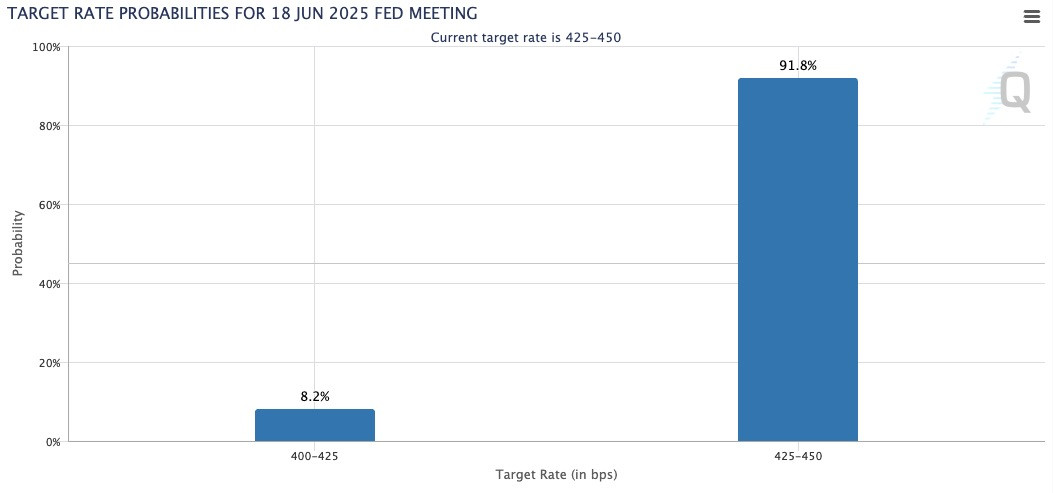
The market seems to agree. Fed futures now imply an 86% chance of no change in June and around a 60% probability of a 25 bps cut in July. But that could shift quickly if CPI prints hotter than expected and tariff effects accelerate.
In fact, markets have already grown more cautious: CME FedWatch now shows just an 8% probability of a June rate cut, down sharply from nearly 40% a week ago. Odds for a July cut have fallen to 42%, while expectations for two cuts by year-end have dropped to 72%, compared to nearly three cuts priced in before last week’s FOMC meeting.
My Take
It’s tempting to jump to conclusions—either panic about stagflation or assume tariffs will be rolled back soon enough to avoid serious impact. The reality is probably somewhere in between.
If housing continues to cool and the bulk of tariffs remain suspended, inflation may stay contained. But if trade tensions re-escalate or corporate inventory buffers run out faster than expected, we could see stickier price pressures by summer.
In short, April CPI might not bring fireworks, but it’s likely to set the tone for how inflation and Fed policy evolve into Q3. And in a market as sensitive as this one, even a small surprise could make a big ripple. #cpi #inflationrate
#cpi#inflationrate