
Is Wall Street Riding a New Bull Run Thanks to the Trade Truce?

Markets woke up Monday with renewed vigor as Beijing and Washington agreed to suspend major tariffs for 90 days. The deal has effectively removed a “significant tail risk” from the U.S. economy, according to top Wall Street strategists, and opened the door for the Federal Reserve to tilt its policy balance toward growth. Yet behind the optimism lies a cautious chorus warning that higher tariffs still loom, inflation pressures persist, and earnings may not all shine in the second half of the year. Below, we unpack what the market’s smartest minds are saying—and why the rally may not be over, but it isn’t bulletproof either.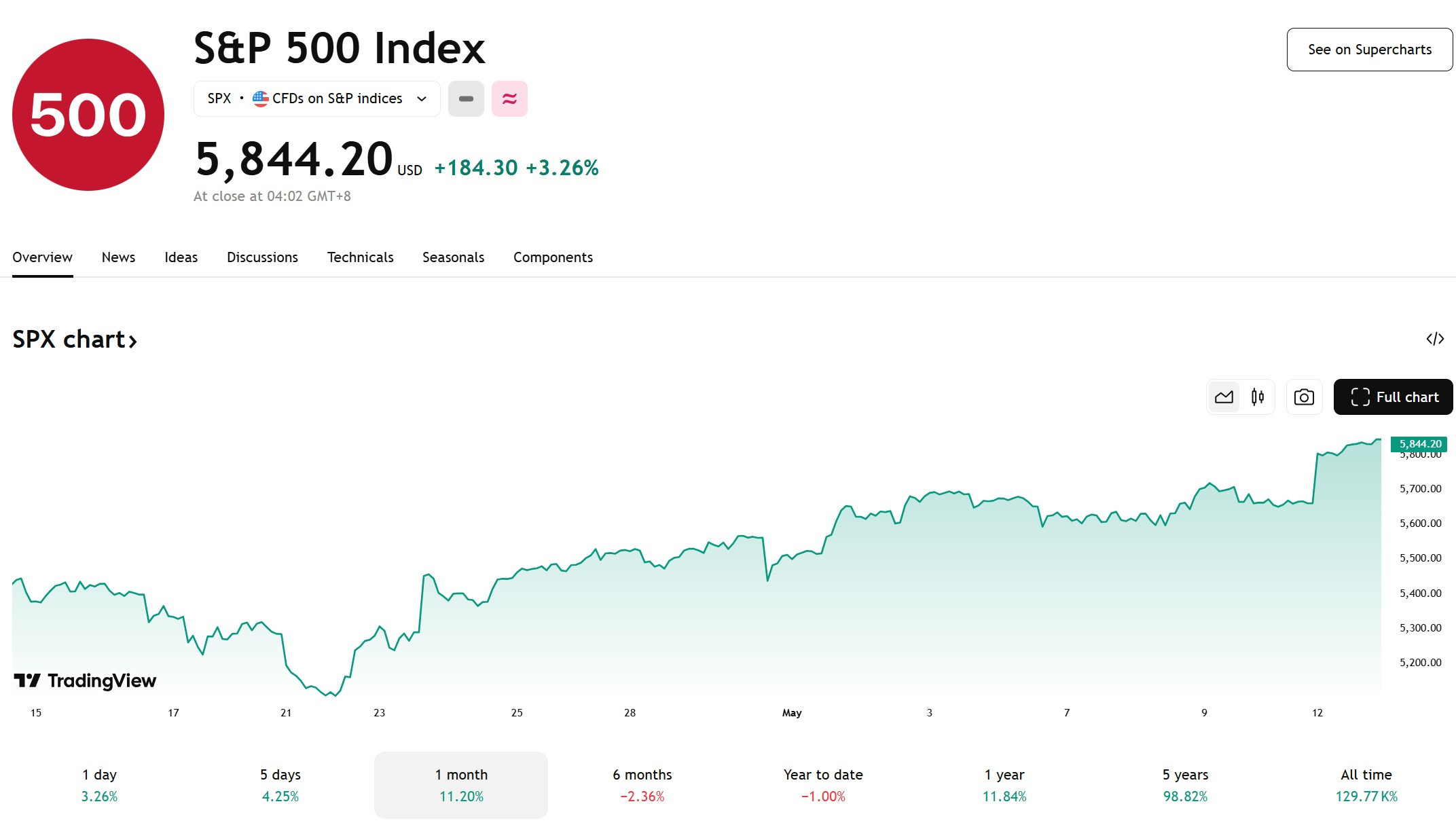
What Changed with the Trade Agreement?
Mike Wilson, Morgan Stanley’s CIO and famed for calling last year’s market bottom, believes the recent tariff suspension signals an end to the “historic sell-off” of 2024. He reiterated a bold forecast: $SPX will climb to 6,500 by year-end, about 12% above current levels. “With tariffs off the table,” Wilson told CNBC, “the Fed can rebalance its dual mandate. Growth is looking a bit brighter, and policy may shift from fighting inflation to supporting the economy.” He pointed to a weakening dollar and resurgent sentiment among corporates and consumers as fuel for risk assets. In his view, recession fears have “significantly diminished,” setting the stage for earnings upgrades in the second half of 2025, after a brutal first half.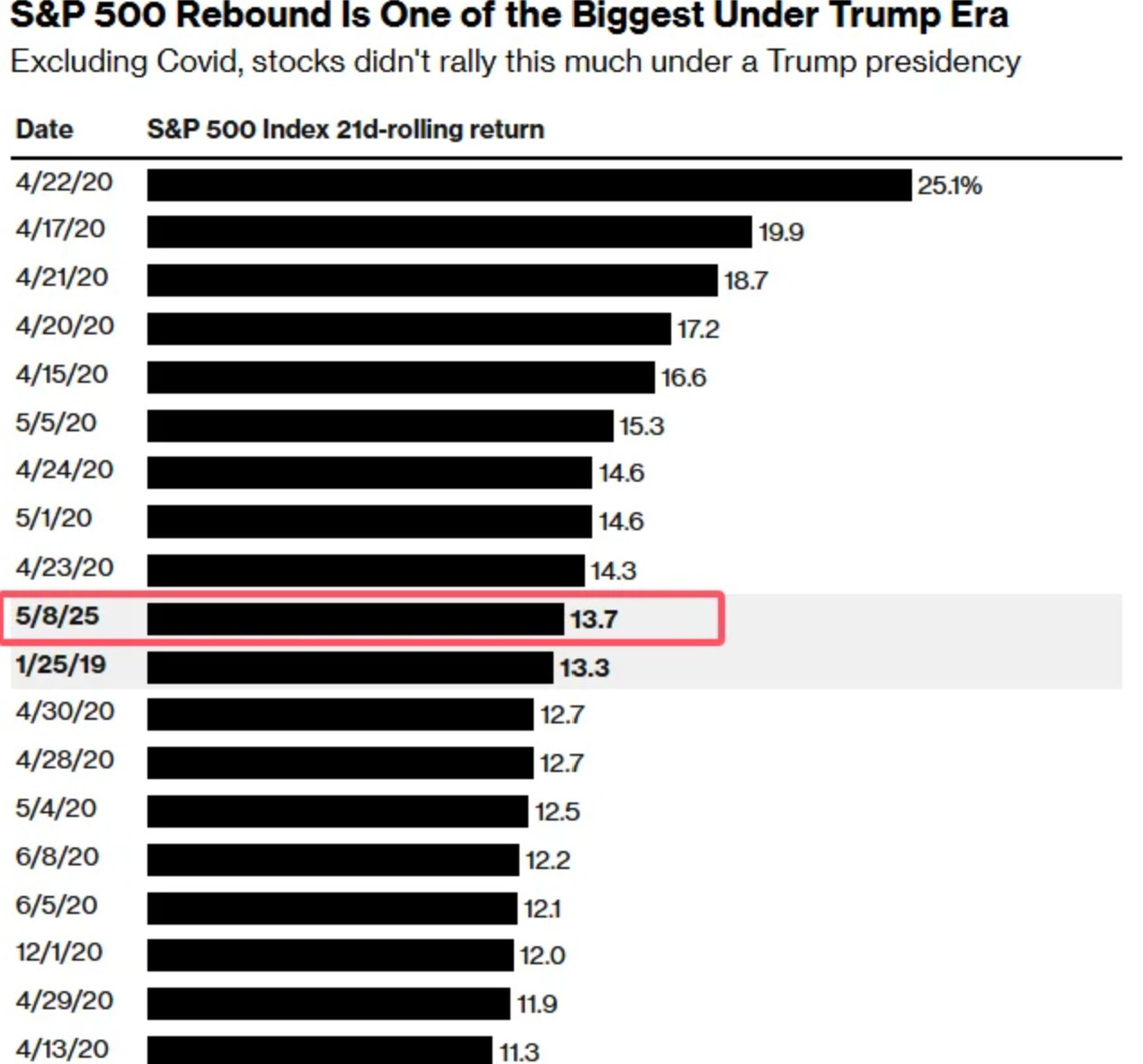
Will Stocks Keep Climbing?
Not everyone is raising a victory flag just yet. Torsten Sløk, Chief Economist at Apollo, argues that while the deal has removed the specter of a full-blown trade cutoff, markets now face a fresh calculus: growth versus inflation. Traders have trimmed their expectations for Fed rate cuts from three or four this year to about two, reflecting worries that easing tariffs won’t immediately quash price pressures. “Growth story may hold up,” Sløk notes, “but if inflation stays sticky, the policy payoff will be smaller.” In other words, even if the U.S. avoids a recession, pockets of weakness may force investors to temper expectations.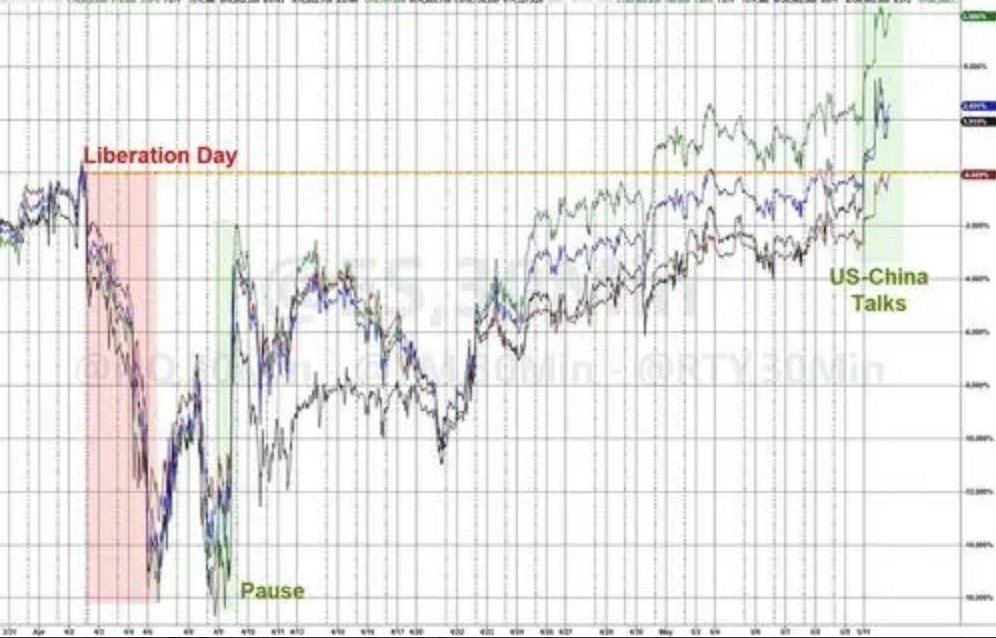
How Did Trump’s Tweets Move Markets?
Donald Trump once again played market mover last month. On April 9, he fired off a tweet declaring “now is a great time to buy stocks,” mere hours before announcing a broader pause on reciprocal tariffs against multiple countries. From that day through May 9, $SPX surged 14%—its strongest one-month rebound of Trump’s presidencies outside the pandemic shock of 2020. Data compiled by industry trackers shows this move rivals any rally seen under his two terms.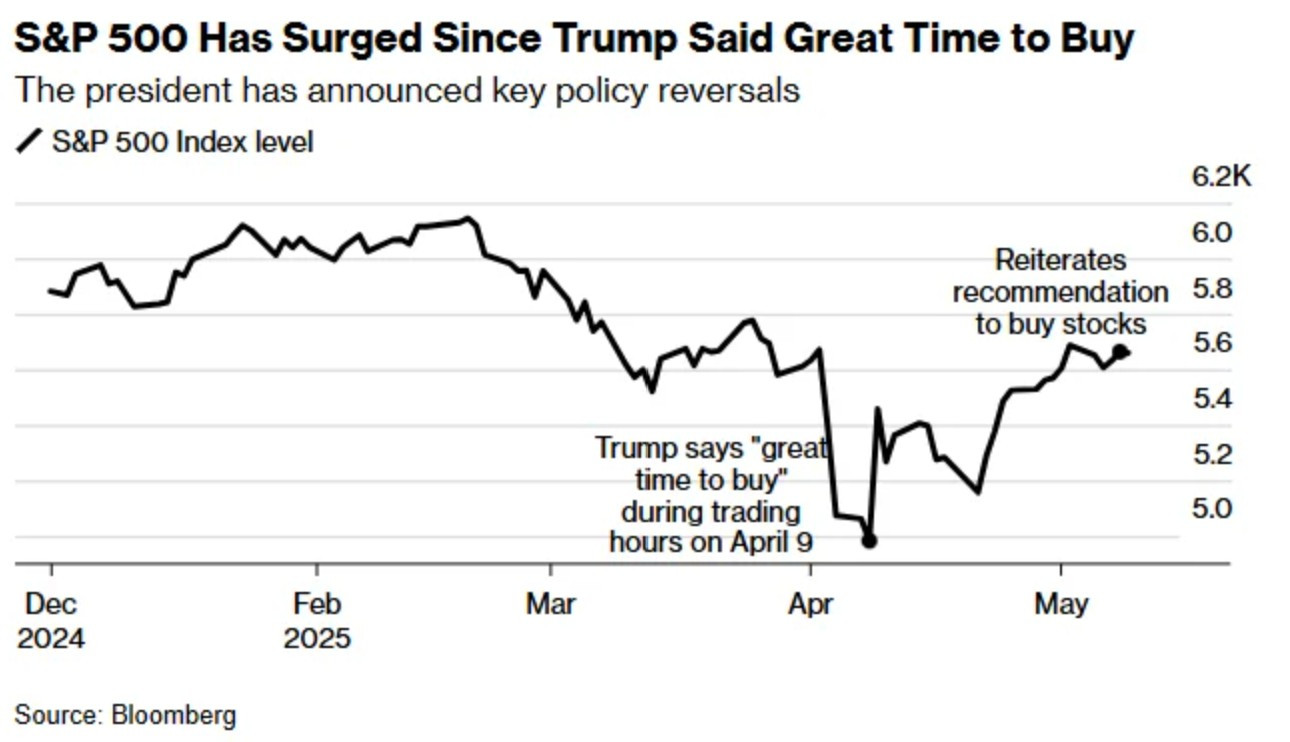
Critics quickly accused Trump of insider tactics, but strategists see a more nuanced picture. “It’s a put option implied by policy,” says PIMCO’s Arun Sai. “The market is wired to ‘buy the president.’” Indeed, stocks have historically rallied when key trade deadlines were pushed out or negotiations showed progress. After Trump repeated his bullish call on May 8, warning that economic prospects justified more stock exposure, the Dow jumped 1,160 points (2.8%), the Nasdaq gained 4.4%, and the S&P 500 rose 3.3%—erasing April’s tariff-induced slide completely.
Goldman’s 6500: Confidence with Caution
Goldman Sachs isn’t far behind in optimism. Strategist David Kostin and team raised their $SPX year-ahead target to 6,500 from 6,200, implying an 11% upside from Monday’s close. The firm credits the tariff cease-fire for rekindling the “buy America” narrative and muting recession chatter. Yet their report also warned that stretched valuations and patchy earnings growth may cap P/E multiples in the coming months.
“While large tech names should lead the bounce, broader profit outlook is uneven,” the report reads. Goldman expects 2025’s overall tariff rate to remain substantially above 2024’s, pressuring corporate margins. Hence, the bank advises focusing on companies with clear pricing power—those that can maintain profit margins despite rising input costs. Their message: yes, believe the bulls, but keep an eye on hard data, not just headlines.
Looking Beyond the Headlines
Roger Altman, Evercore’s founder, offers a sobering counterpoint. He reminds investors this is merely a 90-day reprieve, a “suspension order” rather than a final settlement. Even with the pause, U.S. average tariff rates will climb from the 3–4% seen in early Biden years to about 14%. “Tariffs still stoke inflation, curb consumption, and depress growth,” he cautioned on CNBC. Altman urges markets to prepare for tough talks ahead on technology transfers, intellectual property, and state subsidies.
Meanwhile, other strategists warn that the real risk now shifts to the data pipeline. Barclays’ team says investors should shift focus from policy to prevailing inflation prints, slowing GDP gains, and corporate earnings trends. CFRA’s Sam Stovall colorfully sums it up: “We’re drifting in an iceberg field of uncertainty, but buoyed by the belief the president won’t let us crash.” TS Lombard’s Dario Perkins adds that special envoy Darci Bettis is doing a “masterful job of selling stability,” yet he warns of “muddling through” rather than decisive wins.
The bottom line? Monday’s trade détente may have ignited the next leg up for risk assets, but it didn’t eliminate all threats. With tariff levels still elevated, inflation still stubborn, and earnings uneven, the market’s path forward looks more like an extended rally with caution flags than a no-brainer bull run. For investors, the call is clear: heed the smart money’s bullish signals, but don’t ditch your seat belt.
This content is provided for informational or educational purposes only and does not constitute investment advice.