
Has the trend reversed? NVIDIA's stock price has rebounded with a surge of over 11% in three days

NVIDIA's stock price has seen gains of 5.44%, 5.63%, and 4.16% over the past three trading days.
As of close (May 14), the stock price reached $135.34, nearing the high point set in February of this year. Additionally, its annual trend has turned positive, recovering from a prior decline of over 35%.
Multiple recent market developments have collectively fueled this surge in NVIDIA's stock price. But has its price trend truly reversed?
Moderated Tariffs Between China and the U.S., Though Semiconductors Are Excluded
The Joint Statement of the China-U.S. Geneva Economic and Trade Talks, released days ago, outlines that China will reduce tariffs on U.S. goods from 125% to 10% for 90 days, while the U.S. will eliminate 91% of the tariffs imposed on Chinese goods and adjust the 34% reciprocal tariffs, suspending 24% of them for 90 days and retaining 10%.
Although semiconductors, AI, and other strategic industries were not mentioned in the statement regarding additional tariff adjustments, the U.S. continues to strictly enforce export restrictions on NVIDIA's advanced chips (such as the H100 and A100) through non-tariff measures. NVIDIA's high-end market sales in China remain constrained.
Nevertheless, this has signaled short-term market optimism about "trade relaxation," boosting NVIDIA's stock price as investors anticipate potential future policy improvements.
Saudi Arabia's Massive AI Data Center Investment Leads to a Major Deal for NVIDIA
During U.S. President Trump's visit to Saudi Arabia on May 13, the two countries rapidly shifted their economic and trade focus from oil to technology and military sectors.
At the welcome ceremony held at the Saudi royal court, attendees included heavyweights in artificial intelligence, such as NVIDIA CEO Jensen Huang, OpenAI CEO Sam Altman, Tesla CEO Elon Musk, and leaders from companies like Amazon, Google, Uber, and Palantir.
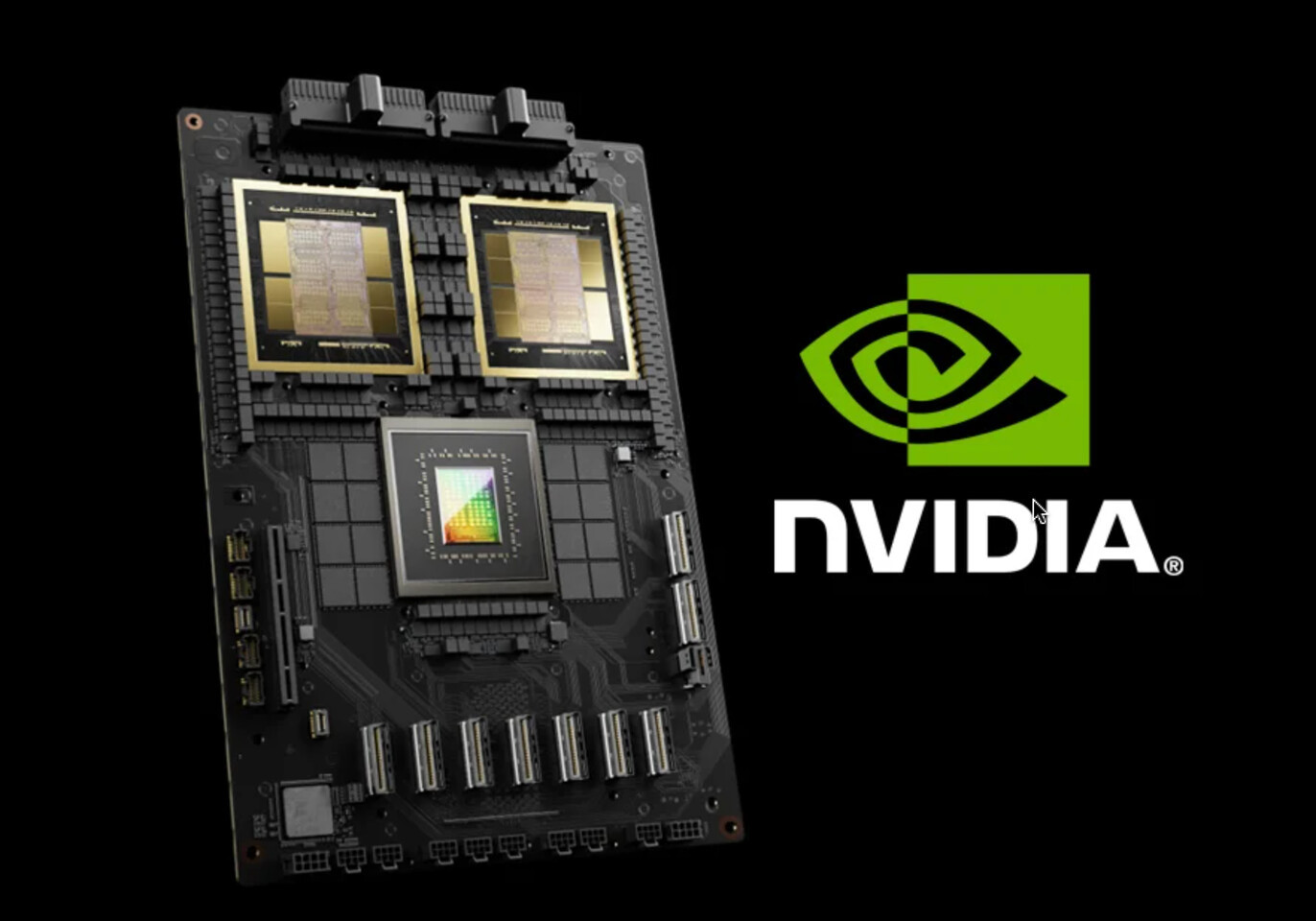
Humain, a newly established subsidiary of Saudi Arabia's sovereign wealth fund, announced a partnership with NVIDIA to build an AI factory in Saudi Arabia. Under the agreement, NVIDIA will deliver over 18,000 of its latest GB300 Blackwell AI superchips and InfiniBand network technology to Humain for developing large AI models and constructing new data center projects.
This quantity represents 12% of NVIDIA's global shipments in the first quarter of 2025.
The chips NVIDIA is selling to Saudi Arabia are not "outdated models" but the most advanced GB300 Blackwell chips, announced at NVIDIA's GTC 2025 conference in San Jose on March 18, 2025, with mass production scheduled to begin in the third quarter of 2025. In other words, Saudi Arabia is purchasing "futures" of these chips!
According to relevant data, the single Blackwell Ultra chip will offer the same 20 petaflops of AI performance as its predecessor but with more 288GB of HBM3e memory. If the H100 is better suited for large-scale model training and the B200 excels in inference tasks, this chip serves as a versatile platform capable of pre-training, post-training, and inference. It is also suitable for AI agents and "physical AI" used to train robots and autonomous vehicles—truly a versatile solution!
Jensen Huang stated, "Artificial intelligence, like electricity and the internet, is essential infrastructure for every nation. We are collaborating with Humain to build AI infrastructure for the people and enterprises of Saudi Arabia to achieve the kingdom's grand vision."
Repeal of AI Diffusion Rules + Massive Purchases by Chinese Enterprises
On May 13, the U.S. Department of Commerce officially announced the repeal of the "AI Diffusion Rules" signed during the Biden administration and introduced additional measures to strengthen global chip export controls, including restrictions on the global use of Huawei's Ascend AI chips.
For NVIDIA, this is undeniably positive news, as it removes the largest risk of AI technology proliferation and curbs potential global competition from Huawei.
Furthermore, recent reports indicate that NVIDIA's largest Chinese clients—ByteDance, Alibaba, and Tencent—ordered over $16 billion worth of H20 chips in the first three months of this year.
If analysts' forecast of $12 billion in global H20 chip sales for fiscal year 2024 is accurate, this means sales of these GPUs in China alone during the first quarter of this year exceeded last year's global total.
Is NVIDIA Stock Still a Buy?
Despite being hyped, NVIDIA's stock price still remains lower than its peers, especially when compared to AMD in most valuation ratios. Additionally, the 2024 and 2021 reverse stock splits have had no impact on these ratios whatsoever. Stock splits do not affect valuations.

And The news items I mentioned above that should indeed support NVIDIA's future performance.
Notably,The U.S. stock market has seen a recurrence of the "Tech stock clustering" trend similar to December last year, with other sectors and equal-weighted indices performing poorly while tech stocks drive the Nasdaq and S&P to new heights (the Nasdaq has posted seven consecutive gains). I am not particularly fond of this market trend.
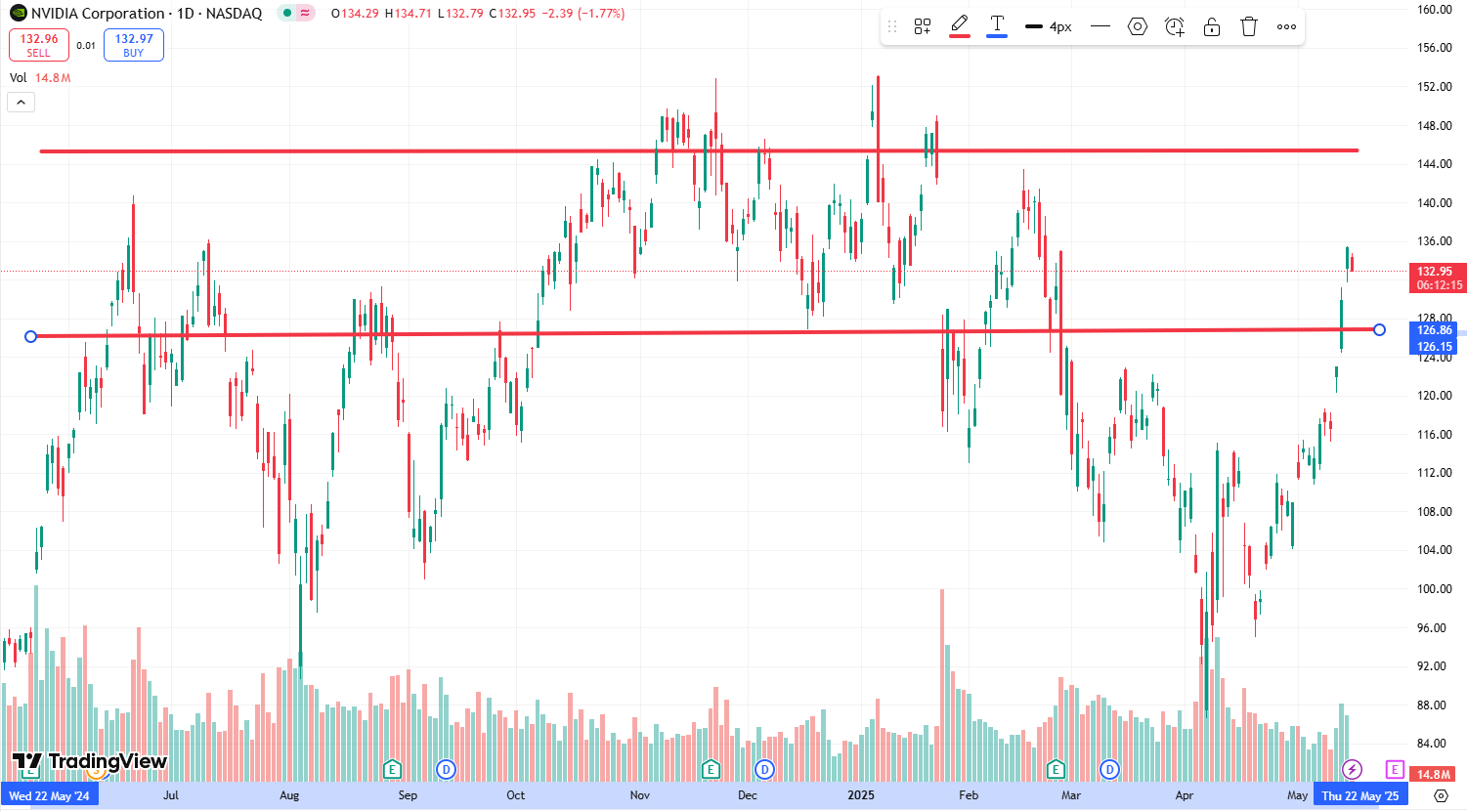
From a technical analysis perspective, monitor the $126 support level: a break below could lead to a decline toward $113, while a breakthrough above $145 might initiate a new upward trend. If you are certain about a holding period exceeding three years, you may consider adding positions on dips; otherwise, it may be wiser to wait and see.$NVDA
Disclaimer: This is just my opinion based on what I’m seeing. Not financial advice—do your own research before investing.