
Could a Secret Dinner Unlock America’s Chip Monopoly?
In a stunning turn of events, a mysterious March dinner at Mar‑a‑Lago set off a chain reaction that has dramatically loosened U.S. export controls on AI chips—paving the way for $NVDA and other American semiconductor giants to reclaim global markets.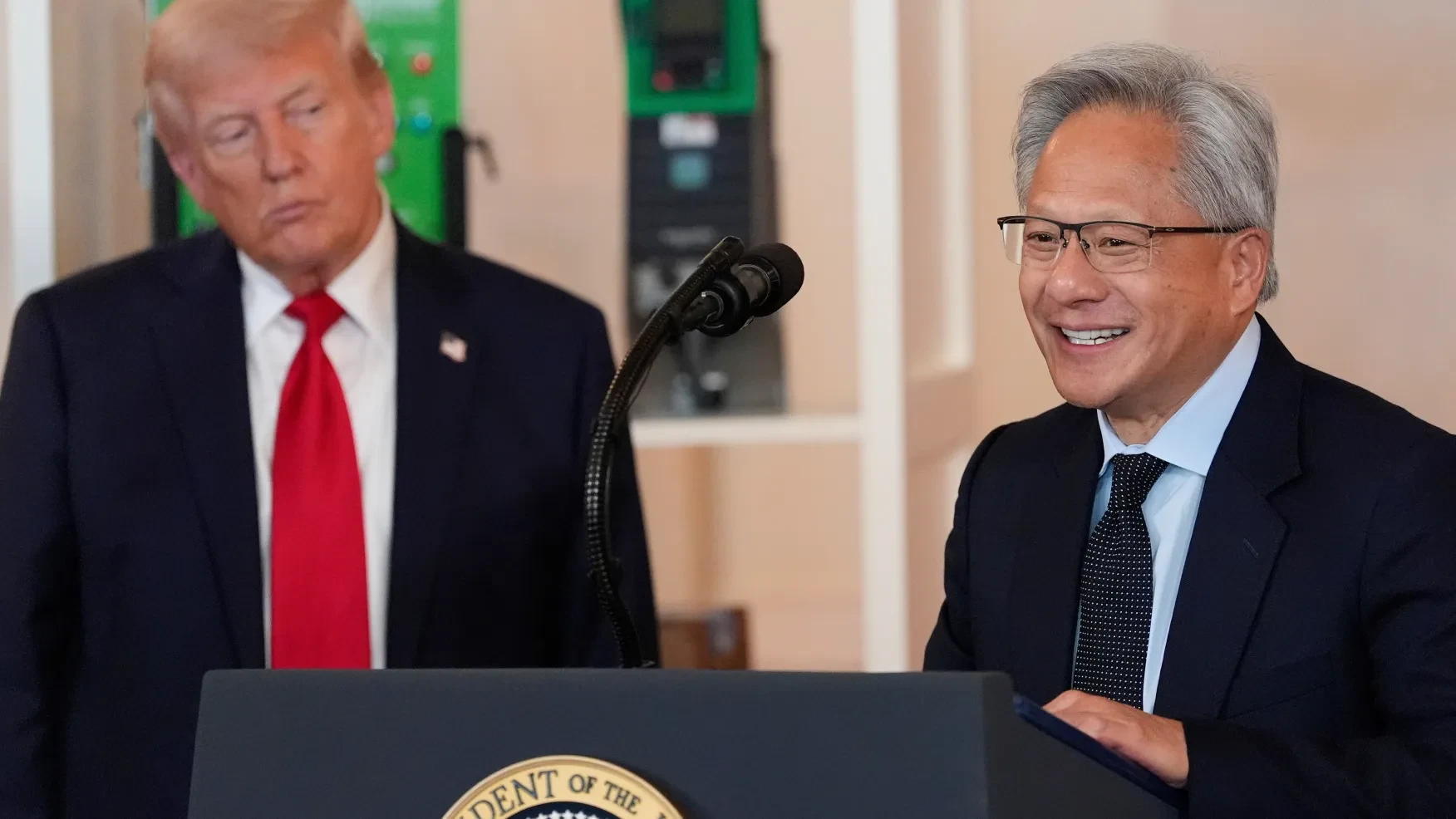
An Unlikely Dinner, an Unprecedented Deal
Word leaked that $NVDA CEO Jensen Huang was among a handful of tech leaders invited to President Trump’s private Mar‑a‑Lago estate for an off the record dinner. Within days, Nvidia announced plans to invest an eye‑watering $500 billion in U.S. AI infrastructure manufacturing—a project Trump eagerly applauded, publicly urging regulators to expedite export licenses for Nvidia’s cutting-edge H20 chips.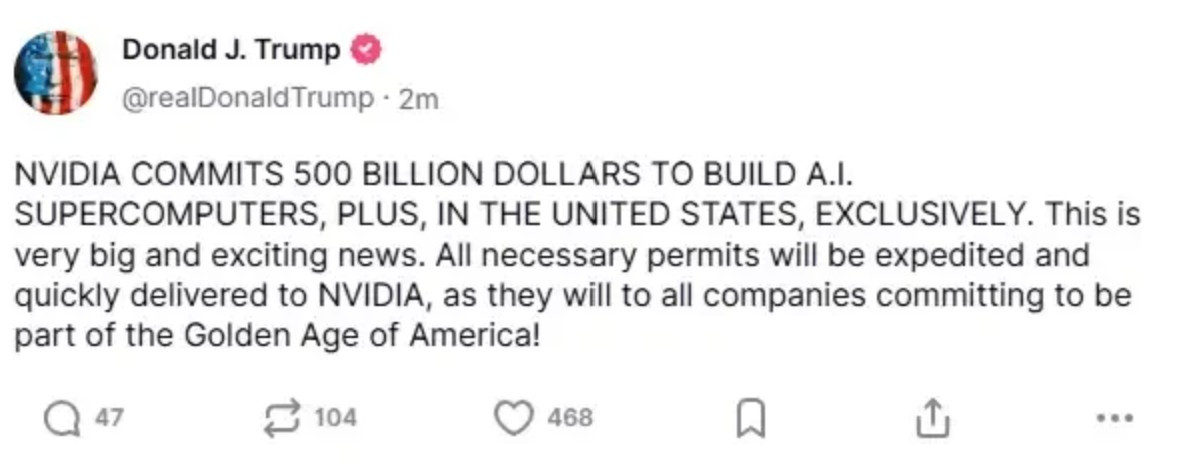
Yet just one day later, $NVDA filed an SEC notice confirming that H20 exports to China and other restricted regions would still require an indefinite license—seemingly undermining any behind closed doors promises. Industry observers scoffed: “All that Mar‑a‑Lago fanfare, and Huang got nothing.”
Then everything changed in mid‑May. On May 13, the Commerce Department quietly rescinded the “AI Diffusion Rule” that had been slated to take effect on May 15. The move instantly removed cumbersome export guardrails that had boxed U.S. chipmakers into limited markets and promised a lifeline to firms desperate for new customers.
What Exactly Were the AI Diffusion Rules?
Introduced January 15 under the Biden administration, the rule enforced a three‑tier licensing system for advanced AI chips:
- Tier 1 (Friendly Nations): G7 members plus Australia, New Zealand, South Korea, the Netherlands, and Ireland faced no restrictions.
- Tier 2 (Quotas): Over 120 countries, including Singapore, Israel, and Saudi Arabia, could import only up to 50,000 H100 GPUs over two years—subject to rare quota increases.
- Tier 3 (Black‑listed): China (including Hong Kong and Macau), Iran, and Russia were barred entirely from acquiring advanced AI chips.
This restrictive framework, while ostensibly designed to curb proliferation, inadvertently forced American firms into a “straitjacket,” cutting them off from lucrative markets hungry for AI hardware. No wonder Nvidia and AMD steered clear of the Middle East—until now.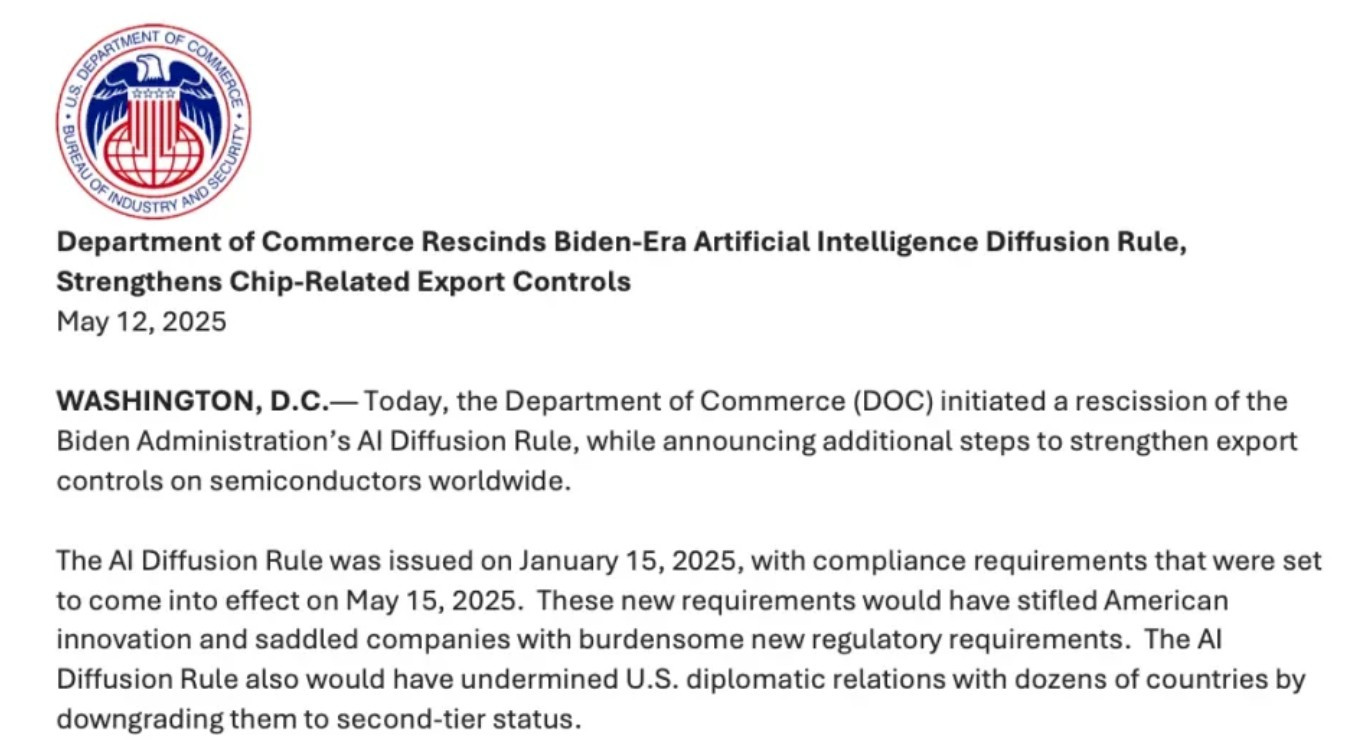
Did Washington Just Give U.S. Chipmakers the Green Light?
With the AI Diffusion Rule scrapped, U.S. chipmakers wasted no time. On May 14, Jensen Huang revealed that Nvidia would supply 18,000 GB300 chips—alongside its InfiniBand high‑speed interconnect to Saudi Arabia’s Humain AI initiative. AMD swiftly followed, pledging billions in chip and software support for a massive data‑center project linking Saudi and American facilities.
These announcements underscore how one regulatory reversal can immediately translate into multibillion‑dollar deals. The “Mar‑a‑Lago effect,” once dismissed as political theater, delivered tangible—and substantial—commercial relief.
Is Huawei the Real Target?
Far from a blanket deregulation, Commerce’s announcement contained a pointed carve‑out: any use of Huawei’s Ascend series AI chips abroad would now breach U.S. export controls under the “General Prohibition 10” (GP10) clause. The department even listed specific Huawei models, signaling that, while U.S. firms gain broader freedom, Huawei remains under tight unilateral sanctions.
GP10 broadly defines “knowing” involvement in illicit exports covering willful ignorance as much as outright awareness and exposes violators to steep penalties. This means that international cloud providers must secure licenses if they suspect Huawei chips will support sensitive military or weapons‑related AI training.
Is This a ‘Watered‑Down’ China Strategy?
In tandem with rescinding the broad AI Diffusion Rule, Commerce issued fresh guidance to cloud service operators: exporting U.S. chips or equipment to Chinese AI trainers poses “significant risk” unless licenses are obtained. The department flagged certain ECCN‑classified products like high‑performance servers and accelerator cards and warned that even unknowingly facilitating sensitive use could trigger license requirements.
Paradoxically, this dual approach easing restrictions overall while tightening them specifically against Huawei—creates a narrow corridor for American companies. They can now pursue Middle Eastern and other previously off‑limits markets, yet must remain vigilant against any entanglement with Chinese AI projects deemed sensitive.
What Lies Ahead for American Chipmakers?
For Nvidia and AMD, the policy shift couldn’t have come at a more opportune moment. After months of lobbying and a well‑publicized dinner—U.S. firms have won back global growth opportunities without diluting the government’s stance on Huawei. That balance appeals to both Silicon Valley’s desire for exports and Washington’s national‑security concerns.
Still, some uncertainties remain:
- H20 License Timing: Nvidia’s need for an indefinite license for H20 exports to China offers leverage and suspense—over when, or if, regulators will grant it.
- Future Rulemaking: With the AI landscape evolving rapidly, further adjustments to export controls are likely. Industry insiders will watch whether Commerce implements new caps, carve‑outs, or risk‑based licensing frameworks.
- Global R&D Dynamics: Experts like Bill Gates warn that over‑restricting technology can spur rival nations to accelerate homegrown innovation—potentially undercutting U.S. leadership in the long term.
The drama of a secretive dinner, a $500 billion investment pledge, and a last‑minute regulatory about‑face underscores one undeniable truth: in the high‑stakes game of AI and semiconductors, policy—even the most arcane licensing rules can make or break multi‑billion‑dollar markets overnight. For U.S. chipmakers now liberated to roam beyond familiar borders, the next chapter will hinge on how deftly they navigate both global demand and the ever‑shifting sands of Washington regulation.
This content is provided for informational or educational purposes only and does not constitute investment advice.