
Is Nvidia’s China Chip Strategy Triggering a Homegrown AI Breakthrough?

$NVDA ’s recent decision to halt all future Hopper‑architecture GPU launches in China marks a pivotal moment in the world of artificial intelligence hardware. CEO Jensen Huang confirmed that new U.S. rules, effective mid‑April, now require special export licenses for H20 GPUs—$NVDA ’s last legally exportable high‑end chip to China—forcing the company to absorb an estimated $5.5 billion one‑time charge. With China accounting for roughly 13 percent of Nvidia’s fiscal‑year revenue, the announcement not only tightens compute supply for Chinese data centers but also hands a rare market opening to domestic chip designers hungry to prove themselves.
What Changed in Nvidia’s China Playbook?
- Export licenses are now mandatory for H20 GPUs, effectively halting unlicensed shipments
- $NVDA will no longer introduce any Hopper‑based products to China beyond the H20 series
- Financial backlash includes a $5.5 billion write‑down and an anticipated 8 to 9 percent drop in data‑center revenue, according to Morgan Stanley
- H20’s performance was already limited to about 20 percent of the H100’s throughput and lacked tensor cores, overclocking and clustering features

Navigating Intellectual Property and Local R & D
Despite the export clampdown, $NVDA is deepening its presence in China through planned research facilities. Sources tell the Financial Times that Huang discussed a Shanghai R & D center with Mayor Gong Zheng during a recent visit. Yet in statements to CNBC, Nvidia made it clear that no GPU design files or sensitive blueprints will be sent to China for modification. Instead, the Shanghai operation—once approved by both local authorities and U.S. regulators—would focus on validating chip performance against Chinese workloads, optimizing software stacks for regional customers and collaborating on applications like autonomous driving. All core design, verification and final production remain anchored outside China, ensuring $NVDA ’s proprietary technology stays protected under U.S. export laws.
Can China’s Chipmakers Rise to the Challenge?
China’s ambition to build a $50 billion AI‑chip market by the end of the decade now hinges on homegrown suppliers stepping into the breach. Local firms such as Huawei, Cambricon and Hygon must demonstrate that their products can deliver at scale, plug seamlessly into established AI ecosystems and offer supply‑chain reliability amid geopolitical uncertainty. According to Omdia analyst Su Lianjie, China’s “intelligent computing centers” continue to expand rapidly and carry high domestic demand with strong policy support for import substitution. Success for these companies will hinge on rigorous performance benchmarking, robust software compatibility and assurances of uninterrupted manufacturing—even as global trade tensions persist.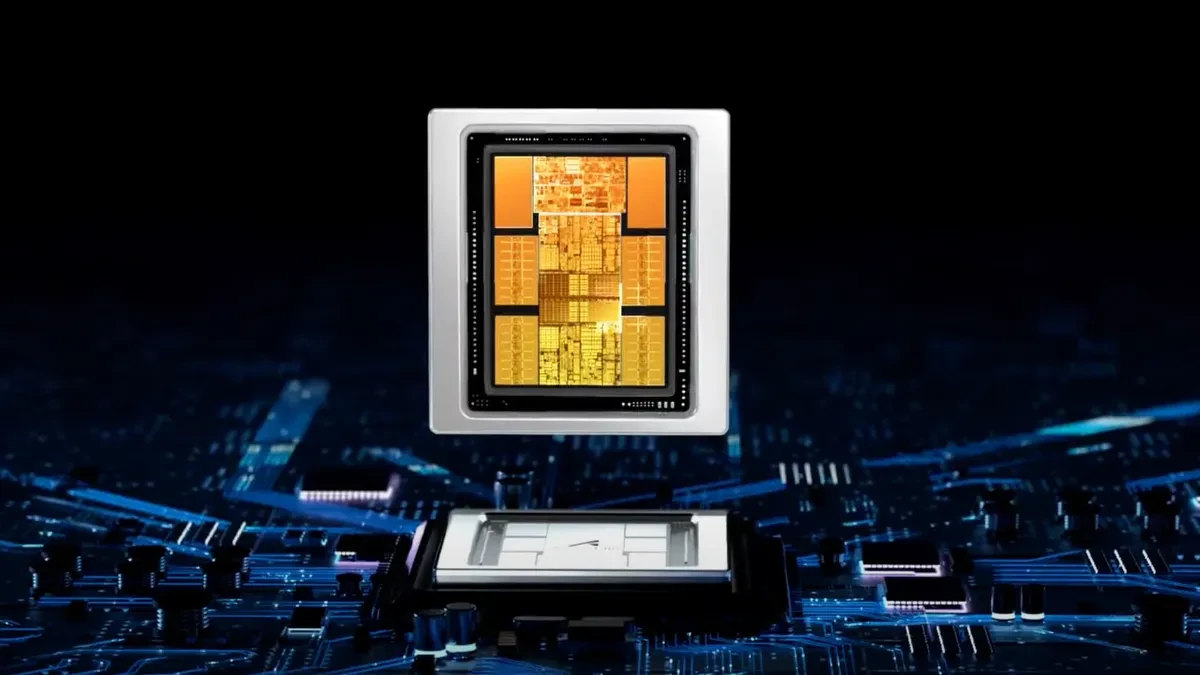
Political Backdrop and Future Policies
China’s foreign ministry has decried Washington’s restrictions as a politicization of technology that ultimately harms global innovation. Spokesperson Lin Jian warned that “malicious suppression” of China’s semiconductor industry could boomerang on U.S. interests. Jensen Huang has echoed this critique, arguing that limiting chip exports undermines America’s own competitive edge and national security. Meanwhile, the incoming U.S. administration has signaled intentions to replace the existing export‑control framework with “a much simpler rule” geared toward preserving U.S. AI leadership. If enacted, such revisions could reopen access not only in China but also in other strategic regions like the Middle East—where Nvidia recently joined an official trade delegation—altering the trajectory of the current standoff.
What Lies Ahead for the Global AI Chip Market?
In the immediate term, Nvidia must soften the blow of its Chinese revenue shortfall by accelerating alternate GPU lines that comply with export controls and by managing investor expectations around slower data‑center growth. For domestic Chinese vendors, the mandate is clear: capture market share now and build credibility through performance and ecosystem support. Over the medium term, the AI‑chip industry may fracture into two loosely connected ecosystems—one led by Nvidia and its overseas partners, the other driven by China’s state‑backed architecture push. Cloud providers, enterprises and research institutions will have to balance peak performance demands against supply‑chain risks, potentially diversifying across both camps to hedge against sudden policy shifts. The next chapters in this saga will reveal whether Nvidia’s strategic retreat from Hopper chips in China becomes a catalyst for indigenous innovation or a cautionary tale of how export policy reshapes technological leadership.
This content is provided for informational or educational purposes only and does not constitute investment advice.