
Trump’s $600 Billion Saudi Deal Isn’t Just Big — It’s Strategic

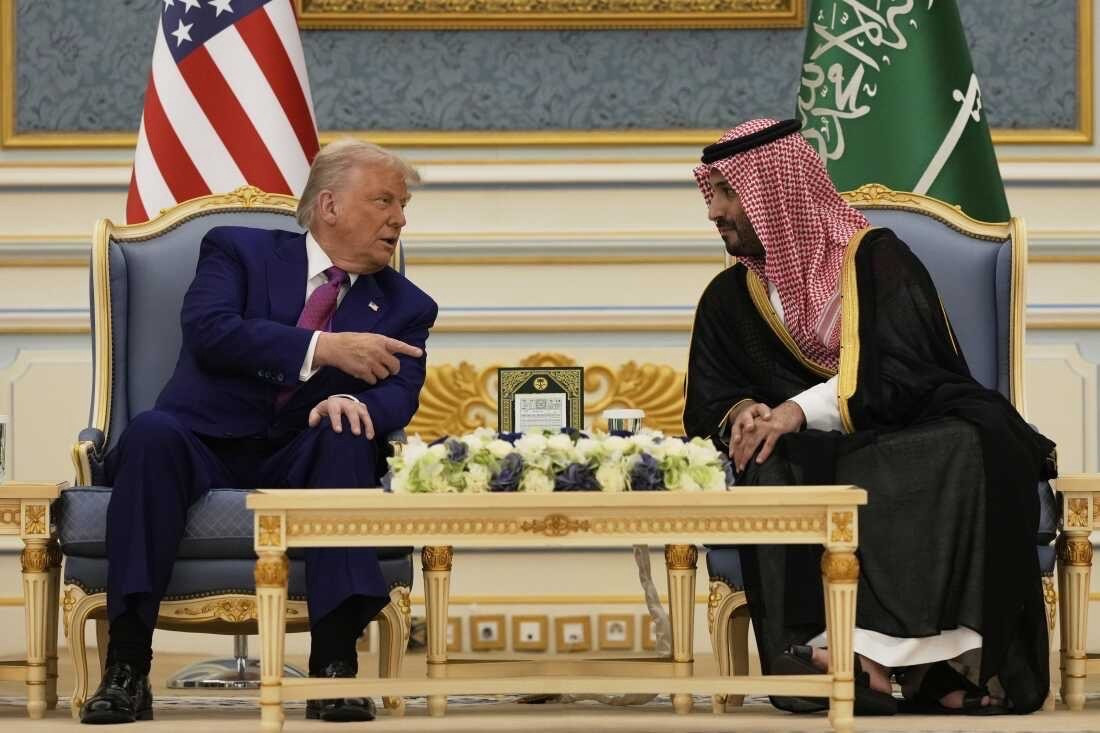
When President Donald Trump stood on stage in Riyadh and announced a $600 billion investment commitment from Saudi Arabia to the U.S., it wasn’t just another flashy “deal” headline. This was a meticulously choreographed power move—part economic theater, part geopolitical recalibration.
Let’s unpack what really happened here.
What’s Inside the $600 Billion?
This isn’t a single check. It’s a sprawling package that spans industries critical to the next phase of global growth:
• Tech & Energy: DataVolt is investing $20B into U.S. AI data centers and energy infrastructure. Another $80B is being funneled into joint tech investments involving U.S. giants like Google, Microsoft, and NVIDIA.
• Defense: A massive $142B arms deal includes upgrades to air and missile defense, maritime security, and military training.
• Healthcare & Industrial Manufacturing: Saudi-based Shamekh IV Solutions is spending $5.8B, including on a new IV fluid plant in Michigan.
• Infrastructure Services: U.S. firms are exporting $2B worth of engineering services for Saudi megaprojects like King Salman Park and Qiddiya City.
• Joint Investment Funds: The two nations launched new funds targeting aerospace, energy, and even global sports—each with $4–5B in capital.
Why Trump Pushed It So Hard
There are three layers to Trump’s strategy here:
1. Market Signaling
Trump explicitly said, “It’s going to go a lot higher,” referring to the stock market. The deal works like a bullish trigger—global capital flowing into the U.S. is meant to boost sentiment and valuations, especially in defense, energy, and tech stocks.
2. Strategic Re-Alignment
At a time when the global balance of power is shifting, this deal draws a thick underline under U.S.-Middle East cooperation. It tightens ties with Saudi Arabia on everything from military dependency to technological interdependence.
3. Domestic Leverage
With large investments directed into battleground states like Michigan, and with promises of drug price drops and job creation, the deal also functions as an election-season calling card.
This isn’t just foreign capital inflow. It’s part of a campaign narrative about economic leadership, job creation, and American industrial revival.
Why Saudi Arabia Is Willing to Spend Big
This is not generosity. It’s strategy.
Saudi Arabia is undergoing a once-in-a-generation economic transformation. Under Vision 2030, it’s aggressively diversifying away from oil. To do that, it needs global tech, infrastructure know-how, defense capability, and financial systems it can’t fully build at home.
The U.S. offers all of that—and global legitimacy. This deal isn’t just about investment returns; it’s about buying strategic access to innovation, stability, and influence.
At the same time, this helps Saudi Arabia position itself as more than a regional oil giant. It wants to be seen as a modern player in AI, healthcare, and global sports. That narrative gets a serious boost with U.S. partnership.
What It Means for Global Investors
Here’s the real takeaway: Capital is choosing its long-term partners.
This deal highlights where the “safe bets” are in an uncertain world:
• AI infrastructure
• Military modernization
• Critical healthcare manufacturing
• Global investment platforms
These are not just short-term plays—they’re sectors where national security and economic growth now overlap.
If we follow the money, the implication is clear: U.S.-based industries with strategic value are becoming magnets for sovereign wealth, even in a fragmented global landscape. And that trend may accelerate.
If you find this type of breakdown helpful, stick around. I’ll keep diving into the deals and moves that shape tomorrow’s markets.