
UnitedHealth's Stock Price Cuts in Half: Is It Time for Allocation?

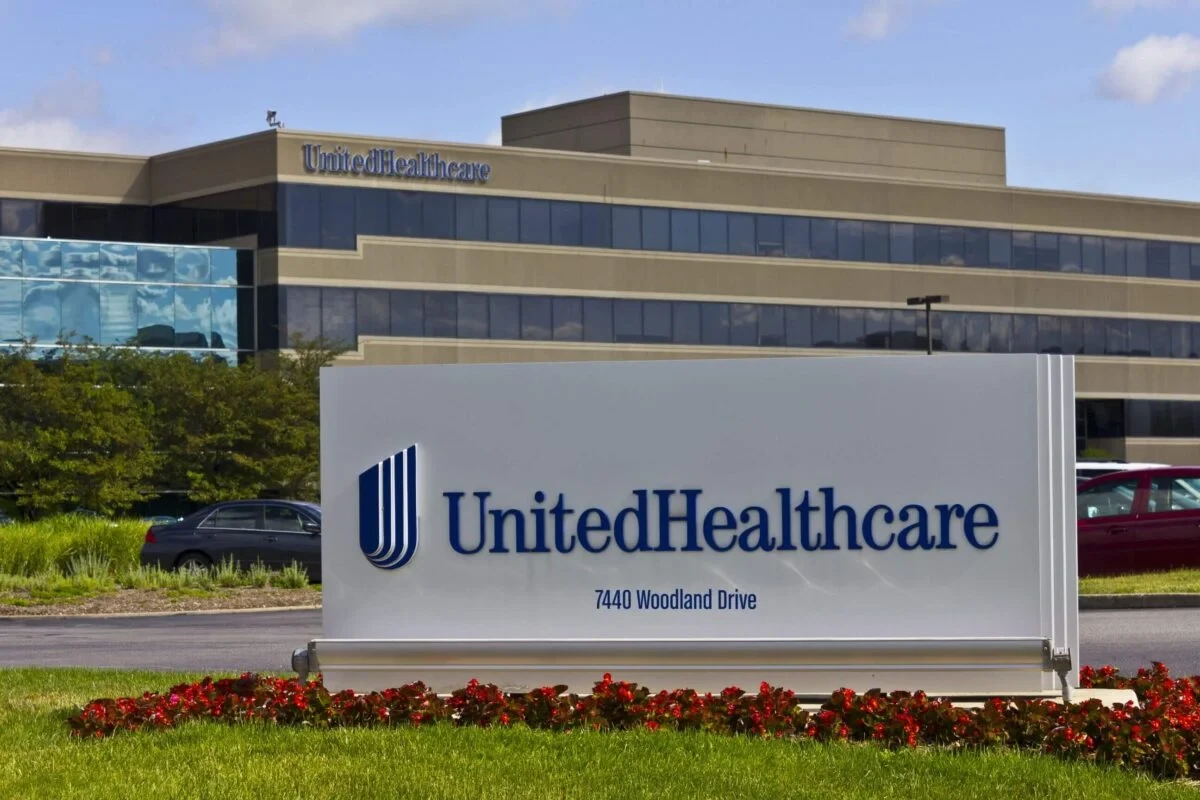
On December 4, 2024, a bullet ended the life of Brian Thompson, the CEO of UnitedHealthcare. Unlike in other shooting cases, public opinion didn't overwhelmingly side with the victim this time.
The public began voicing their grievances against UNH. They accused it of having a claim-denial rate of 32%, far exceeding the industry average of 16%, and of being a company that profits at the expense of critically-ill patients. Some even hailed the perpetrator as a modern-day Robin Hood. In response, UNH's stock price plummeted.
Misfortunes never come alone. On May 15, 2025, The Wall Street Journal reported that the U.S. Department of Justice was launching a criminal investigation into potential health-insurance fraud by UnitedHealth. After the news broke, UNH's stock price plunged again.
As of May 16, UNH's stock price had dropped from a peak of $606 to $291.91, a 51% decline.
UNH is the world's largest health-insurance company (by premium income) and an important blue-chip stock on the U.S. stock market, with a 20-year historical compound annual growth rate of 8.89%.
Now, many investors are wondering: Is it time to buy at the bottom?
UnitedHealth Under Criminal Investigation
On May 15, 2025, The Wall Street Journal reported that the group was under criminal investigation for possible health-insurance fraud. As early as February 2025, there were reports that the U.S. Department of Justice was conducting a civil-fraud investigation into how the group recorded diagnostic results, as these results led to additional payments under the Medicare Advantage (MA) program.
MA is part of the U.S. federal health-insurance system. In short, it outsources a comprehensive health-insurance package originally provided by the government to commercial insurance companies, covering hospitalization insurance, outpatient care, and prescription-drug plans.
The basic mechanism of MA is that the federal health-insurance program pays insurance companies per enrollee based on their health-risk levels. Insurance companies like UNH aim to keep actual expenditures lower than government allocations through cost-control measures to turn a profit.
UnitedHealth Group is the largest commercial health-insurance company in the U.S. and globally, and a key player in the MA program.
As of 2024, UnitedHealthcare, UNH's health-insurance division, covered over 50 million Americans, with over 9 million MA enrollees, ranking first in market share in this area. Its other core business division, Optum, provides medical services, pharmacy management, and health-data analysis, and employs over 70,000 doctors, being deeply integrated into the U.S. healthcare system.
The key issue in UNH's criminal investigation by the U.S. Department of Justice isn't the traditional claim-denial problem, but whether the group inflated patients' conditions to defraud the federal government for higher allocations.
Is There Really a Problem with UnitedHealth?
If UNH had some "tricks" in policy payouts in recent years, the profit margin of its insurance business should be good, perhaps even much higher than that of peers.
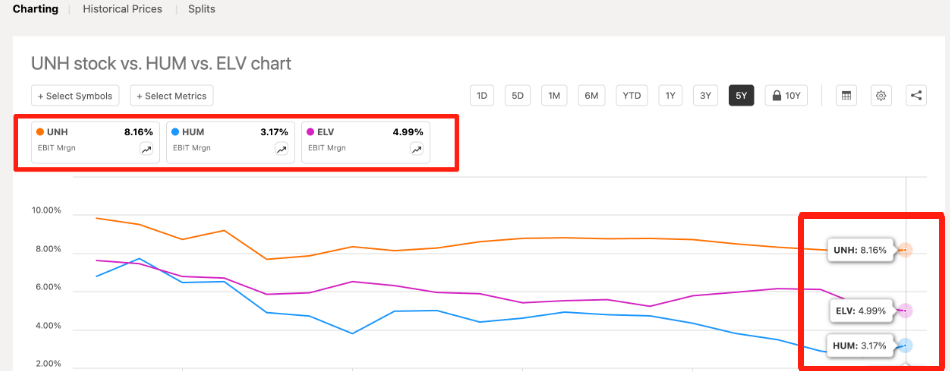
By comparing UNH's EBIT Margin with those of HUM and ELV, I found that UNH's margin was indeed significantly higher.
Could it be that UNH has been cooking the books on policy payouts to boost its profits?
Upon further investigation, I found that UnitedHealth's two main business segments: health insurance and health services. These two segments have quite different profit margins. The profit margin of the health-insurance segment is less than 5%, similar to that of peers. The health-services segment has a margin of 7-8%, which raises the overall profit margin.
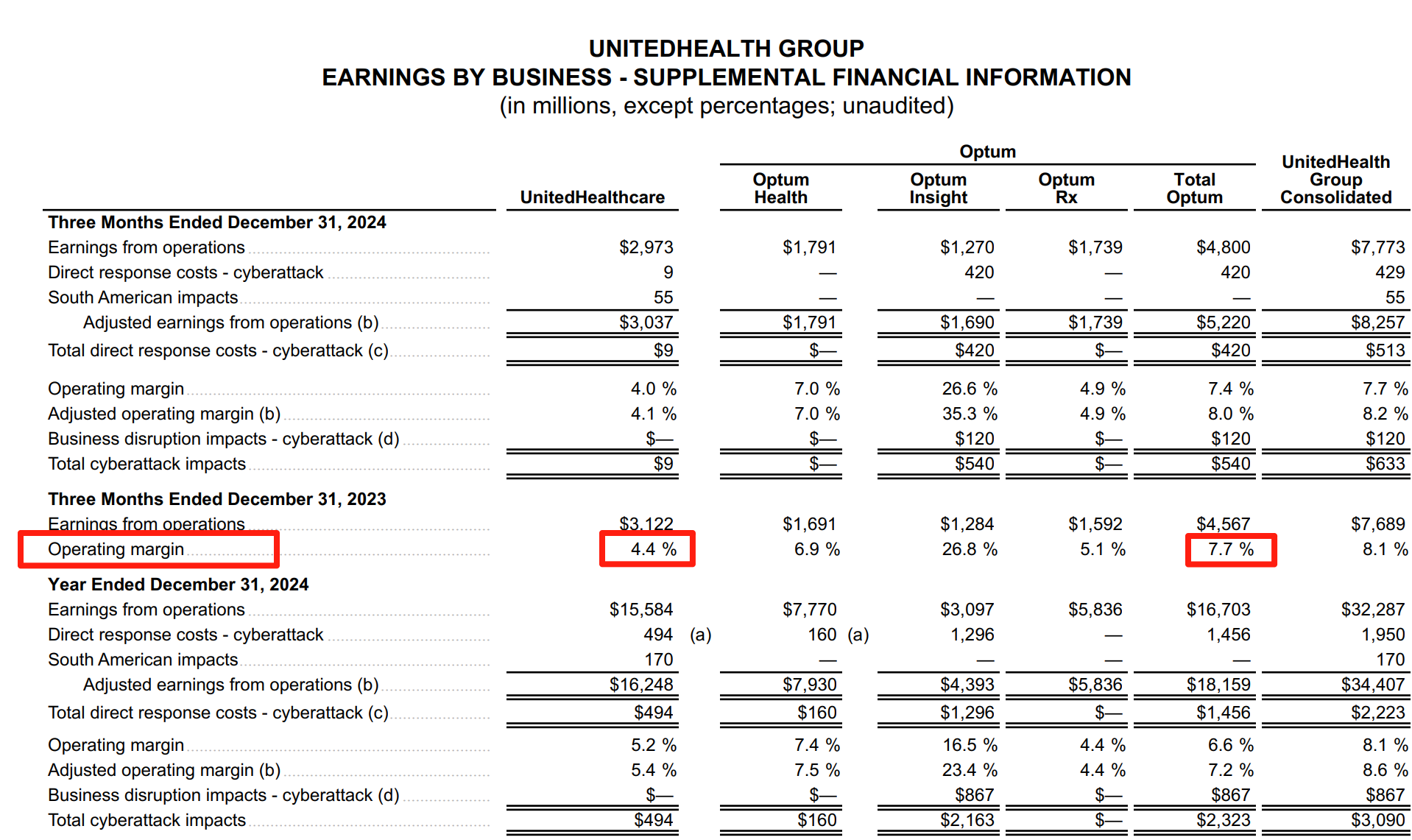
So, the profit margin of UnitedHealth's insurance business is still at the industry average. There's no sign of problems with the insurance business when compared with peers.
Is It Time to Buy at the Bottom?
The continuous release of negative news on Wall Street has caused UnitedHealth's stock price to plunge in the short term.
However, last Thursday and Friday, UnitedHealth's executives made large-scale consecutive purchases. The CEO even bought $25 million worth of shares. This indicates that this sharp decline might be a coordinated short-selling maneuver by UnitedHealth's insiders and Wall Street.
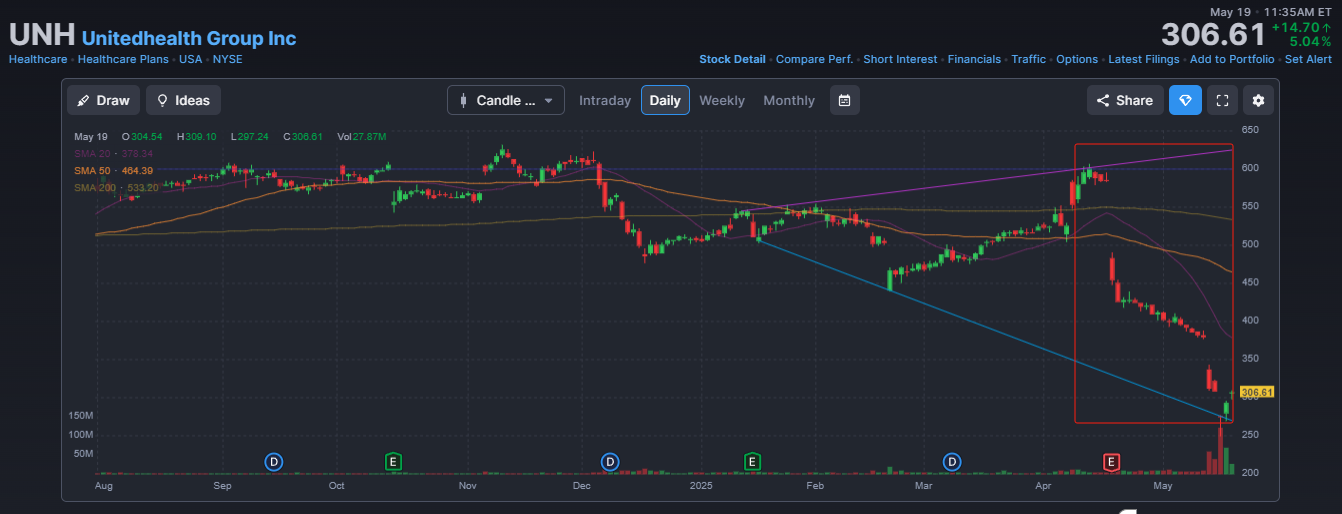
I think that due to the rapid decline caused by the flurry of negative news, the current valuation is indeed attractive, making it a relatively good opportunity to buy at the bottom.
Any positive news in the future could trigger a rebound. But it may take time, especially considering Trump's plans to regulate pharmaceutical prices, which are closely related to insurance companies.
Incidentally, I've seen people comparing UnitedHealth's current stock price to NVIDIA's $90 price a few months ago. I find this comparison quite interesting. What's your take on it? Let me know in the comments.$UNH
Disclaimer: This is just my opinion based on what I’m seeing. Not financial advice—do your own research before investing.