
Could Tech Stocks Defy Moody’s Downshift?

Last Friday, Moody’s trimmed the United States credit rating from Aaa to Aa1, yet major technology stocks barely flinched. After an initial dip, $NDAQ and the SPDR Technology Select Sector ETF both rebounded into positive territory by the close. Rather than a credit scare, it was a confluence of expectations, yield dynamics and the unstoppable AI narrative that steadied the sector.
Investors have been here before. When Standard & Poor’s cut the US rating in 2011, the SPDR tech ETF plunged over six percent on day one and wobbled for weeks. A similar shock hit in 2023 when Fitch stripped the US of its AAA status, yet the selloff in tech was a far more muted four percent. This time around, Moody’s downgrade was flagged well in advance and America’s debt outlook has loomed large for months, muting the element of surprise.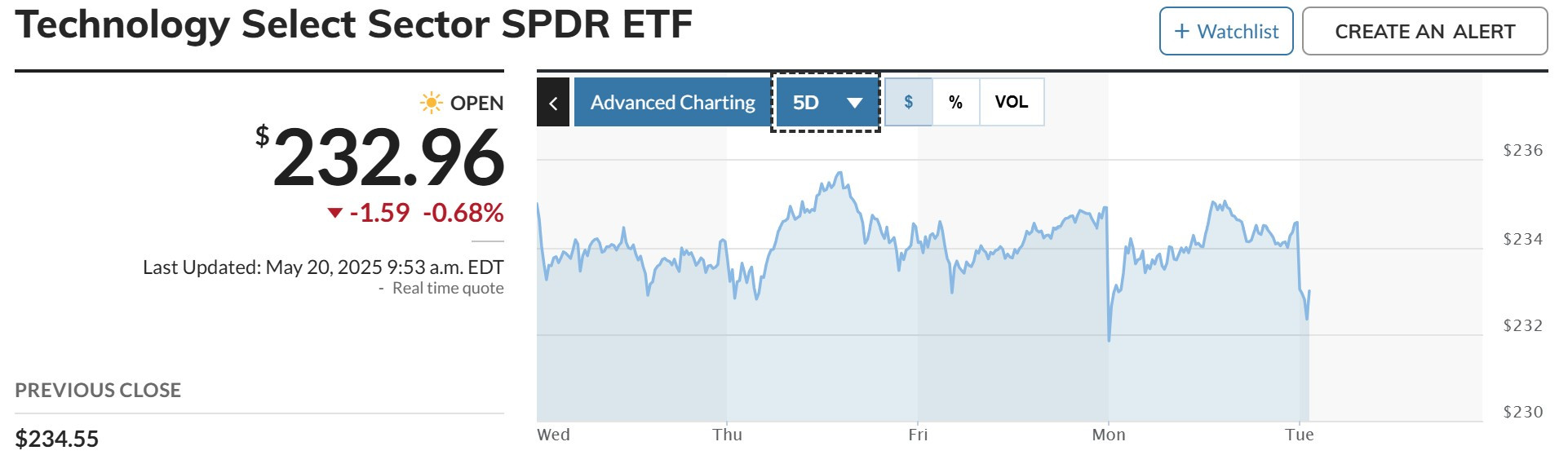
Can Tech Thrive Despite Moody’s Shock?
Market participants largely shrugged at Friday’s credit action. Moody’s had already shifted its outlook to negative last November, citing the steady climb in federal debt and rising interest obligations. Analysts note that few surprises remain when a downgrade has been telegraphed for half a year. On Monday, $SPX opened down nine tenths of a percent and $NDAQ fell one point four percent. Yet both indexes regained ground by the close, a pattern that underscores how baked‑in expectations now govern market moves.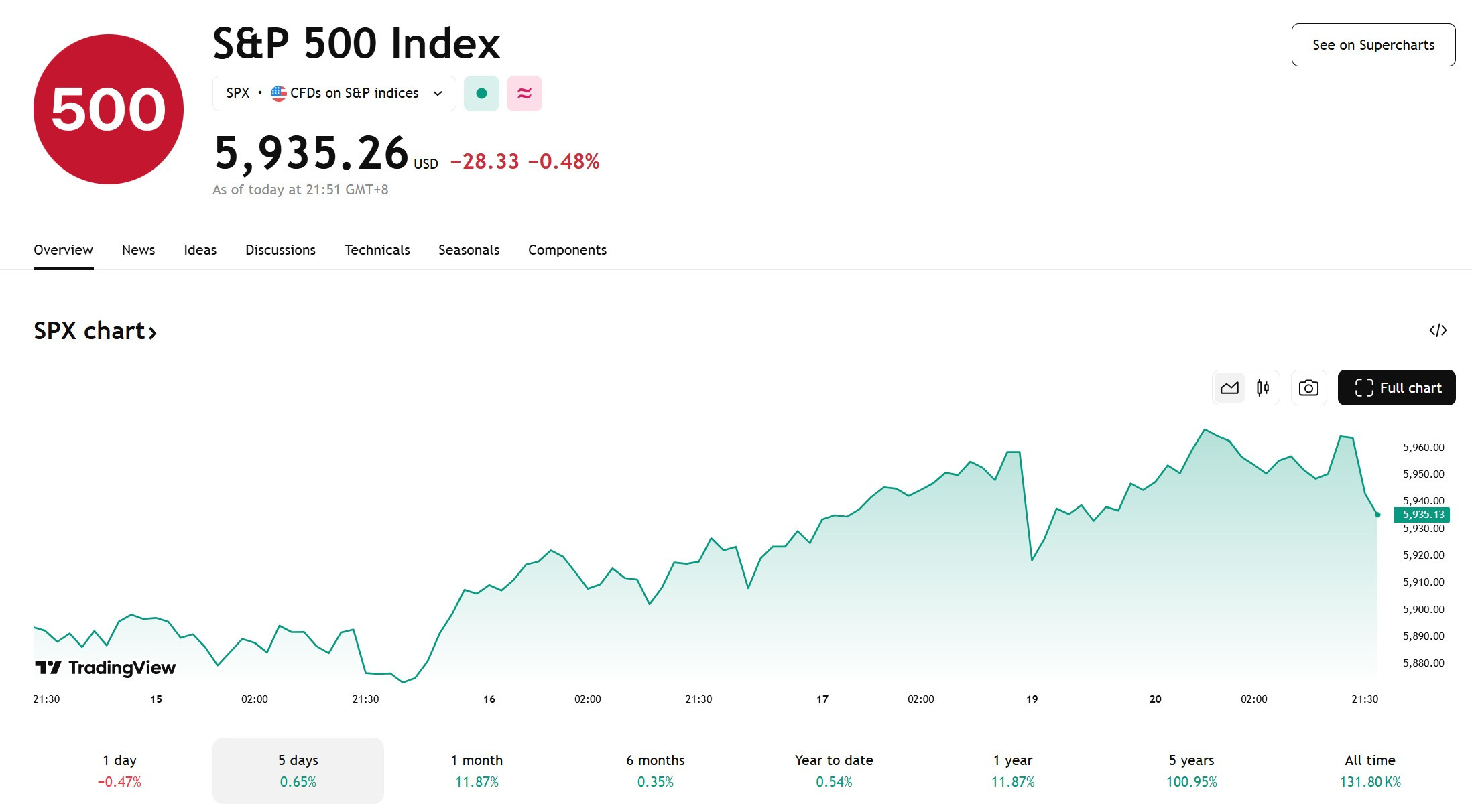
It wasn’t that investors suddenly deemed US debt risk free. Instead they recognized that the core challenge facing stocks lies elsewhere: yields on ten year Treasury notes. As yields flirted with four point five percent intraday, the relative appeal of so‑called risk free paper briefly surged. Once rates settled back to around four point four percent, tech names found their footing again.
Are Higher Yields the Real Threat?
Rising Treasury yields matter more than credit grades when it comes to equity valuations. A higher risk free rate forces investors to demand steeper returns from growth‑oriented sectors where profits sit years ahead. In plain terms, five percent yields on government bonds can outshine the promise of far‑off technology profits.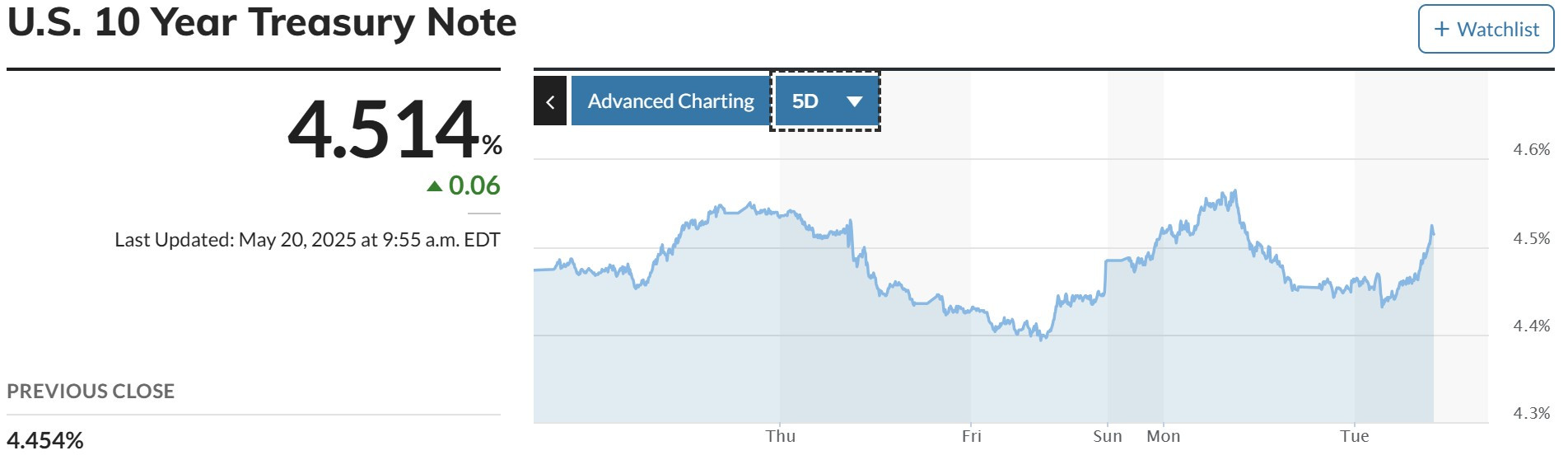
A closer look reveals three key reasons yields outweigh ratings for tech:
• Bond yields set the baseline cost of capital that discounts future earnings.
• Tech companies rely on cheap funding for research and expansion.
• Portfolio mandates often tilt toward bonds when yields breach certain thresholds.
Morgan Stanley’s chief strategist Mike Wilson argues that any pullback sparked by Moody’s action may simply present a buying opportunity. He points out that a temporary spike in ten year yields above four point five percent could prompt modest valuation compression—precisely when long term investors should consider stepping in.
AI Momentum Offers Unexpected Support
Nothing has underpinned confidence in tech stocks more than the artificial intelligence boom. Hyperscale cloud providers continue to pour billions into AI infrastructure, and the so called five out of seven big tech giants—$AMZN , $GOOGL , $AAPL , $META and $MSFT —delivered robust first quarter results. $NVDA ’s earnings, due next week, promise another potential catalyst.
While guidance remains murky for most firms, President Trump’s provisional tariff pause with China has lent an air of stability to supply chain concerns. In this context, AI emerges as both a growth driver and a psychological buffer, convincing investors that technological dominance will triumph over fiscal headlines.
Seven Years of Powell’s Debt Alarm
Fed Chair Jerome Powell has spent the past seven years warning that America’s fiscal path is unsustainable. From his first Jackson Hole speech to his most recent public appearances, he has consistently flagged the long term risks of mounting deficits. Yet monetary policy remains the Fed’s domain; Powell has no direct authority over congressional budget decisions.
Still, his persistent admonitions have shaped market discourse. In mid April, he cautioned that deficits at full employment demand correction. On May seventh, he urged lawmakers to restore fiscal health, stressing that runaway debt could eventually constrain the central bank’s ability to pursue stable prices. While Powell offered no policy prescriptions, his message resonates: unchecked borrowing amplifies financial vulnerabilities.
Might this Be a Buy the Dip Moment?
As Moody’s downgrade reverberates, some experts see a silver lining. Mike Wilson believes that the resulting pullback could be the pause investors need to accumulate shares at more attractive levels. He highlights two durable upside factors: the tariff truce that may breathe new life into trade sensitive names and the ever strengthening earnings outlook that underwrites long term returns.
Yet not all on Wall Street share Wilson’s optimism. Morgan Stanley’s CIO Lisa Shalett warns that the recent rally may lose steam as revenue growth slows and profit momentum fades. Even Jamie Dimon of JPMorgan cautions that record deficits and geopolitical tensions are under priced risks. In their view, markets may be too complacent given the twin dangers of inflation and global friction.
What Lies Ahead for Investors
In the days ahead, attention will swing back to Treasury auctions and any fresh signals from Washington on debt and spending legislation. Meanwhile, tech earnings, especially Nvidia’s results, will likely dictate short term sentiment. If yields stay below five percent and AI companies continue to outpace street estimates, the sector may chart new territory despite a weaker credit grade.
For now, the narrative is clear: a downgrade alone cannot derail the tech juggernaut. Yields hold the real sway over valuations, while artificial intelligence and strong corporate earnings offer a powerful counterweight. Whether this is the moment to buy into a brief dip or to step aside on valuation concerns remains the central debate among strategists. One thing is certain investors will be watching Washington, bond markets and the next wave of AI updates all at once.
This content is provided for informational or educational purposes only and does not constitute investment advice.