
The U.S. Senate Just Took a Major Step Toward Stablecoin Regulation — Here’s Why It Matters

On Monday night, the U.S. Senate advanced the GENIUS Act, a bill designed to regulate stablecoins—cryptocurrencies pegged to real-world currencies like the U.S. dollar. This may sound like a niche regulatory development, but it has far-reaching implications for the future of the digital financial system, the role of the U.S. dollar, and the intersection of crypto and traditional finance.
Let’s walk through what just happened, what’s in the bill, and why this moment is worth watching.
What Is the GENIUS Act?
The GENIUS Act—short for Guaranteeing the Essential Nature and Integrity of the U.S. Dollar—proposes the first federal regulatory framework for stablecoin issuers.
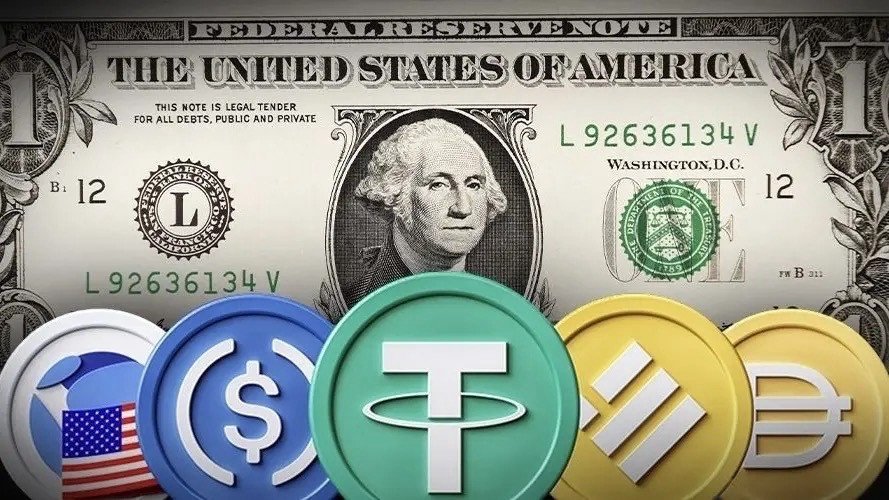
A quick primer: What are stablecoins?
Stablecoins are a type of cryptocurrency that are designed to maintain a stable value, typically pegged 1:1 to a fiat currency like the U.S. dollar. Unlike volatile assets such as Bitcoin or Ethereum, stablecoins aim to provide the speed and programmability of crypto with the price stability of traditional money.
They’re widely used in:
• Crypto trading and DeFi applications
• Cross-border payments
• Access to U.S. dollars in regions with weak banking systems or inflation
Popular examples include:
• USDT (Tether)
• USDC (issued by Circle)
Today, stablecoins collectively represent hundreds of billions of dollars in transaction volume—but they remain largely unregulated in the United States. The GENIUS Act aims to change that.
What Happened in the Senate?
On May 20, the Senate passed a cloture vote—a key procedural step that required a 60-vote majority to end debate and move the bill forward for final passage.
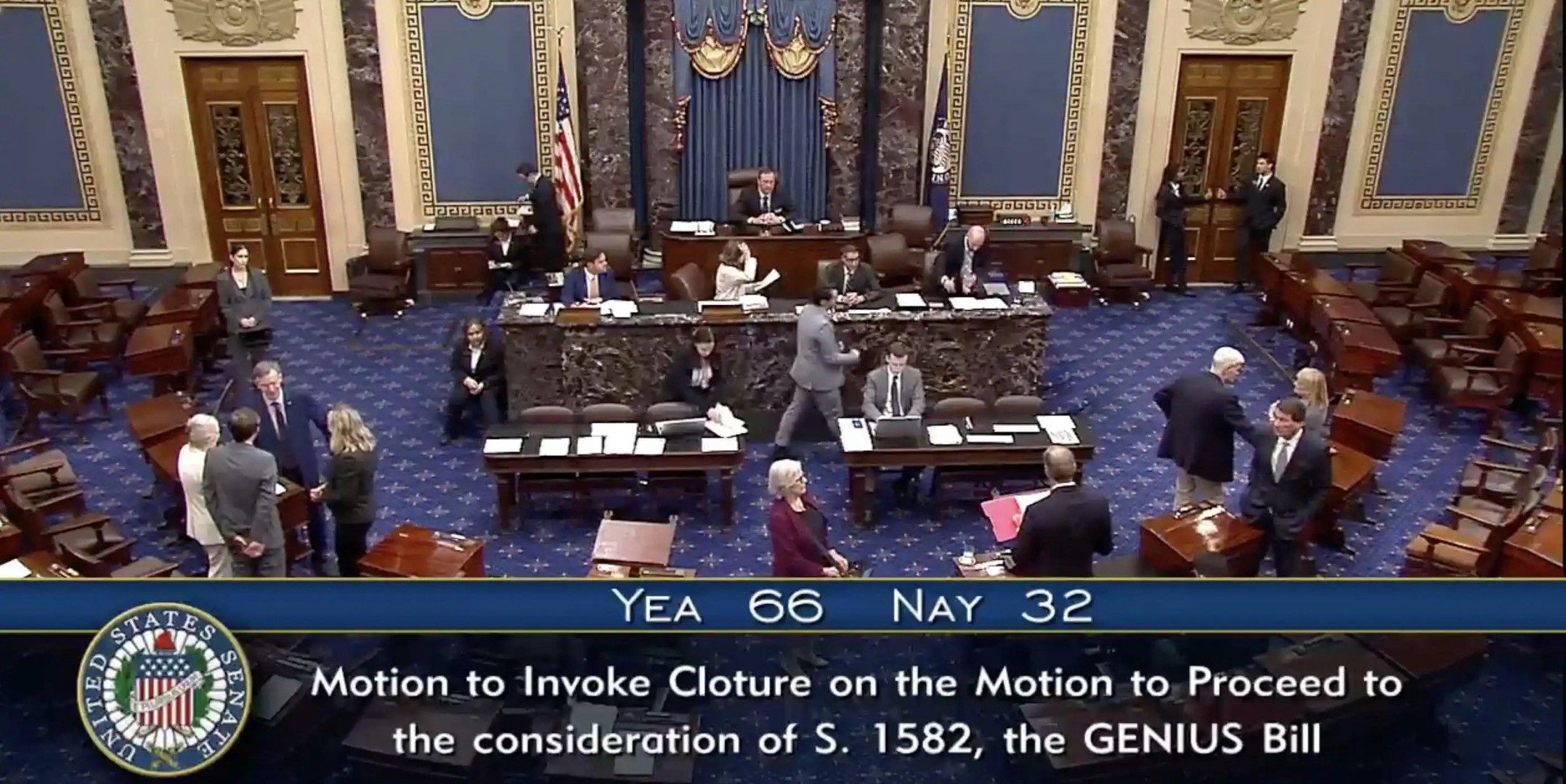
This shows the bill has real bipartisan momentum, something rare in today’s Congress. Senator Bill Hagerty (R-Tenn.), who sponsored the legislation, said the move was “groundbreaking” and framed it as a way to modernize the U.S. payment system while reinforcing the global role of the dollar.
In parallel, the House of Representatives is developing its own version of the stablecoin bill. If both chambers pass a version, a final compromise would likely emerge later this year.
Not Everyone Is On Board
This isn’t the first time the bill has come up. Earlier in May, the GENIUS Act failed a procedural vote when Senate Democrats abruptly withdrew support over concerns about:
• National security risks
• Anti-money laundering (AML) loopholes
• Political implications, especially in an election year
Senator Elizabeth Warren (D-Mass.) remains a vocal opponent. She argues the bill could enable financial corruption and empower interests aligned with former President Trump. Nonetheless, the latest vote suggests that opposition is weakening—or at least being outweighed by bipartisan interest in regulation.
Why This Matters Beyond Crypto
What makes this bill so significant isn’t just its impact on crypto markets. It’s the strategic implications for the U.S. dollar and global finance.
Here’s the bigger picture:
1. Stablecoins are functioning as unofficial digital dollars. In many parts of the world, they are already a faster, more accessible way to hold and transfer dollar value.
2. This bill is a de facto endorsement of dollar-backed stablecoins. It signals the U.S. is willing to allow private sector-driven digital dollars to flourish—under proper regulation.
3. It’s also a geopolitical play. By regulating dollar-backed stablecoins, the U.S. could strengthen the dollar’s reach in an increasingly multipolar financial landscape where other countries are exploring their own digital currencies.
This could be the beginning of a hybrid system: public dollar issuance (Treasuries, Fed policy) combined with private digital distribution (regulated stablecoins).
What to Watch as an Investor
This bill’s progression could have ripple effects across multiple sectors:
• Stablecoin issuers like Circle may gain investor confidence and valuation uplift from regulatory clarity.
• Crypto infrastructure providers that offer compliance, auditing, and payments APIs could see new demand.
• U.S. Treasuries may play an even more central role, as some proposed frameworks require stablecoins to be backed by short-term government debt.
This could be the first step toward a regulated on-chain U.S. dollar ecosystem—something that blends traditional capital markets with blockchain rails.
Final Thoughts
The GENIUS Act isn’t just another crypto bill. It’s a sign that the U.S. is preparing to shape the next phase of global finance on its own terms. By establishing clear rules for digital dollars, the government isn’t just catching up to crypto—it’s beginning to define the rules of the game.
If passed, this bill could pave the way for a more integrated, secure, and globally relevant digital dollar infrastructure. And we may look back on this week as the moment that shift began.