
Xiaomi’s 3nm Chip “Xuanjie O1” Enters Mass Production

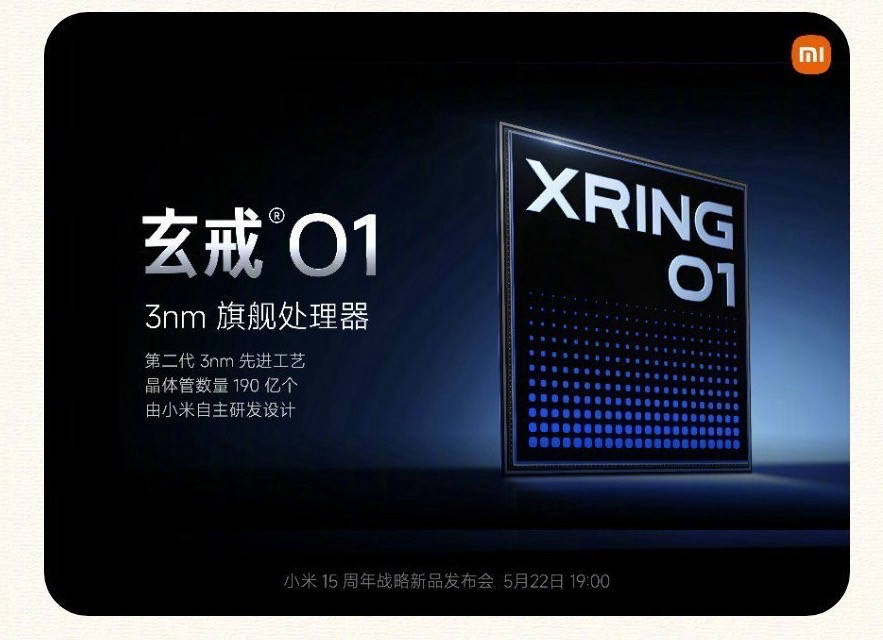
On May 19, Xiaomi announced that its self-developed 3nm chip, the Xuanjie O1, has entered mass production. This makes Xiaomi the fourth company in the world, after Apple, Qualcomm, and MediaTek, to lead the design of a 3nm SoC. The news quickly drew attention from the capital markets, not just for its technical significance, but for its timing—amid tightening U.S. export restrictions on China’s semiconductor industry.
From an investor’s perspective, the move raises both opportunities and key concerns.
Geopolitical Headwinds: U.S. Export Controls Still Loom Large
Since 2019, the U.S. has implemented multiple rounds of semiconductor export restrictions targeting China, particularly around cutting-edge chip design and advanced manufacturing equipment. While Huawei and SMIC have been directly sanctioned, Xiaomi remains outside the U.S. Entity List, giving it more freedom to operate in global supply chains.
The Xuanjie O1 reportedly contains around 19 billion transistors, below the U.S.’s current threshold of 30 billion for triggering advanced chip restrictions. This keeps Xiaomi’s chip technically outside the most severe bans—for now.
But U.S. policy remains fluid. Any future updates or tightening could affect key suppliers, such as TSMC or EDA software providers. For investors, this introduces meaningful regulatory risk.
Xiaomi’s Chip Strategy: Progress with Limitations
The Xuanjie O1 marks a notable milestone for Xiaomi in terms of chip design autonomy. It reduces reliance on Qualcomm and opens the door to vertical integration, potentially boosting gross margins and brand differentiation—especially in the premium smartphone market.
However, Xiaomi remains dependent on global suppliers: TSMC handles manufacturing, and the chip is built on ARM architecture using international EDA tools. Xiaomi has made progress in design, but not in fabrication or IP ownership.
This creates a bottleneck—if external suppliers or geopolitical forces shift, Xiaomi’s chip ambitions could face abrupt disruption.
Business Impact and Valuation Considerations
• Competitive Differentiation
The new chip could boost Xiaomi’s high-end smartphone positioning. But near-term impact will depend on actual performance, thermal efficiency, and user adoption.
• Risk-Reward Tradeoff
In-house chip development enhances control but also increases R&D costs and operational complexity. Xiaomi has reportedly spent over 13.5 billion RMB and built a team of 2,500+ engineers—a long-term bet that may weigh on short-term margins.
• Market Sentiment and Valuation
Investors may view this move as a sign of Xiaomi’s evolving tech moat. However, any disappointment in performance or policy escalation could trigger negative repricing.
• Tech Sovereignty and Policy Watch
Xiaomi’s positioning benefits from China’s push for tech self-sufficiency—but it also exposes the company to policy volatility, both at home and abroad. Strategic execution in this space will be critical.
Long-Term Optionality Meets Policy Risk
The mass production of Xuanjie O1 shows Xiaomi’s growing ambitions in core technology. For investors, it signals the possibility of higher long-term value creation, driven by product differentiation and tighter vertical integration.
Still, the structural risks remain high—geopolitics, supply chain fragility, and uncertain chip economics are all material factors. Investors should approach with cautious optimism and monitor real-world performance post-launch.
As an investor, I’ll be tracking three key variables:
• The chip’s actual capabilities compared to Qualcomm and Apple’s SoCs
• Xiaomi’s ability to scale production without external disruption
• Shifts in global semiconductor policy, especially from the U.S.
One more thing: Xiaomi will officially unveil the Xuanjie O1 at its launch event on the evening of May 22. This will be a crucial moment to assess performance specs, product integration plans, and strategic clarity—watch closely.