
Could Hong Kong’s Stablecoin Law Tilt the Balance of Digital Currency Power?

Hong Kong’s swift passage of its Stablecoin Bill marks a watershed moment in the global race for “digital minting rights.” By bringing fiat-pegged digital coins under robust legal oversight and laying out stringent licensing requirements, the city-state has signaled its intent to capture a strategic advantage in the emerging digital currency landscape. With institutions set to apply for regulated stablecoin issuance by year’s end, Hong Kong joins the United States and other financial hubs in recognizing that control over digital currency issuance may define monetary influence in the years ahead.
What Makes Hong Kong’s Approach So Bold?
First and foremost, Hong Kong’s legislation moves stablecoins from regulatory ambiguity into a clear legal framework. The new law mandates that any entity issuing a fiat-referenced stablecoin—whether pegged to Hong Kong dollars or other official currencies—must obtain a license from the Monetary Authority. Crucially, issuers will need to meet these core conditions:
- Entity presence: A licensor must be a locally incorporated company or a foreign-incorporated firm recognized under Hong Kong law.
- Capital adequacy: Each licensee must maintain a paid-up capital of at least twenty-five million Hong Kong dollars.
- Full reserve requirement: Reserve assets must at all times match or exceed the circulating stablecoin value. Fractional reserves are expressly prohibited.
- Redemption guarantee: Holders who request redemption must receive face-value payment promptly and without burdensome conditions or unreasonable fees.
These stipulations, coupled with robust anti–money laundering and risk-management protocols, aim to ensure that stablecoins are not only safe for end users but also serve as reliable conduits for cross-border payments and decentralised finance services.
Why Stablecoins Have Become Impossible to Ignore
Stablecoins—digital tokens pegged to fiat or other hard assets—have grown from niche cryptocurrency tools into major holders of government bonds and potential drivers of monetary demand. Consider the remarkable ascent of one leading issuer: as of March 2025, Tether’s U.S. Treasury holdings reached $98.5 billion, up from virtually zero in 2020. This surge places stablecoin issuers among the top overseas holders of American sovereign debt, underscoring their growing role in the global funding ecosystem. Analysts at Citigroup forecast the stablecoin market could swell to $1.6–$3.7 trillion by 2030.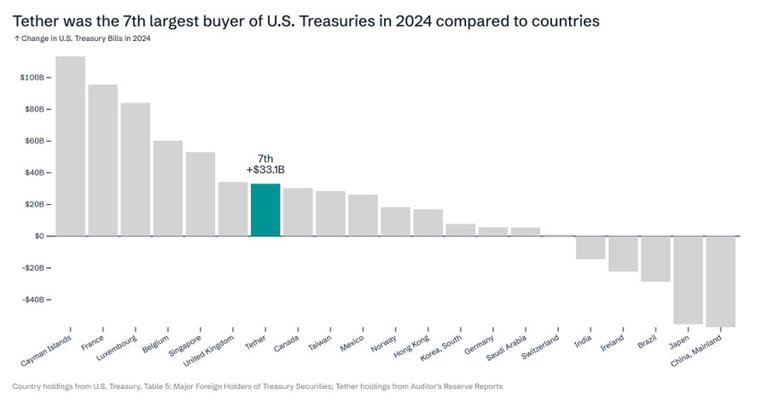
Stablecoins bridge traditional finance and digital assets by offering faster, cheaper transactions without the volatility of pure cryptocurrencies. Their key use cases include:
- Entry into decentralised finance—tracking issuance growth offers a barometer of overall digital-asset health.
- Safe-value storage—stablecoins allow value preservation without exposure to native token swings.
- Cross-border payments—regulatory clarity could unlock broader adoption for remittances and international trade.
Yet the TerraUSD collapse of 2022 proved that insufficient backing and opacity can unleash systemic risk. Hong Kong’s law directly addresses these concerns by enforcing full reserves and transparency.
How the U.S. Is Scrambling to Keep Pace
Across the Pacific, American policymakers also see stablecoins as vital to preserving the dollar’s preeminence. The U.S. Senate’s recently introduced GENIUS Act has yet to reach a floor vote but enjoys bipartisan support. Meanwhile, the House has advanced its own stablecoin bill out of committee. Deutsche Bank reports that Washington aims to establish a regulated, dollar-backed stablecoin ecosystem by August 2025. Proposed legislation would require issuers to hold short-term U.S. Treasuries as collateral, effectively creating a structural demand for American debt.
For the United States, stablecoins offer dual benefits: they reinforce dollar-based global transactions and provide an anchor for dollar hegemony in digital finance. Citigroup warns that the overwhelming majority of today’s stablecoins are dollar pegged, reflecting enduring confidence in U.S. currency. As Congress races to finalise rules, regulated issuers could start issuing tokens under clear federal oversight by late 2025 or early 2026.
Is the Battle for Digital Minting Power Just Beginning?
Hong Kong’s preemptive moves suggest that mastery over stablecoin issuance may become a new dimension of monetary sovereignty. By staking its claim early, the city hopes to draw fintech innovators and institutional issuers eager for legal certainty. The Monetary Authority’s accompanying sandbox programme will allow qualified applicants to pilot their stablecoin models under regulatory supervision before full licensing, smoothing the path for real-world deployments.
While Washington and other financial centres craft their own frameworks, the ultimate victor in the quest for digital currency influence remains uncertain. Will the jurisdiction that issues the most widely used stablecoins command disproportionate economic sway? Can full-reserve requirements coexist with the need for scalable stablecoin models? And will retail users and enterprises flock to licensed platforms, or will decentralised, off-shore alternatives persist?
In the rapidly evolving digital economy, Hong Kong’s Stablecoin Bill illustrates a broader trend: major economies are no longer content to let private entities dictate the rules of money creation. Control over digital minting rights has become a nonnegotiable pillar of monetary strategy. As legislative debates unfold from Capitol Hill to Brussels and beyond, one fact is clear: the era of unregulated stablecoins is ending, and the future of money is being shaped by those who write the rules.
This content is provided for informational or educational purposes only and does not constitute investment advice.