
Bitcoin Hits All-Time High! Hong Kong Passes Stablecoin Bill Ahead of the U.S.!

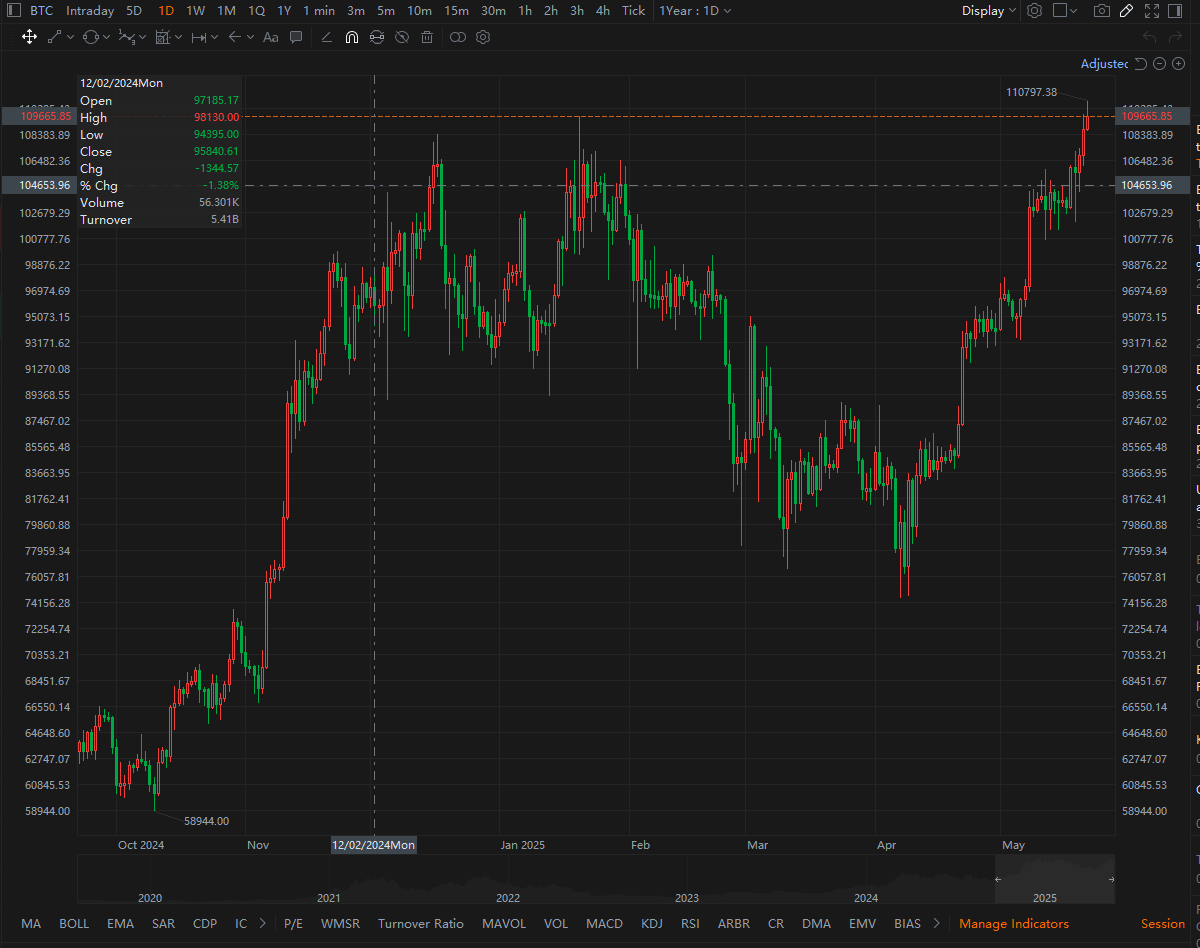
Overnight, Bitcoin surged over 2%, briefly approaching $110,000 and hitting a new all-time high.
Just days after the U.S. stablecoin bill, the GENIUS Act, passed a procedural vote in the Senate, Hong Kong rushed to pass its own stablecoin bill yesterday.
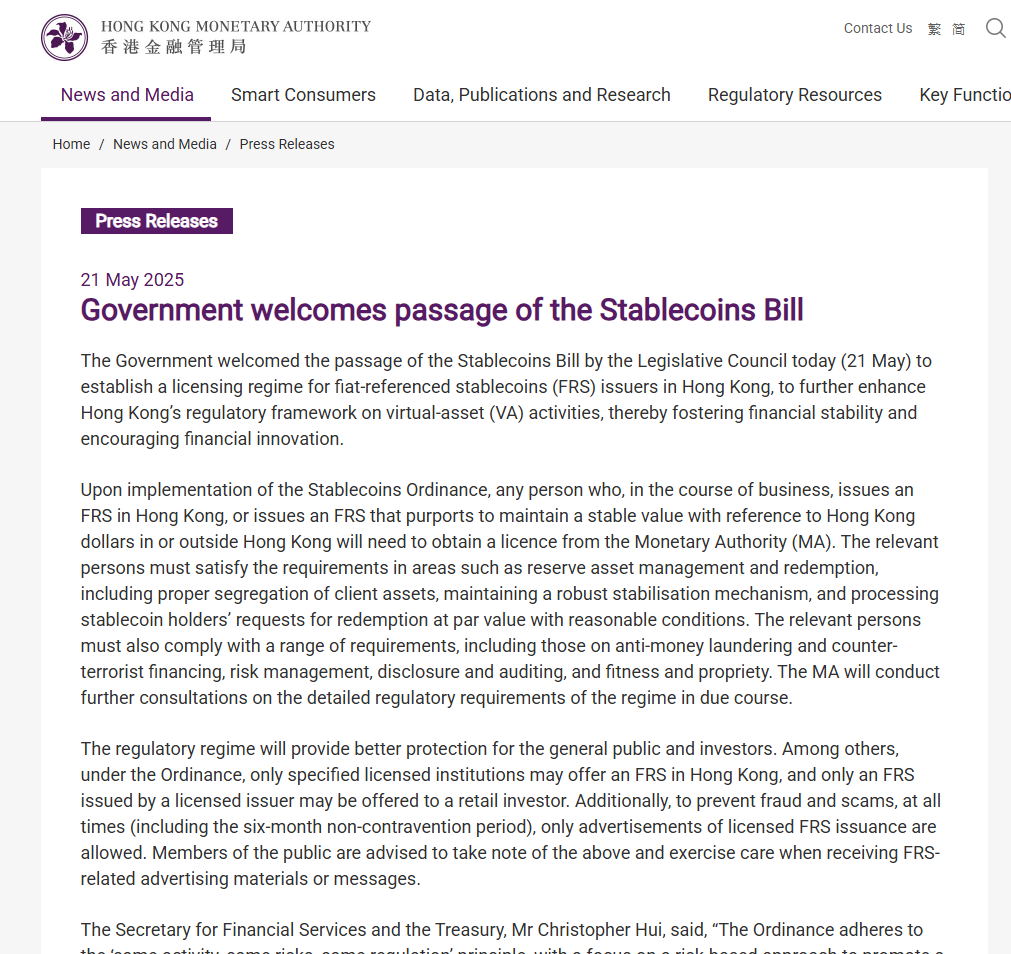
While it may appear that Hong Kong is following the U.S., this isn’t the case. Hong Kong’s stablecoin draft has been open for public consultation since November 2023, taking less than two years from proposal to passage—a relatively fast timeline.
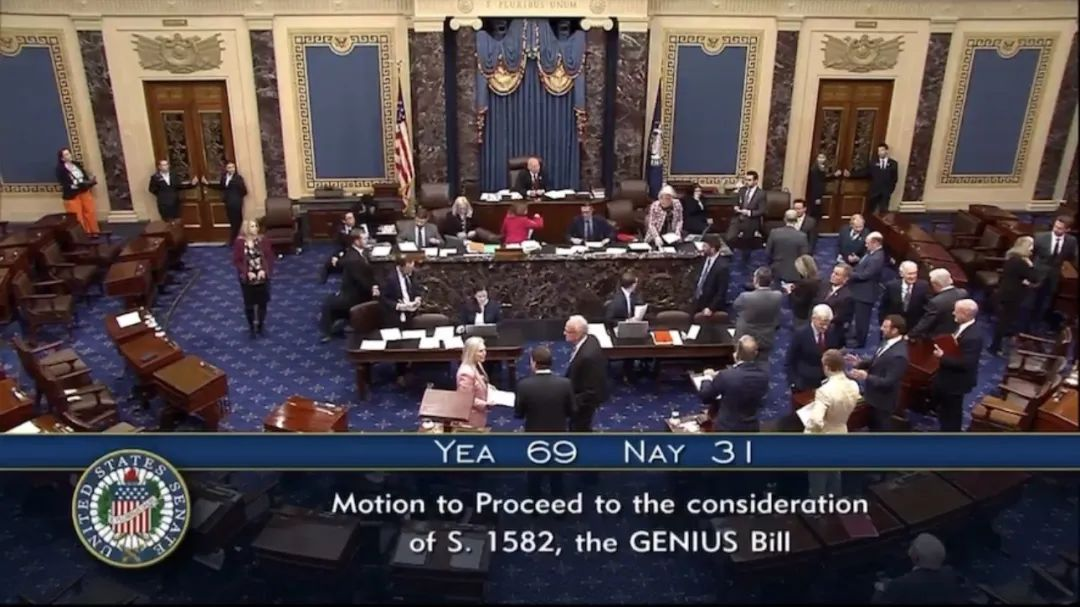
The problem lies with the U.S. GENIUS Act, which was introduced in February and will go to a formal Senate vote on May 22. It is expected to take effect by early next year, all within less than a year. So it’s not that Hong Kong was slow; the U.S. moved extraordinarily fast.
Superficially, the regulatory frameworks of both regions are similar. Hong Kong’s system is overseen by the Monetary Authority, while the U.S. has a dual leadership structure: large institutions report to the OCC, and small ones to state regulators. Both require issuers to be licensed, maintain high-liquidity reserves, and undergo regular audits.
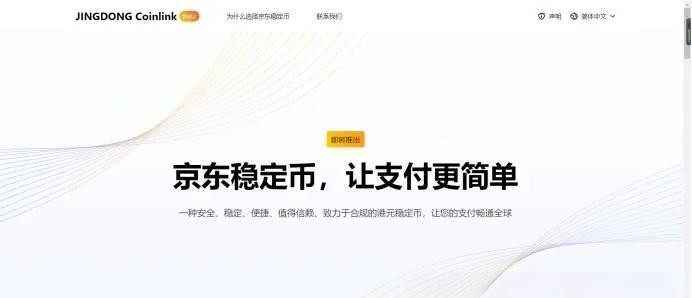
Notably, Hong Kong currently has no licensed stablecoin issuers, though the Monetary Authority announced last year that institutions like JD.com, Circle, and Standard Chartered had entered a sandbox testing phase.
Hong Kong’s policy appears lenient on paper, but the implicit costs of applying are high. As HashKey Exchange CEO Wilson Weng publicly stated, obtaining a virtual asset exchange license in Hong Kong costs "certainly tens of millions of Hong Kong dollars."
U.S.-dollar stablecoins account for 99.79% of the global stablecoin market. Fearing that a few insiders might dominate this massive market, the U.S. has lowered barriers to encourage free competition. Euro, British pound, and Singapore dollar stablecoins have struggled for years, with a combined market cap of just over $200 million.
And, Hong Kong, lacking a significant stablecoin market, seems more focused on leveraging hype to issue licenses, potentially benefiting well-connected players. This mirrors the controversy over its exchange licensing system a few years ago, which attracted major platforms but ultimately awarded licenses to local incumbents, driving exchanges like Binance and OKX out of the territory (leaving Hong Kong users to access them via VPNs).
Finally, it’s worth noting that the Hong Kong dollar itself is essentially a USD stablecoin, with a circulation scale of around $200 billion—slightly larger than Tether’s $150 billion. In that sense, it remains the world’s largest USD stablecoin.