
Microsoft’s Full AI Agent Platform Shift: What Does the Build Conference Signal for Business and Stock?

At the 2025 Build developer conference, Microsoft $MSFT declared it is no longer “just a tools company.” With lightning speed, it is fully betting on the era of AI “agents,” embedding AI capabilities with enhanced autonomous action across its core products—from operating systems to cloud platforms, from office suites to browsers.
For investors, the questions are clear: What big direction is Microsoft betting on? How does its business model change? And how will that sreflect on future revenues, profits, and stock price?
1. From “Tools Company” to “Agent Platform”: Microsoft’s Platform-Level Reinvention
In the past decade, Microsoft regained its tech crown mainly via Azure cloud, Office subscriptions, and GitHub ecosystem. But starting with this year’s Build, it unified these pillars under a new AI agent platform strategy.
To clarify, “agents” differ from traditional “AI assistants.” They don’t just answer queries or generate text; they understand tasks, break down steps, invoke tools, and act autonomously. GitHub Copilot now not only suggests code but can plan development, fix bugs, and submit pull requests—becoming a “virtual programmer.”
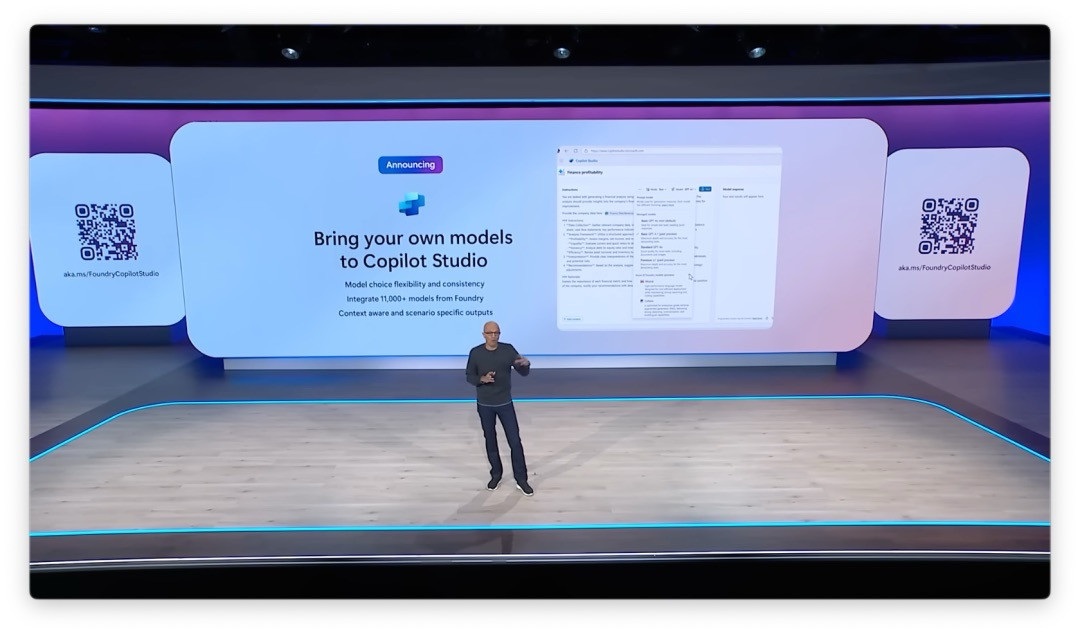
Microsoft 365 Copilot evolves from a “presentation helper” to an “enterprise task coordination hub,” integrating Jira, Notion, Teams, Google Drive. Multi-agent collaboration can automate meeting summaries, onboarding, and financial analysis.
The underlying logic: Microsoft no longer just sells software; it aims to be the “App Store for intelligent agents.” Developers build AI agents in Copilot Studio, publish in an Agent Store, and millions of Office users access them. Microsoft takes commissions like Apple.
This platform-plus-commission model marks a major commercial upgrade. Office and Azure become not just revenue lines, but distribution platforms for AI apps and agents.
2. Azure All In on AI: More Than a Hosting Platform, an AI Infrastructure Provider
Besides the agent ecosystem, Azure AI Foundry’s upgrade is equally important. It’s no longer just a “model hosting platform” but a direct competitor to OpenAI, Amazon Bedrock, Google Vertex AI’s industrial AI platforms.
Azure supports over 1900 AI models including xAI’s Grok 3, OpenAI, LLaMA, Mistral, and enables hybrid and on-premises deployment. This signals Microsoft’s move to reclaim AI middleware market share from AWS.

Introducing xAI models also shows Microsoft is moving beyond exclusive OpenAI reliance, building a “model supermarket” plus own cloud platform combo. For enterprise clients, this multi-model flexibility lowers AI adoption barriers and strengthens control, accelerating AI adoption in government, manufacturing, healthcare.
For Azure revenue, AI services shift from “nice to have” to growth engines.
3. Windows: From Operating System to Agent Execution Platform
An easily overlooked shift is Windows.
Microsoft announced Windows AI Foundry as the “unified platform for local AI development,” meaning PCs will no longer just run software but run large models and fine-tune AI locally as “edge nodes.”
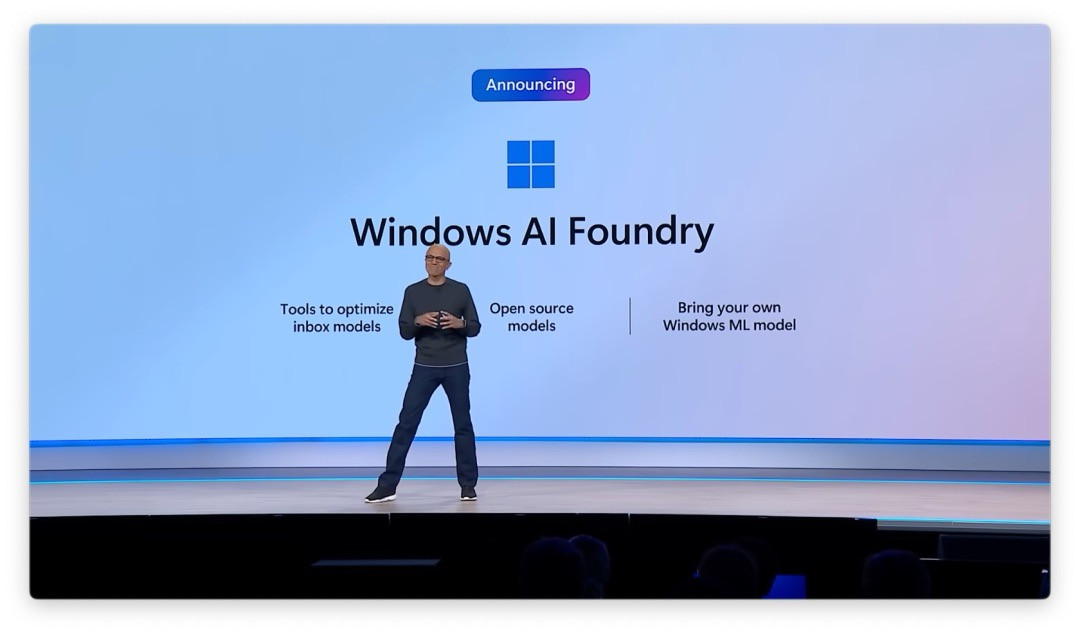
With the MCP protocol (dubbed the “USB-C of AI”) integrated, any AI model or agent can call system resources like browser APIs. This allows AI apps to deeply integrate with system infrastructure—turning Windows into the “main battlefield for intelligent agents.”
Microsoft is transforming its legacy “terminal dominance” into “AI execution platform dominance.”
4. What Does This Mean for Microsoft’s Stock?
From a market perspective, Microsoft is shifting from software product company to AI agent platform operator + developer infrastructure provider.
Revenue implications:
• Microsoft 365 Copilot and Agent Store will bring sustained subscription growth and commission revenue;
• GitHub Copilot enterprise and AI integration in VS Code increase developer platform stickiness and conversions;
• Azure AI platform’s multi-model marketplace and on-prem deployments enhance competitiveness versus AWS, driving large customer renewals and new deals.
Profit margins:
• AI training is compute-heavy and costly initially, but agent platforms scale to lower marginal costs quickly;
• Compared to traditional SaaS, agent app monetization is more efficient with longer lifecycles;
• Azure infrastructure rental has strong profit leverage.
Valuation logic:
Investors historically valued Microsoft on Office subscription stability and Azure growth in low double digits. Now it tries to platformize, scale, and distribute AI capability—making its profit model closer to Apple + Amazon’s combo, with stronger cyclicality resistance and longer growth runway.
My personal judgment: This shift may elevate Microsoft’s valuation baseline over the next two years.
Microsoft’s OS-Level AI Bet Deserves Repricing but Brings Risks
Previously, Microsoft was valued for subscription and cloud stability; now it hinges on AI agent viability and platform ecosystem build-out.
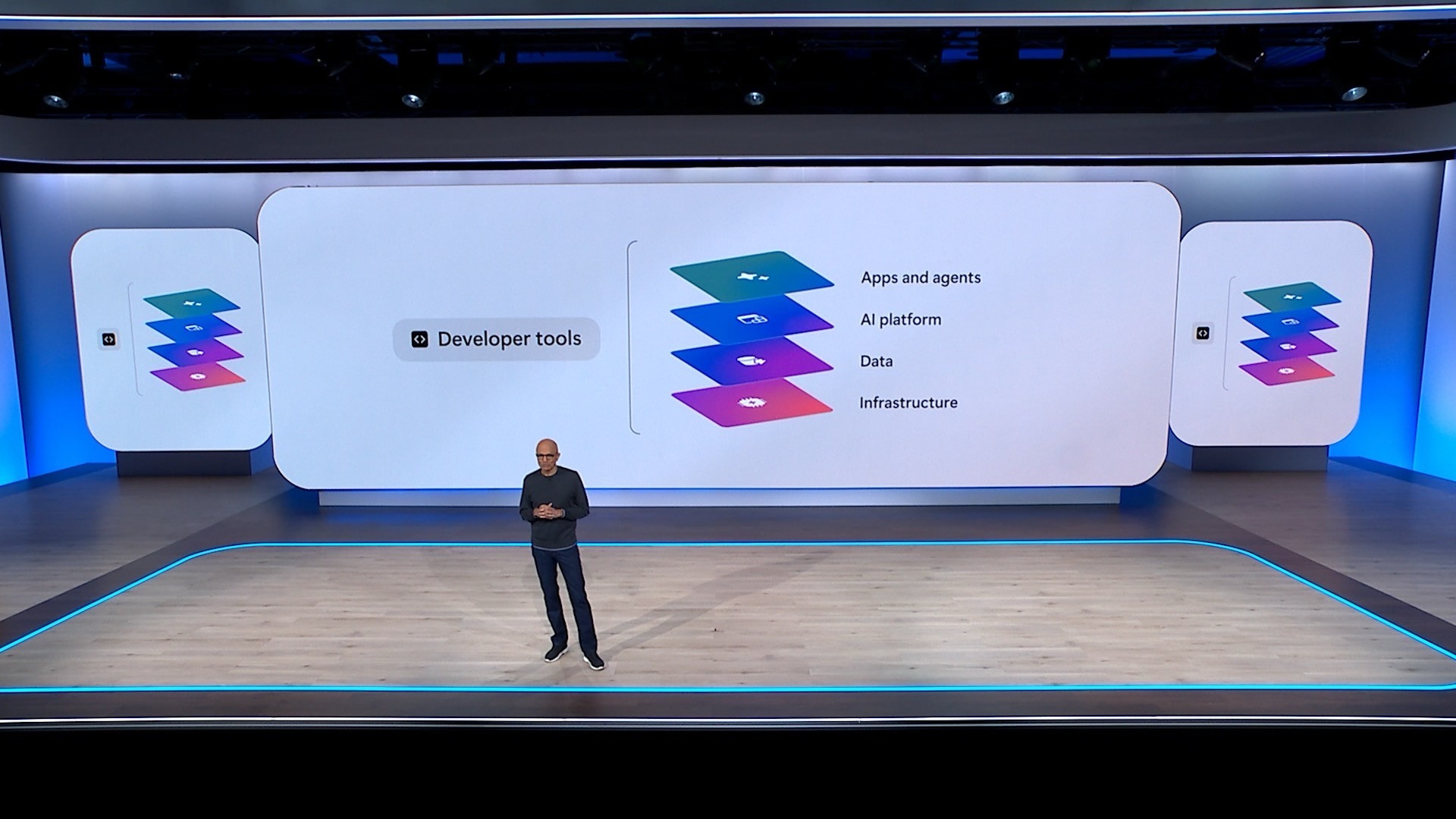
The Build conference reveals Microsoft’s deep transformation from tools company to intelligent agent platform operator—not just technical, but fundamental commercial change. If successful, Microsoft’s revenue and profit growth potential is huge, possibly lifting valuation substantially.
Risks:
• AI R&D and compute costs are high and pressure margins short term;
• Agent ecosystem cultivation needs time, with uncertainty around user adoption and developer activity;
• Cloud market competition remains fierce, with AWS and Google as strong contenders;
• Regulatory scrutiny on data and AI ethics could limit application scope.
Overall, Microsoft is making a long-term, profound strategic bet on AI agents. Challenges and volatility are inevitable short term, but the medium to long-term potential is very promising.