
BYD Overtakes Tesla in Europe’s EV Race for the First Time

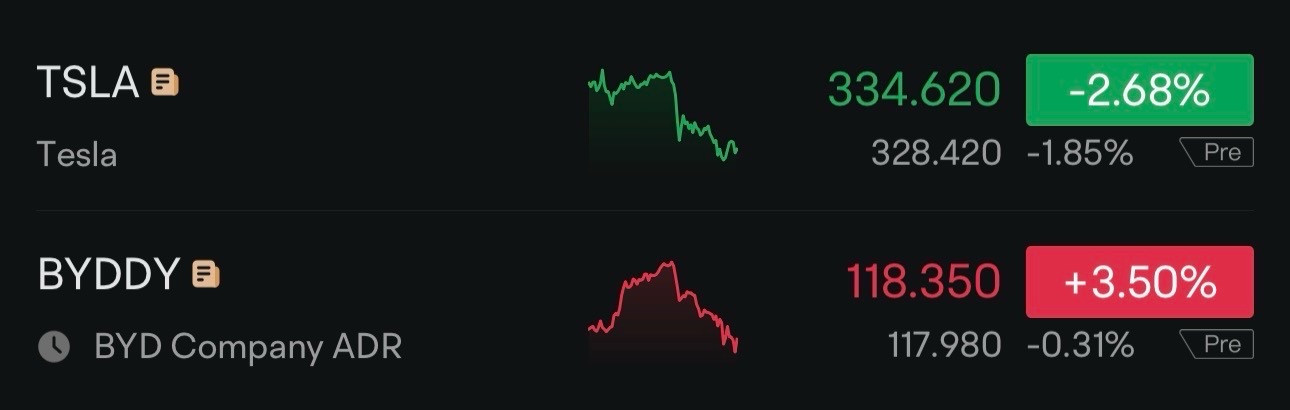
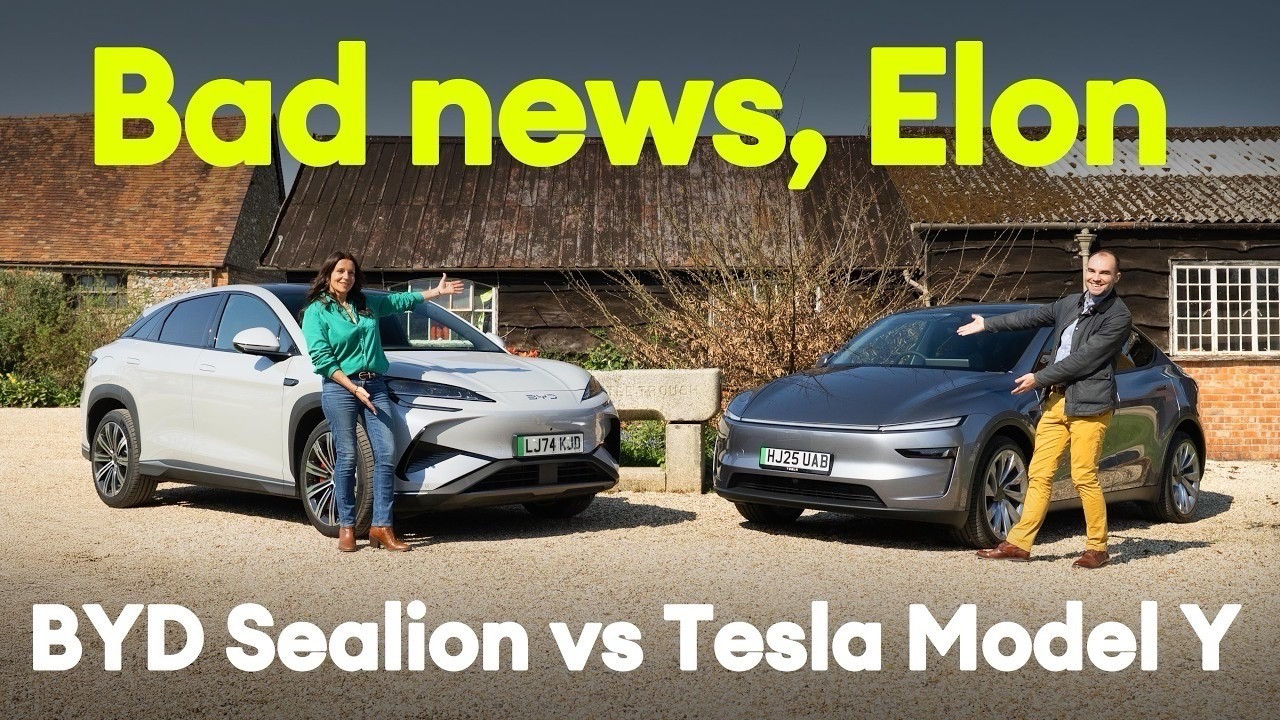
April marked a historic moment in Europe’s electric vehicle (EV) market: BYD’s EV sales surpassed $TSLA’s for the first time. Investors reacted quickly—BYD’s stock rose on both the Hong Kong and mainland Chinese exchanges, while Tesla’s pre-market shares edged down by 2.68% before the market. While this is only a one-month snapshot, it reveals a deeper shift in the global EV landscape that investors can’t afford to ignore.
A few years ago, few would have believed a Chinese automaker could challenge Tesla on its home turf—or anywhere else in the West. But that moment has now arrived.
BYD Beats Tesla in April Europe Sales
According to data from market research firm Jato Dynamics, BYD registered 7,231 new EVs in Europe in April, a stunning 169% year-over-year increase. Tesla, by contrast, saw a 49% drop, falling down the monthly rankings.
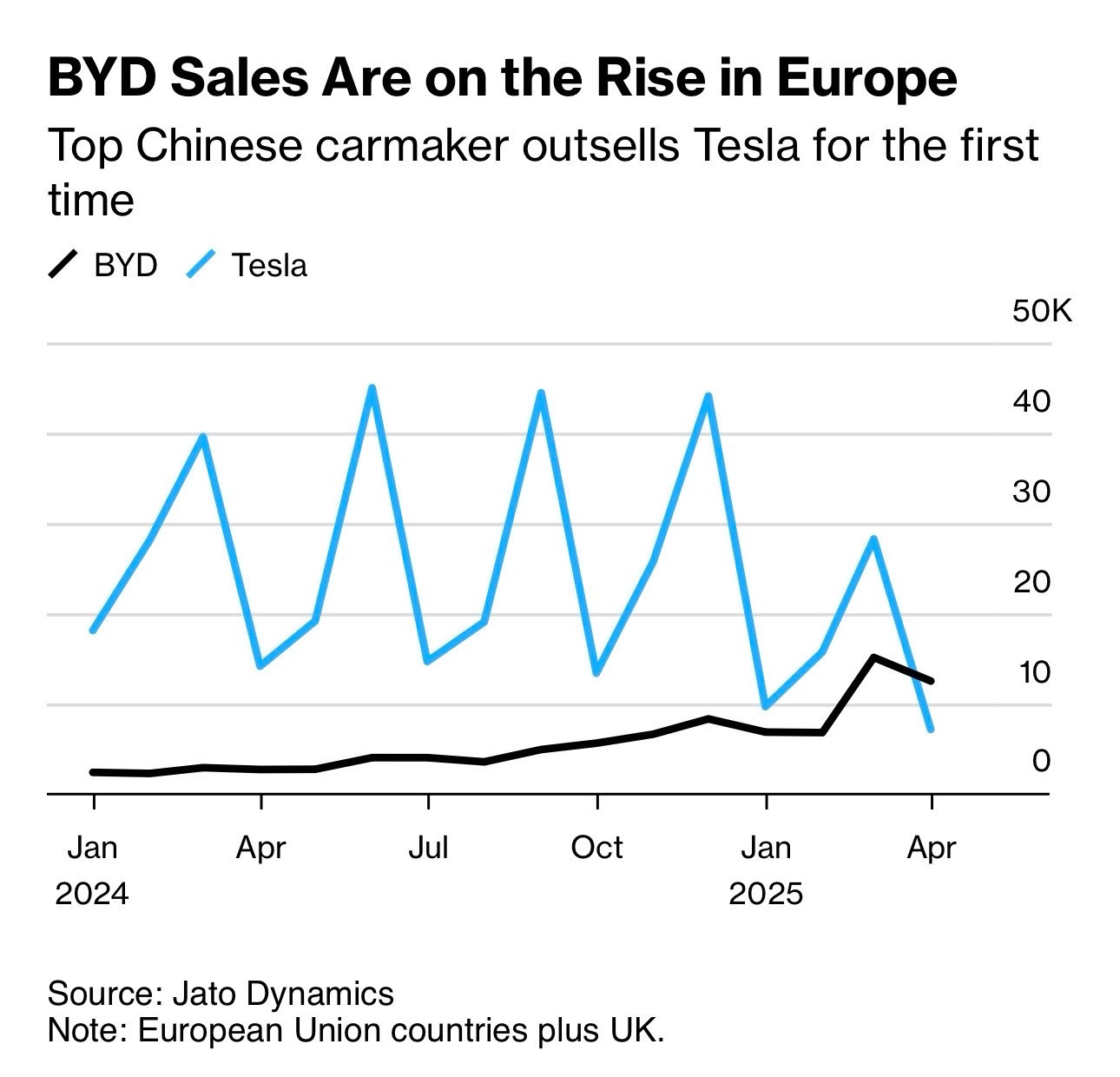
And that’s just the pure electric vehicles (BEVs). When you include plug-in hybrid electric vehicles (PHEVs)—an area where BYD excels—the picture becomes even more dramatic: BYD’s total sales soared 359% compared to a year ago.
📌Quick explainer:
• BEVs (Battery Electric Vehicles) run purely on electricity, with no gas engine.
• PHEVs (Plug-in Hybrids) combine battery power and a gas engine, offering more flexibility, especially in regions with sparse charging infrastructure.
This Is Not a Market-Wide Decline—It’s Tesla’s Problem
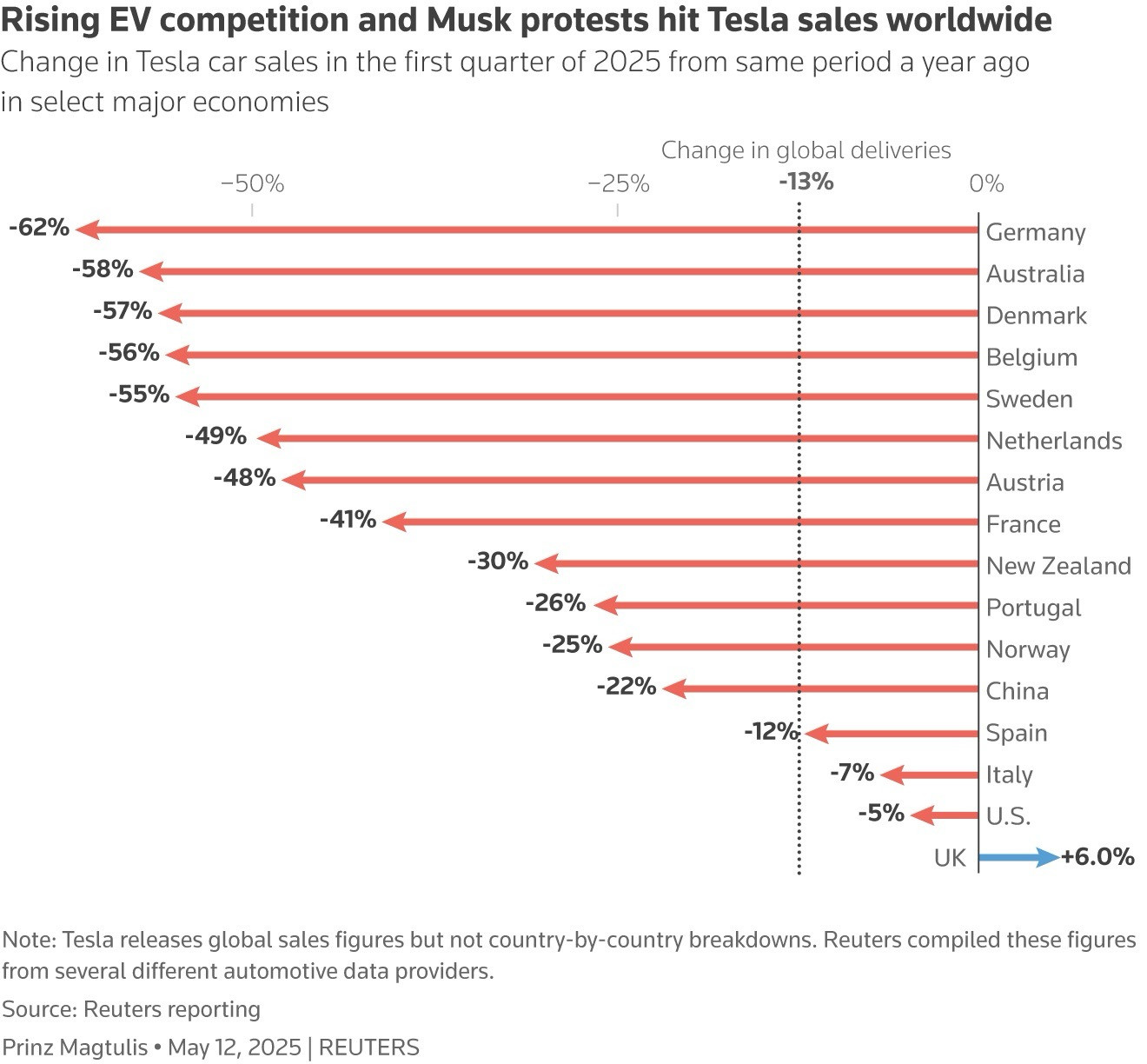
At the Qatar Economic Forum in May, Elon Musk claimed that all automakers were struggling in Europe due to a weak economy. The data tells a different story:
• The overall European EV market grew 28% year-over-year;
• Volkswagen’s EV sales jumped 61%, and its Skoda brand more than tripled;
• Five automakers surpassed Tesla’s sales in Europe in the first four months of 2025—all of them saw year-over-year gains;
• Tesla’s European sales fell nearly 40%, the worst among all major EV makers.
As Jato analyst Felipe Munoz put it, “The monthly sales gap might still be narrow, but the symbolic impact is huge—this is a turning point for the European EV market.”
Why Is BYD Pulling Ahead?
This wasn’t a fluke. It’s the result of several long-term trends converging:
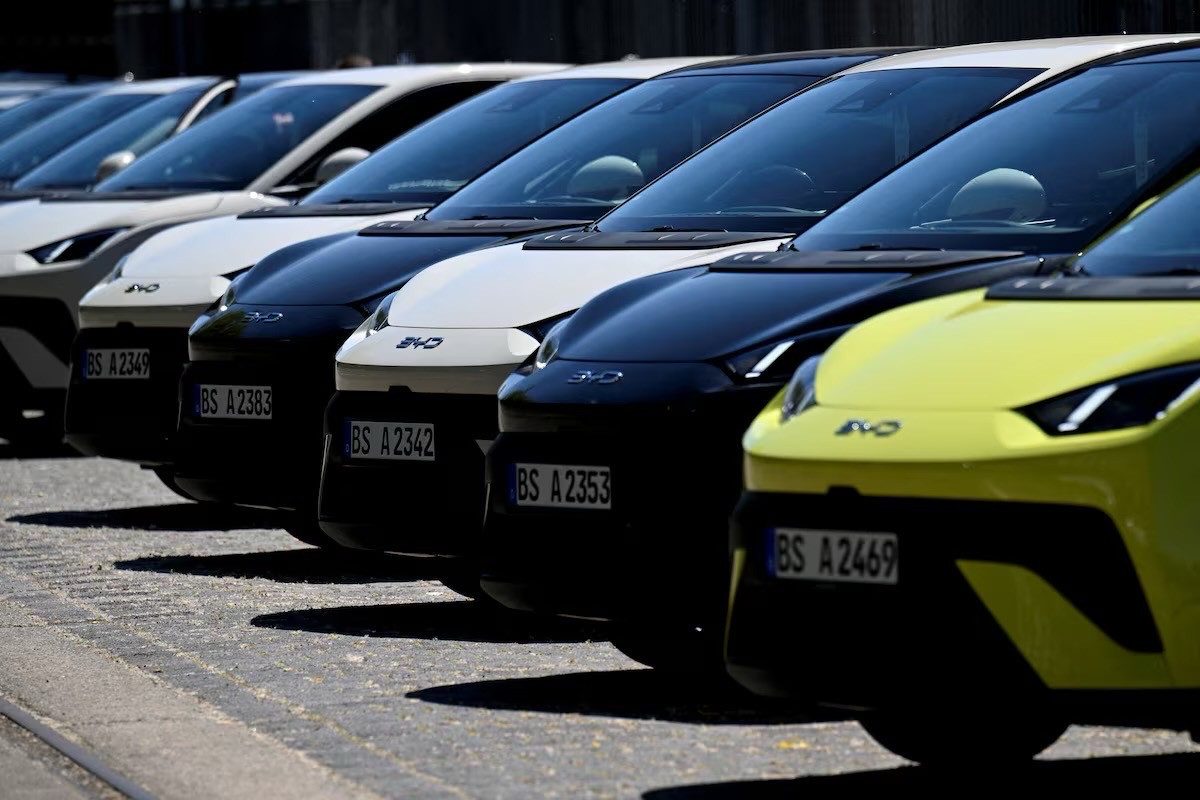
1. Tailored Products for Europe
BYD’s models like the ATTO 3 and Seal aren’t just rebranded Chinese cars—they’ve been re-engineered to meet European expectations for safety, design, and drivability. Add to that a very competitive price point, and it’s no surprise they’re gaining traction.
2. A Smart PHEV Strategy
In markets where public charging is still lagging, plug-in hybrids are a practical solution. BYD dominates this category, and the massive jump in PHEV sales shows how well it has understood the market’s real needs.
3. Tesla’s Brand Is Losing Its Shine
Musk’s polarizing public persona has alienated some consumers in Europe. Combine that with slower product rollouts and inconsistent pricing, and Tesla is no longer seen as the only game in town.
Munoz noted that even though Tesla’s new Model Y is in full production and readily available in Europe, sales remain sluggish. The issue, he says, is not supply—but weak demand.
What This Means for Investors
This development sends three important signals:
1. Chinese Automakers Are Entering a New Global Phase
BYD’s success isn’t just about one company—it marks a broader breakthrough of Chinese EVs into developed markets.
2. Tesla Faces a Strategic Inflection Point
From Europe to China, Tesla is seeing sales decline, brand dilution, and rising competition. A turnaround won’t come from another price cut or a single model update—it requires deeper strategic change.
3. The EV Market Has Entered a “Warring States” Phase
Tesla’s dominance is over. Going forward, expect a multi-polar EV market with BYD, Volkswagen, Hyundai, Stellantis and others fighting for different slices of the pie.
My Take
This is a pivotal moment in the global EV industry. Tesla won’t disappear overnight, but it’s clearly no longer synonymous with electric vehicles. As an investor, you can’t treat the EV sector as a “Tesla story” anymore.
In my view, BYD’s market share in Europe is just getting started. With its cost advantages, mature supply chain, and increasingly localized approach, it’s well-positioned to keep growing. Tesla may still mount a comeback—but only if it can clearly define what it wants to be: a tech visionary, or just another car company?