
Xiaomi’s Big Bet on Chips and EVs: Can Its Stock Keep Up?

On May 22, Xiaomi dropped a bombshell.
It unveiled its first self-developed 3nm chip, the “Surge O1,” and officially introduced its premium SUV, the Xiaomi YU7. But this wasn’t just a product launch. It was a clear signal to investors: Xiaomi is pivoting hard from “value-for-money gadgets” to deep tech and smart manufacturing.
The ambition is clear—but so are the questions:
Can Xiaomi realistically compete with Apple in chips and with Tesla in cars?
And more importantly for investors—what does all this mean for the stock?
Let’s break it down—from business strategy and tech ambitions to valuation logic.
Xiaomi No Longer Just a Hardware Assembler
Let’s start with the strategy.
Over the past few years, Xiaomi’s push into “deep tech” has gone from slogan to serious business. The two pillars? In-house chips and smart EVs—both targeting the high-value upstream layers of the tech stack.
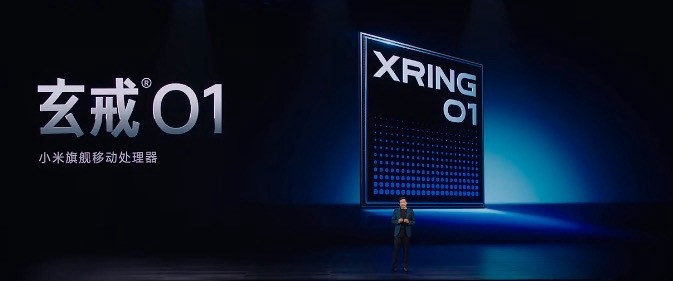
The new Surge O1 chip, built on TSMC’s 3nm process, is Xiaomi’s first serious play in this space. With over 3 million points on AnTuTu and 19 billion transistors, it’s clearly positioned to rival Apple’s A-series chips.
At the event, Lei Jun didn’t hold back: Xiaomi will double down with ¥200 billion (about $28 billion) in R&D over the next five years—twice the investment of the past five.
But chips don’t make money right away. So why bother?
Because owning core IP is what separates tech platforms from hardware resellers. The smartphone market is brutally competitive, and without proprietary tech, Xiaomi is forever stuck fighting on price.
Yes, chipmaking is tough—Qualcomm, Apple, and MediaTek dominate. But Xiaomi’s move isn’t just about shipping chips. It’s about shifting investor perception from “assembly line” to “platform company.”
And that matters a lot for valuation.
Why Is Xiaomi Building a Car?
Let’s talk about the Xiaomi YU7 SUV.
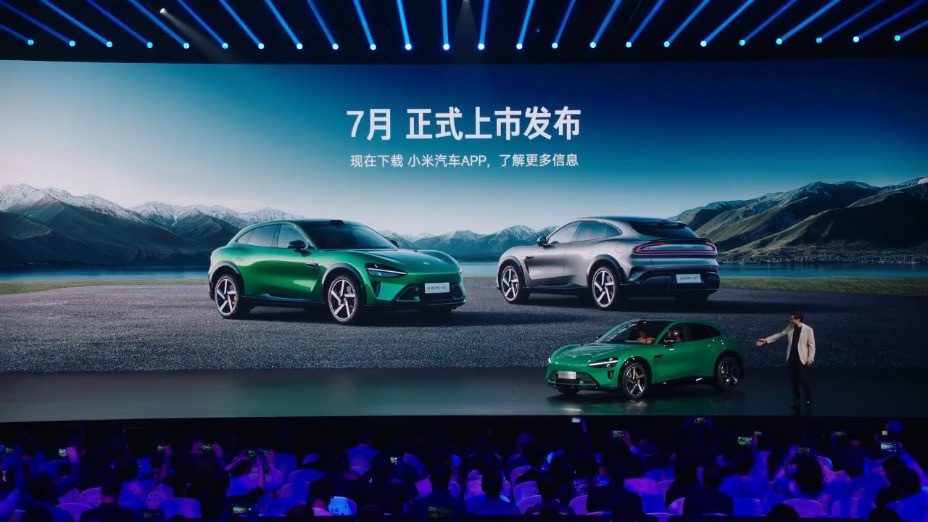
It checks every box: 835km range, 800V platform, high-performance lidar, massive screens, AI-powered cockpit. Clearly aimed at the same crowd eyeing Tesla’s Model Y. And Xiaomi’s already teasing a price tag north of ¥300,000 ($40,000+).
For a brand known for undercutting rivals, this raised eyebrows.
But here’s the thing: EVs aren’t just cars anymore—they’re smart devices on wheels.
Xiaomi isn’t just selling a vehicle. It’s creating a key node in its “Human-Car-Home” ecosystem, similar to what Huawei is doing with its Aito lineup. The goal? Use the car to lock users into the Xiaomi universe—across phones, wearables, appliances, and now, vehicles.
From a stock perspective, this is crucial. Investors no longer reward phone makers with high multiples. But smart mobility + ecosystem lock-in? That’s the kind of narrative the market pays up for.
Even if Xiaomi’s cars don’t move huge volumes at first, just proving the model works could open the door to a new valuation framework—one that’s no longer tied to smartphone ASPs.
That’s exactly what we saw with Huawei’s EV partner, Seres—whose stock surged before hitting mass production.
What’s Xiaomi Really Worth?
Right now, Xiaomi trades at around HK$550 billion (~$70B USD), with a P/E ratio of roughly 18x. That’s pricey for a consumer electronics brand—but cheap if you believe it’s becoming a tech platform.
So the key question is this:
Will the market see Xiaomi as the next NVIDIA… or just another Oppo?
If the Surge chips scale, the car hits production, and the ecosystem story lands, Xiaomi could push into the 25–30x earnings multiple range.
But if this is just a flashy PR play, the stock risks sliding back toward traditional hardware valuations.
As an investor, I’d keep a close eye on four things:
1. Can the Surge O1 chip make it into real devices—and at scale?
2. What’s the final price and first-month feedback on the YU7?
3. Are there signs of deeper OS integration across car and home?
4. Is the market buying into the “Human-Car-Home” story as a defensible moat?
If even two out of these four go right, Xiaomi could be looking at a meaningful re-rating.
Any Company Willing to Spend $28 Billion on R&D Deserves a Second Look
Xiaomi is changing.
With in-house chips, smart EVs, and premium pricing, it’s becoming less like the Xiaomi we knew, and more like a bold hybrid of Apple, Tesla, and Samsung—a Chinese platform company with real tech ambitions.
Sure, the road ahead is risky. Chip design is hard. Car production is harder. And ecosystems take time to mature.
But here’s what matters from an investor’s perspective: Xiaomi has the cash, the talent, and most importantly, the guts to try.
Going forward, its stock won’t just move on phone shipments or app ad revenue.
It’ll rise and fall with whether or not this new “Tech Xiaomi” can deliver on its vision.
We’re no longer investing in the Xiaomi of yesterday.
This is a new company—one betting big on chips, cars, and ecosystems.
And if it gets even part of this right, the upside could be significant.
Follow me for more on how Xiaomi’s chip and EV bets could reshape its stock—and China’s tech landscape.