
After a 30% Drop Amazon Becomes Bill Ackman’s Latest Bet

In the first half of this year, $AMZN’s stock plunged more than 30%. While most investors were still hesitant, Wall Street’s most famous activist investor, Bill Ackman, made a bold move. His hedge fund, Pershing Square Capital Management, just announced a significant purchase of Amazon shares, calling it an “exceptionally attractive” opportunity.
Why would Ackman buy at a time when the market is so pessimistic? Is Amazon still worth betting on? The logic behind his decision runs deeper than it seems.
Who Is Bill Ackman and Why Does His Move Matter
Bill Ackman is one of the most talked-about and influential hedge fund managers on Wall Street.
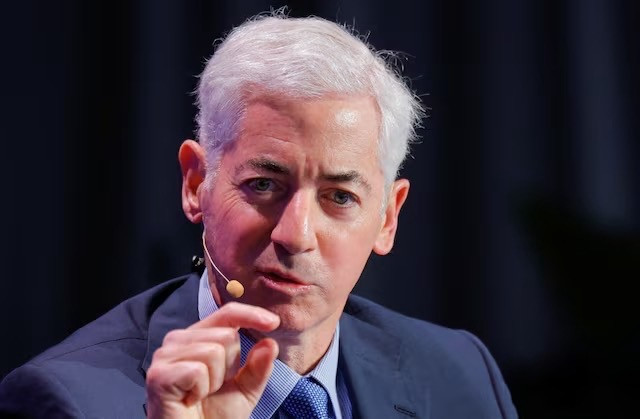
He’s known for his activist investing style—buying into companies and pushing for internal reforms to boost performance and stock price. Through Pershing Square, he’s made legendary calls, like shorting the housing market during the financial crisis, and long-term bets on names like Chipotle, Starbucks, and Hilton that paid off big.
Ackman doesn’t make moves often, but when he does, he’s all in—and he’s not in it for quick flips.
This time, to make room for Amazon, he even sold off Canadian Pacific Railway, a solid performer he’s held for years. In an interview, he admitted, “It was hard to let go of CP, but we needed to make space for Amazon.”
That kind of trade-off says more than it seems on the surface.
What’s Behind Amazon’s Big Drop
Let’s start with what triggered Amazon’s decline.
First, macro pressure. At the start of 2025, the U.S. government unexpectedly slapped a 145% tariff on Chinese imports, which rattled the entire market. E-commerce giants like Amazon were hit particularly hard, as investors feared higher product costs and shrinking profit margins.
Amazon’s CEO, Andy Jassy, tried to ease concerns, saying, “While tariffs have gone up, we haven’t seen major drops in consumer spending or sharp price hikes.” In other words, Amazon is still managing costs and its supply chain well.
Then there’s the AI hype. With money pouring into AI darlings like Nvidia and Microsoft, traditional tech names started getting overlooked. Amazon’s most profitable arm—its cloud division AWS—has seen some growth slowdown, fueling concerns.
But Ackman sees it differently. His partner, Ryan Israel, said on a call, “AWS is still growing. We believe it’s built to weather cycles. Amazon’s earnings power is very much intact.” He even projected Amazon’s earnings per share could keep growing at over 20% annually.
What Exactly Is AWS and Why Does It Matter So Much
AWS, or Amazon Web Services, is the company’s cloud platform—and it’s one of the biggest in the world. In plain terms, many of the apps, websites, payment systems, and games we use every day run on AWS servers. Its clients range from Netflix and Zoom to NASA.
In 2024, AWS contributed more than 60% of Amazon’s operating profits. While e-commerce brings in revenue, it’s AWS that actually prints money.
As long as AWS keeps expanding, Amazon’s core business stays solid. Plus, unlike manufacturing, cloud services aren’t really impacted by tariffs.
Why I Think Ackman Might Be Right on This One
Let’s talk valuation. After the recent drop, Amazon’s price-to-earnings ratio fell below 40x—one of the lowest levels in recent years. And its fundamentals haven’t changed dramatically.
Also, Amazon isn’t some pie-in-the-sky tech name. It already has strong, proven earnings. Even if cloud growth slows in the short term, the bigger picture is still bright. AI models need the cloud to train, and applications rely on it to run. AWS is the backbone of the AI era.
And look at the macro shifts. Yes, U.S.–China tensions created uncertainty, but the Trump administration has since eased tariffs, cutting them from 145% to 30% and pausing further hikes for 90 days. That shows there’s wiggle room in policy, and market fears could gradually ease.
Lastly, Ackman is one of the first major investors to rotate back into a “non-AI core” tech name. That’s a signal. For months, all the money chased hardware names like Nvidia and AMD. Now we’re seeing big money look again at undervalued tech platforms. Amazon might just be the start of that shift.
Is Amazon’s Drop a Gift in Disguise
Ackman’s not betting on a new storyline here. He’s betting on the fundamentals staying strong, even as market sentiment turned negative. He sees Amazon as one of the rare companies with what he calls “franchise value”—the ability to grow through economic cycles and compound over time.
Most of us can’t invest billions like Ackman. But from where he’s coming from, maybe it’s worth asking ourselves: when the market is most fearful, should we be taking a closer look at companies that suddenly look underpriced?