
Trump Threatens 25 Percent Tariff on iPhones Apple Might Just Take the Hit

If US-China trade tensions were a chess game, Apple would be the piece stuck in the middle—under pressure, out of moves, and watched by everyone.
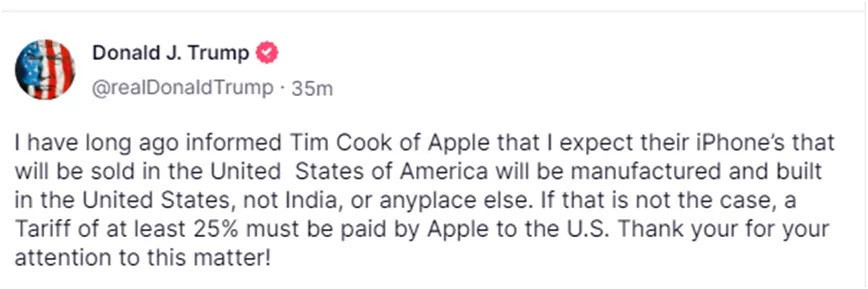
On May 23, Donald Trump took to his social media platform and dropped a bombshell:
“I told Tim Cook, if iPhones aren’t made in the US, Apple will pay a 25% tariff on every device.”
The market didn’t take it lightly. $AAPL's stock dipped nearly 4%, extending its longest losing streak in three years. This wasn’t just a financial shock—it felt more like a political trial by fire.
What’s Trump Really After With This New Threat
This isn’t the first time Trump has gone after Apple. But this time, the tone is different—and much tougher.
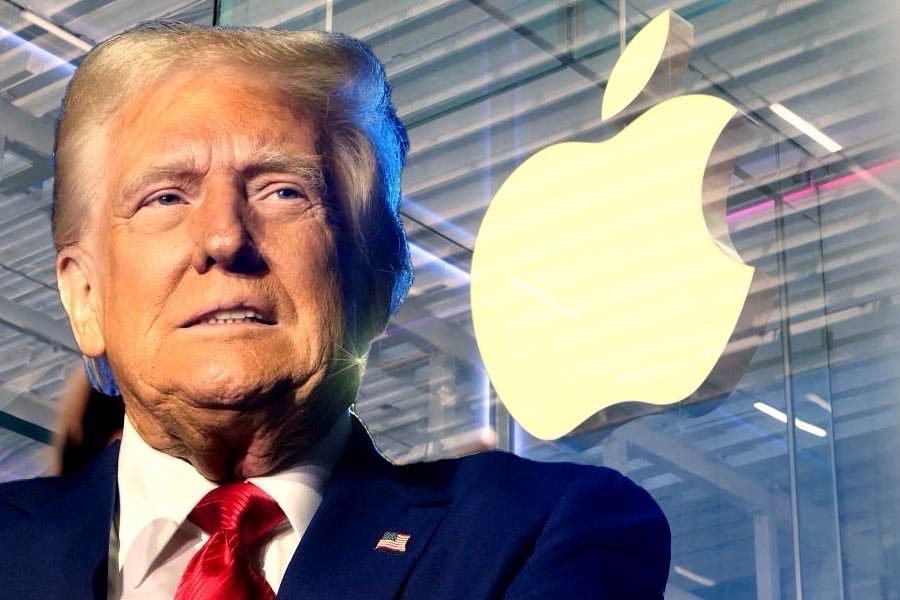
During his first term, Tim Cook managed to navigate the storm thanks to a surprisingly close relationship with Trump, which helped Apple avoid many of the previous tariff threats. But that playbook seems outdated now.
This time, Trump isn’t just calling out Apple. He’s going after all smartphone makers with overseas factories—including Samsung—and he’s starting at 25%. His goal is clear: bring manufacturing back to the US.
But the real question is, can it actually be done?
How Bad Could a 25 Percent Tariff Be for Apple
Analysts are already running the numbers:
• A 25% tariff on iPhones could cut Apple’s earnings per share (EPS) by more than 7%.
• If Apple chooses not to raise prices, its gross margin could drop by as much as 3.5 percentage points.
• But raising prices could hurt sales, especially in the US market.
In other words, every option is a lose-lose:
• Raise prices? Risk losing customers.
• Absorb the cost? Profits take a major hit.
• Move production to the US? That’s just not realistic.
Why Apple Can’t Just Build iPhones in America
Making an iPhone isn’t just about assembling parts—it’s about managing one of the world’s most complex supply chains.
Apple’s manufacturing hubs in China and India aren’t just cheap labor centers. They’re part of highly integrated ecosystems where everything—from screws and molds to chips and logistics—operates in perfect sync.
The scale is massive. Some Apple factories house tens of thousands of workers and are effectively self-contained cities, with dorms, clinics, and even schools. That kind of industrial setup simply doesn’t exist in the US.
Even if it did, the economics don’t add up. Some estimates suggest building an iPhone in the US could cost as much as $3,500 per unit. For context, a high-end iPhone 16 Pro sells for around $1,000 today. That’s not just unprofitable—it’s impossible.
So What Will Apple Do Probably Just Take the Hit
Apple’s likely strategy? Eat the cost. Tariff and all.
Not because it wants to—but because it makes the most business sense. As analyst Ming-Chi Kuo from TF International puts it, even with a 25% tariff, it’s still cheaper to absorb the cost than to rebuild the entire supply chain in the US.
This isn’t about patriotism. It’s about commercial survival.
And remember, it’s not a one-time policy. With Trump, unpredictability is the norm. Even if Apple makes a move today, who’s to say another demand won’t show up tomorrow? India could be next on the list.
My Take
To me, this situation reveals three deeper signals:
1. This isn’t just about trade—it’s a political loyalty test. Trump wants Apple to visibly side with his “America First” narrative.
2. Apple can’t rely on old tricks anymore. The Tim Cook–Trump backchannel may not work like it did before.
3. This kind of pressure won’t go away anytime soon. As long as Trump’s around, expect more unpredictable moves like this one.
Will Apple Raise Prices That’s Probably the Least Bad Option
If you ask me, here’s what Apple’s most likely to do next:
• Slightly raise prices on premium models, where customer loyalty is stronger.
• Announce more US-based investments—data centers, chips, maybe some R&D—to show goodwill.
• Quietly expand its production footprint across India, Vietnam, and other regions, while keeping China in the mix.
That’s Apple’s way of navigating the uncertainty:
Balance the politics, protect the margins, and don’t get caught off guard again.
In the end, this isn’t just a trade dispute. It’s a clash between political ambition and business logic. And on the global stage, Apple isn’t about to make a move that doesn’t make economic sense.