
Trump’s 50% Tariff Threat on the EU Sparks Global Trade Storm

On May 23, 2025, Donald Trump set off alarm bells around the world by announcing plans to slap a 50% tariff on European Union goods starting June 1. In a fiery social media post, he accused the EU of “ripping off” the U.S. for years.
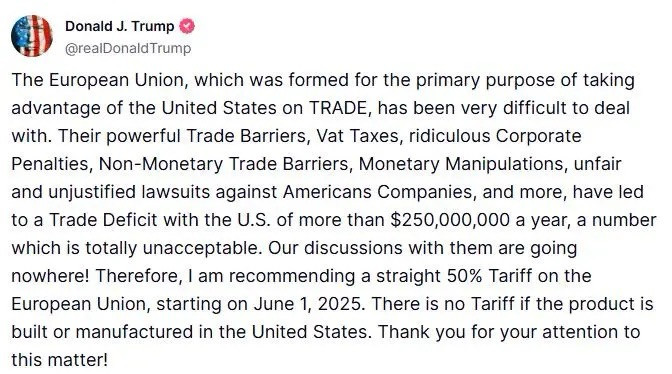
The news hit the markets fast: $SPX and Nasdaq 100 futures $both dropped over 1% pre-market, while the euro briefly jumped against the dollar.
Here’s a closer look at what’s really going on—why Trump is going this route, how the EU is reacting, and what it could all mean for the global economy and everyday people.
Why Tariffs Are a Big Deal in This Fight
At its core, a tariff is just a tax on imports. If the U.S. imposes a 50% tariff on a $100,000 European car, buyers in America would pay an extra $50,000 in taxes. That’s huge. It drives up prices, hits consumers, and is supposed to protect local industries—but it can also trigger retaliation.
Trump has long pushed his “America First” agenda, and high tariffs are one of his go-to tools. He argues that the EU stacks the deck with trade barriers, VAT taxes (a kind of consumption tax widely used in Europe), and currency manipulation. According to Trump, the U.S. runs a $250 billion trade deficit with the EU each year, which he calls “totally unacceptable.”
A History of Tension Between the US and EU
Trade friction between the U.S. and the EU isn’t new. The EU—a bloc of 27 countries with unified trade policy—has always been a tough negotiator.
Back in 2018, the Trump administration imposed 25% and 10% tariffs on EU steel and aluminum, which triggered retaliatory tariffs from Brussels. But this time, the scale is much larger—a 50% tariff is being called “nuclear level.”
Why Trump Is Going All In This Time
There’s more to this than just economic policy.
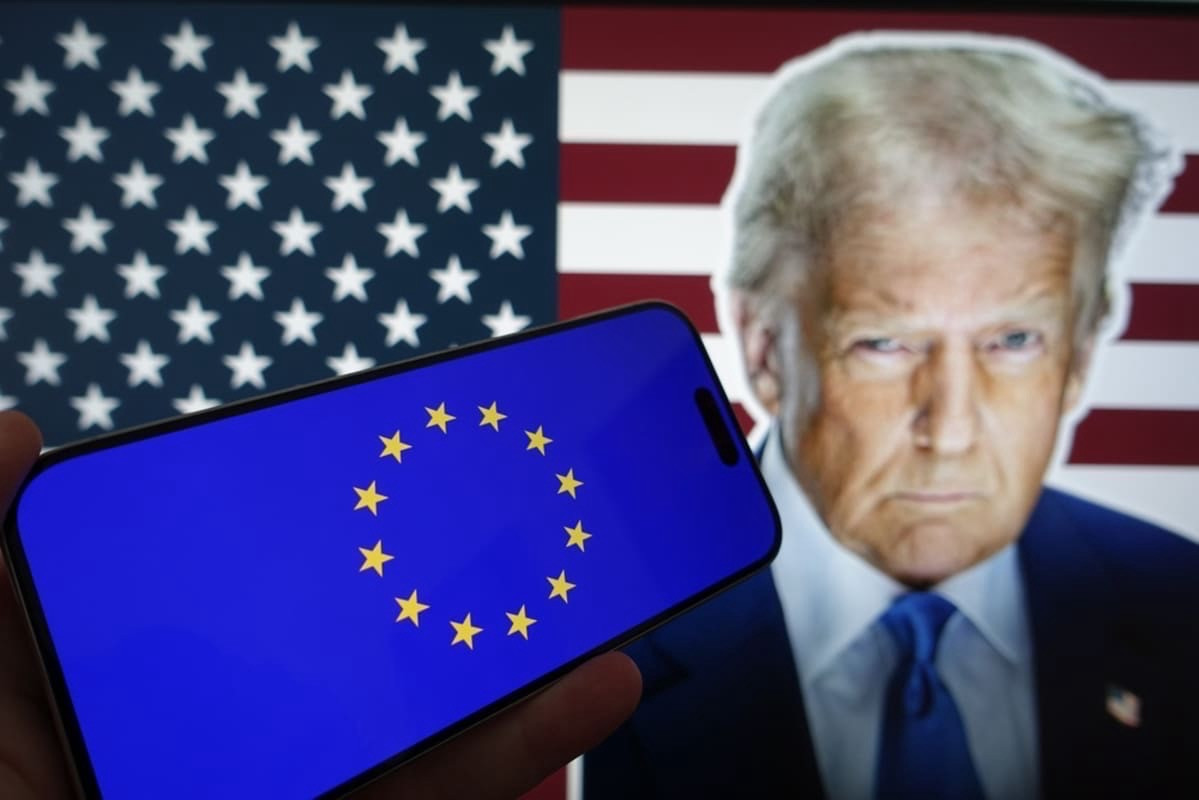
Trump’s aggressive tariff push seems to be part political strategy, part economic gamble:
• Delivering on campaign promises
Trump vowed to “bring back American manufacturing” in his campaign. Targeting EU industries like cars and machinery helps him show he’s taking action—especially to blue-collar voters. He even hinted that EU companies could avoid the tariffs by setting up factories in the U.S., turning trade policy into a jobs pitch.
• Leverage in negotiations
Trump’s tough-guy act isn’t new. His message—“The 50% tariff is already agreed”—makes it sound like a done deal. But then he adds that it might be delayed if the EU builds plants in the U.S. Classic Trump: apply maximum pressure, then leave the door open.
• Domestic distraction
With inflation and supply chain issues still nagging the U.S. economy, blaming the EU for an “unfair trade setup” helps redirect attention and position himself as the defender of American interests.
Trump’s approach may seem blunt, but it’s calculated. He knows tariffs can raise prices and hurt U.S. businesses too—but in the short term, they rally support from workers and industries feeling left behind.
But if the EU hits back hard, global supply chains could suffer even more, and American exporters—from Boeing $BA to soy farmers—might get caught in the crossfire. It’s a high-stakes game that could push U.S.-EU relations to a breaking point and drag down global recovery.
How the EU Is Responding to the Pressure
The EU isn’t sitting quietly. Trade Commissioner Maroš Šefčovič has already pledged to “defend EU interests.” Here’s how they’re gearing up:
• Retaliation ready to go
Brussels has drafted a plan to hit $107 billion worth of U.S. goods with counter-tariffs. Targets may include Boeing jets, farm products like soybeans and whiskey, and American tech. The last time they did this in 2018, it hurt.
• Trying to de-escalate
Before Trump’s tweet, the EU had already proposed a new trade framework—offering to gradually eliminate tariffs on farm and industrial goods and cooperate on areas like energy and AI. It was a clear olive branch, aiming to avoid a full-blown trade war.
• Internal divisions to manage
The U.S. Commerce Secretary mentioned that Germany wants its own deal with the U.S., but EU rules don’t allow individual countries to negotiate alone. That highlights the EU’s internal challenge—getting 27 member states with different priorities on the same page.
My Take
The EU is in a tough spot. On one hand, countries like Germany rely heavily on exports to the U.S.—especially carmakers like BMW and Mercedes. A 50% tariff would be devastating. On the other hand, showing weakness could damage the EU’s credibility as a global power. Retaliation might work politically, but it also risks hurting EU consumers with price hikes. Most likely, the EU will keep a firm stance while quietly looking for room to negotiate.
The Ripple Effect on Markets and Everyday Life
The markets didn’t wait to react. U.S. stock futures fell, signaling investor concern. Meanwhile, the euro’s brief rally may reflect hopes that the EU will respond strongly and defend its economic interests.
For everyday people, this isn’t just a political showdown—it could hit close to home:
• Higher prices
If these tariffs go through, expect European imports like cars and wine to get a lot more expensive in the U.S.
• More supply chain headaches
The global supply chain is already fragile. A new trade war could make things worse, especially for things like auto parts and semiconductors.
• Jobs and growth at risk
U.S. manufacturing might see a short-term boost. But long term, trade wars usually slow down global growth and threaten jobs.
What This Is Really About
At the heart of this clash is a power struggle over who sets the rules in the global economy. Trump wants to shift the balance by pushing American manufacturing back on top, but in a world of deeply connected supply chains, tariffs are a risky weapon. And there’s more to this: the U.S. is clearly uneasy with the EU’s growing influence—not just in trade, but also in setting global standards on things like tech and climate policy.
Where This Could Be Headed Next
For now, U.S.-EU trade talks are stuck. But there may still be a path forward. Trump’s “build in America” offer could be a starting point. The EU might agree to targeted concessions in areas like cars or energy, and the U.S. could dial back the tariff threats.
What You Can Do
If you’re an investor, it’s time to think about spreading out risk—especially if you’re exposed to sectors like autos or tech that could take a direct hit. If you’re a consumer, brace for higher prices on imported goods.
In Summary
Trump’s 50% tariff threat isn’t just another trade spat—it’s a full-blown geopolitical event with global consequences. The EU now has to decide whether to stand firm or look for a compromise. Either way, this clash will shape markets, supply chains, and consumer prices for months to come.
The big question now is whether the June 1 deadline brings tariffs—or a deal. One thing’s for sure: 2025’s global economy just got a whole lot more unpredictable.