
Which Hong Kong IPO Stars Are Lighting Up Markets and Can CATL Keep Its Crown?
In a week defined by blockbuster listings and blistering share gains, Hong Kong’s IPO arena has roared to life. New arrivals from China’s electric vehicle and pharmaceutical champions delivered eye-watering returns.
Leading the charge is Contemporary Amperex Technology Co Ltd (CATL), whose secondary listing saw shares surge over 22 percent in seven trading days. Pharmaceutical powerhouses Hengrui Medicine and 3SBio Inc. also thrilled investors with first-day gains exceeding 25 percent and a weekly climb of more than 57 percent respectively. Against this backdrop of bullish momentum, CATL’s record-breaking debut and its near-perfect execution raise fresh questions: is China’s battery icon invincible, and what challenges lie in wait?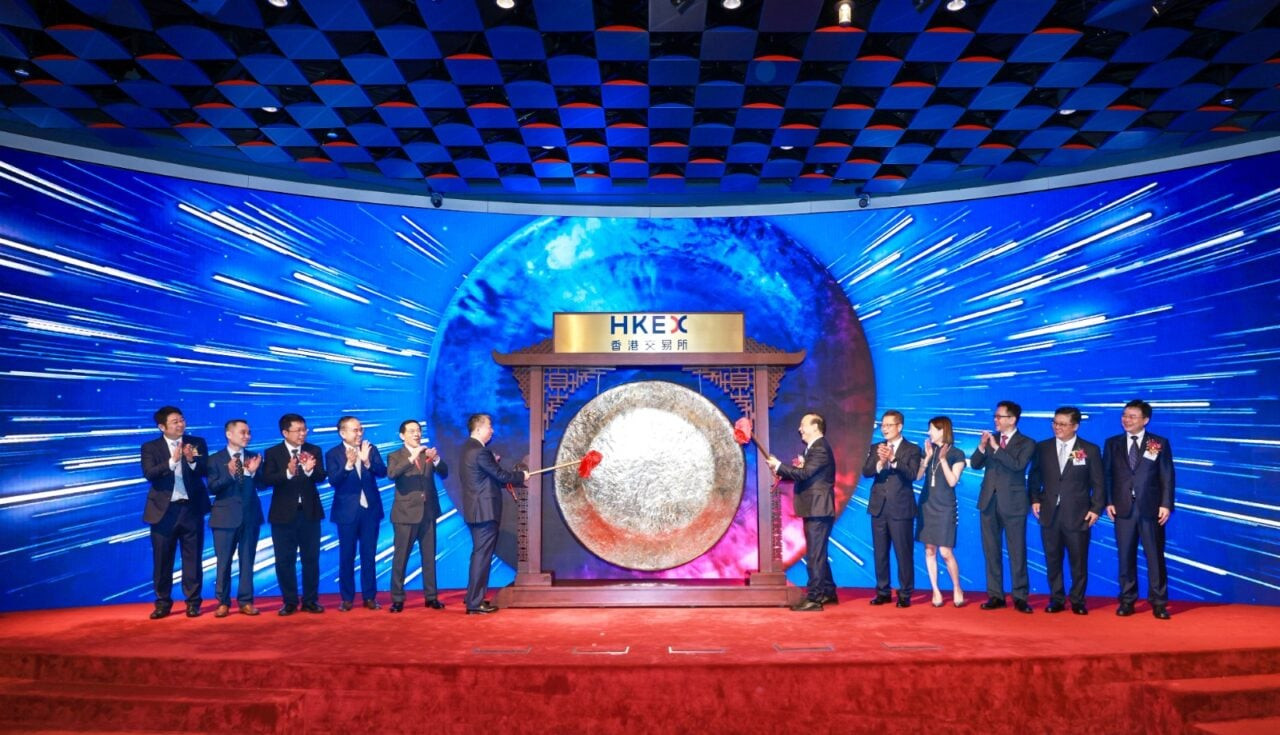
Who Dominated Hong Kong Trading This Week?
The headline numbers tell the story. CATL’s H-share listing on May 20 raised HKD 35.657 billion, making it the largest IPO on the Hong Kong market in recent memory. From its issue price of HKD 263 per share, CATL rallied to HKD 322.4 by the close on May 23, marking a gain of over 22 percent in its first week of trading. Meanwhile, Hengrui Medicine chose the top of its price range at HKD 44.05 per share and saw its stock leap by 25.2 percent on debut. 3SBio Inc. enjoyed an even more spectacular run, rocketing 57.38 percent over the week to claim the title of top weekly performer in the Hang Seng universe.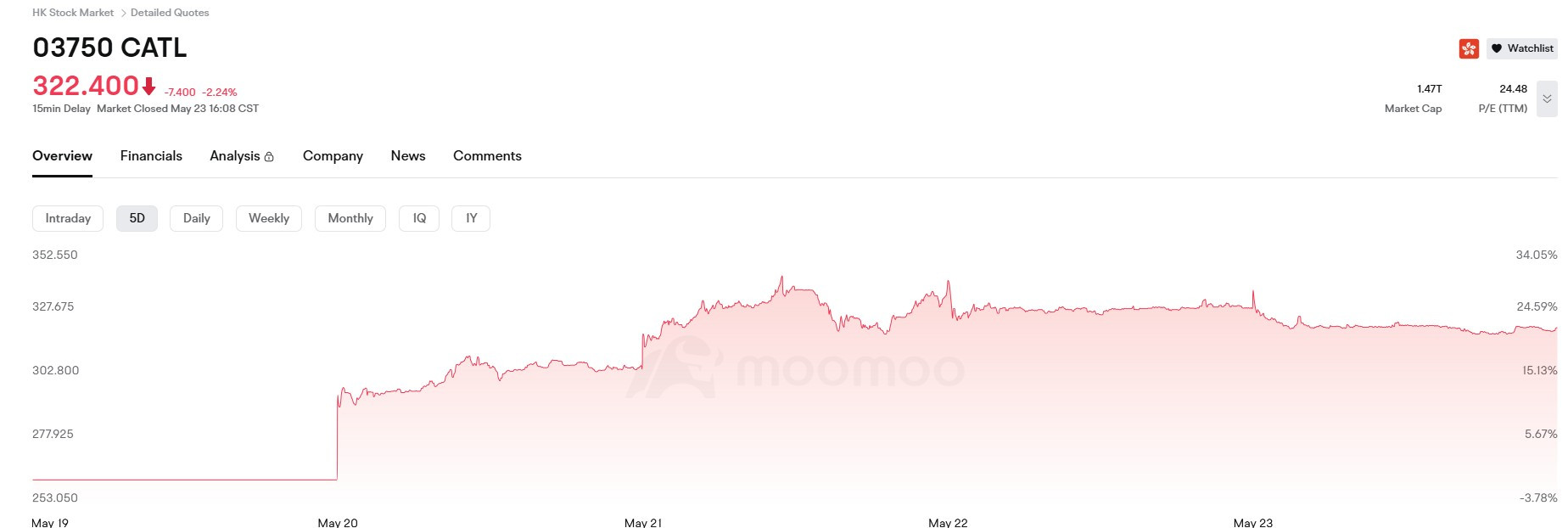
Beyond these titans, other life-science names also impressed. Rongchang Bio soared 27 percent, while Kangzhe Pharma delivered a 24 percent lift. On the index level, the Hang Seng closed the week up 1.1 percent at 23 601.26, with the mainland-focused Hang Seng Tech index slipping 0.65 percent to 5 246.87, and the Hang Seng China Enterprises index rising 1.36 percent to 8 583.86.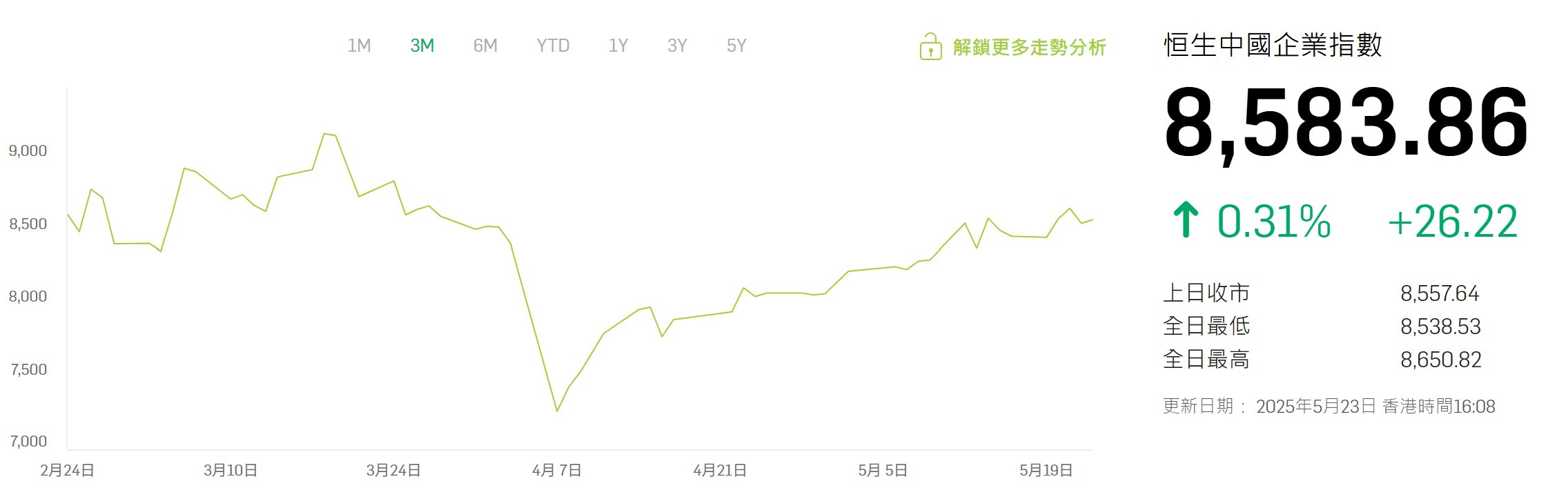
What Drove Investor Frenzy in Healthcare?
A confluence of sector-wide tailwinds powered the healthcare rally. China’s innovation-driven biotechs are enjoying accelerated FDA and ASCO engagement. 3SBio Inc.’s news that it will license its PD-1/VEGF bispecific antibody to Pfizer for markets outside China ignited fresh enthusiasm. Analysts at CICC raised earnings forecasts for 3SBio Inc. to RMB 2.41 billion this year and RMB 2.6 billion next year, lifting their target price by 56.3 percent to HKD 21.1 while maintaining an outperform rating. With multiple homegrown developers slated to showcase data at the May 30 to June 3 ASCO annual meeting, investors are betting on a wave of clinical readouts to further fuel the sector.
How Did CATL Achieve IPO Supremacy?
CATL’s near-flawless execution has set a new benchmark. From its February 11 filing to the May 20 listing, the entire process took just over three months, an extraordinary pace compared to recent Hong Kong floatation timelines. Its cornerstone investors roster reads like a who’s who of global capital: Hillhouse, GaoYi Asset Management, Kuwait Investment Authority and RBC among them. By raising HKD 35.657 billion, CATL surpassed all previous mainland tech and new energy listings in scale.
Investors piled in for several reasons. First, CATL’s dominance in battery manufacturing is unrivaled. It commands over 30 percent of the global market and supplies one in every three electric vehicles worldwide. In China’s mid-to-high-end segment (priced above RMB 250 000), its share exceeds 70 percent. As the only major battery player with stable mass-production capacity and superior safety credentials, CATL is seen as an indispensable partner to both domestic champions and global automakers.
Second, the current valuation gap between CATL’s A-shares (RMB 266.99) and H-shares (HKD 322.4, equivalent to RMB 296.59) translates to an approximate 11 percent premium. That cushion reflects strong sentiment that Hong Kong investors will continue to reward CATL’s growth trajectory and strategic expansion overseas.
What Is CATL’s Short‐Term and Long-Term Outlook?
In the near term, CATL benefits from robust demand for electric vehicles in China and abroad. Its recent push into Europe has already borne fruit, with market share approaching 40 percent last year. European automakers, including Volkswagen’s recent decision to shift some orders from LGES to CATL at the cost of KRW 100 billion in penalties, underscore its rising clout. The company has also broken ground on a German plant and is constructing a facility in Hungary, cementing its foothold in the region.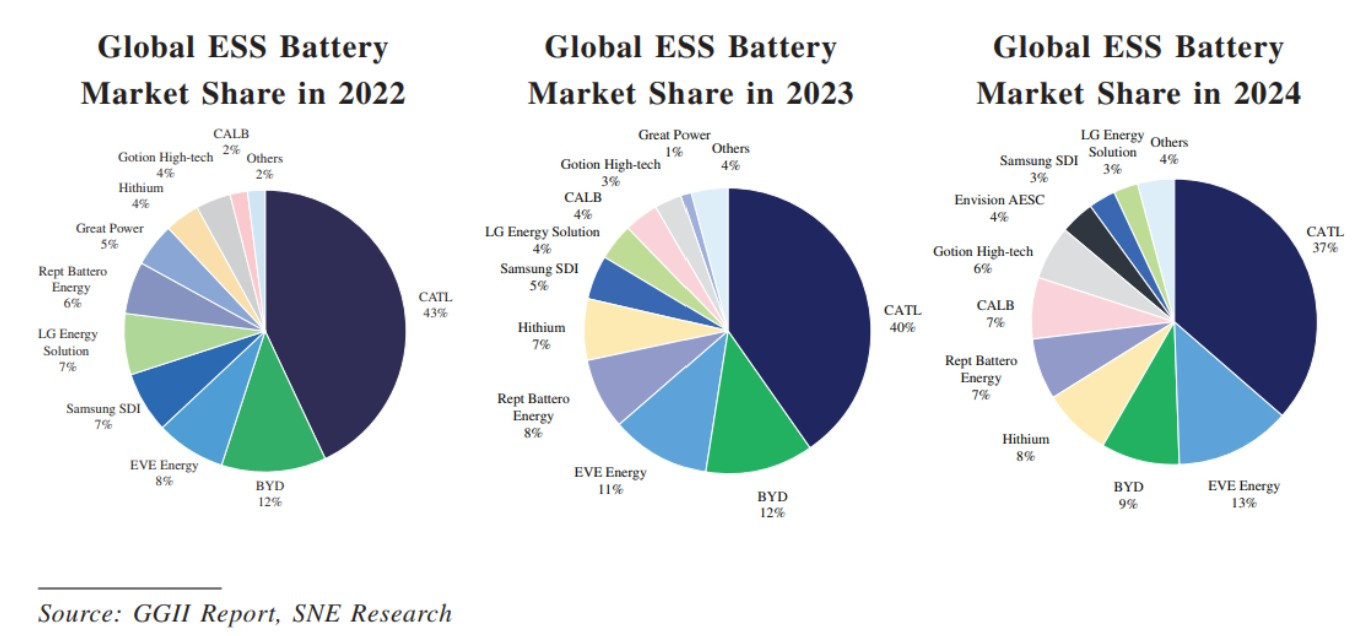
Looking further ahead, CATL is betting on new growth engines beyond core cells. Its bold wager on battery-swapping infrastructure has garnered significant attention. Having launched its first-generation swap stations in 2021, CATL plans to build 1 000 swap stations this year and ultimately aim for 30 000 by 2030. While capital-intensive with long payback horizons, battery swapping could unlock new revenue streams and cement CATL’s role as an end-to-end energy service provider.
Innovation remains the lifeblood of the business. In the latter half of last year, CATL set a 500-day research plan to develop a 20 Ah solid-state cell capable of 1 000 lifecycle charges by year’s end. Achieving that breakthrough would shatter the decades-old lithium-ion paradigm and potentially propel CATL into the ranks of truly great global manufacturers.
Why Is CATL Not Without Challenges?
Even the strongest need to watch their footing. After peaking at RMB 1.6 trillion in A-share market value in 2021, CATL saw its valuation slip to around RMB 1.1 trillion last October when lithium carbonate prices spiked, denting margins and forcing quarterly net profit to drop sharply. That episode prompted investors to reclassify CATL from a pure growth story to a more cyclical play, mindful that raw-material swings can erode profitability despite its pricing power.
Regulatory headwinds also loom large, especially in the United States, where import tariffs on Chinese batteries have been proposed. And while CATL enjoys dominant share in China’s electrification boom, its inability to fully insulate customers from cost fluctuations has drawn some criticism from automakers locked into multi-year supply deals.
Furthermore, CATL must navigate the delicate balance between supporting strategic partners and preserving margins. Its refusal to slash prices indiscriminately has sometimes strained relations with smaller EV makers. The success or failure of its battery-swap model will be closely watched as the industry tests alternative charging and energy-storage formats.
Which Other Opportunities Should Investors Watch?
Beyond CATL, Hong Kong’s IPO party has room for more headliners. Watch for next-week listings from high-growth tech firms and expansion of cornerstone slots for blue-chip insurance and consumer names. In the life sciences space, keep an eye on ASCO presentations by Sino-foreign joint ventures and drug developers poised to unlock licensing deals with global pharmas.
The strength in healthcare and new energy reflects broader confidence that Chinese innovators can market their breakthroughs globally. With major policy incentives for carbon neutrality still in place and Beijing pushing digital and biotech transformations, both sectors seem primed for continued fundraising and M&A activity.
In conclusion, Hong Kong’s capital markets have delivered a spectacular week of IPO fireworks. CATL’s blockbuster H-share debut has reinforced its unrivaled position and ambition to transcend battery manufacturing into a full-service energy play. Yet it faces the twin tests of cyclical pressures and fierce competition overseas. Whether it can sustain its current momentum or forge unique moats will determine if it remains the uncontested “King of Cathode” or yields ground to emerging rivals.
This content is provided for informational or educational purposes only and does not constitute investment advice.