
Bessent Signals Big Shifts on Tariffs Trade Deals and Debt Strategy

On Friday, US Treasury Secretary Bessent made headlines with a wide-ranging speech touching on trade, debt, taxes, and market volatility. But the biggest takeaway? Tariff threats are not just talk—they’re a tactic. And behind the noise, the US is quietly reshaping its trade and financial strategy.
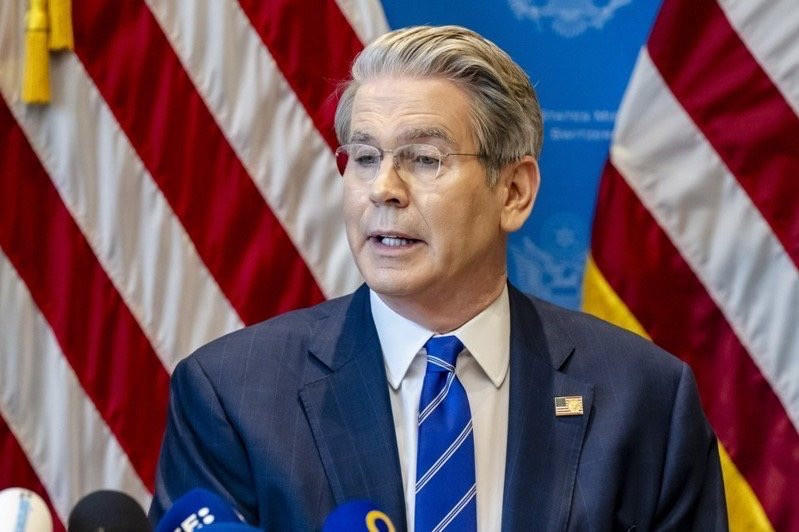
Tariff threats are aimed at pushing the EU to move faster
Trump’s warning of a 50% tariff on EU goods isn’t just rhetoric. According to Bessent, it’s a calculated move to pressure the EU into speeding up trade negotiations. The current 90-day tariff pause—announced in April—is a window for diplomacy, but Bessent made clear that the US won’t wait forever.
While most of America’s trade partners are actively negotiating in good faith, Bessent said the EU stands out for its sluggish pace, partly due to the bloc’s need to coordinate among 27 member states. He expressed hope that Germany, under Chancellor Merz, could take the lead in breaking the deadlock.
In contrast, talks with India and other Asian nations are moving swiftly. Bessent called them “very promising,” hinting that several major trade deals could be announced in the coming weeks. He didn’t name specific countries but suggested momentum is building as the tariff pause approaches its end.
Apple gets a nod in the push for chip supply chain security
In a notable aside, Bessent mentioned $AAPL, saying he expects the tech giant to play a bigger role in securing the chip supply chain. It’s a subtle signal that the Biden administration wants US tech firms to take more responsibility for national economic security—especially in areas like semiconductors, where geopolitical risk runs high.
US may tweak key bank capital rule this summer to ease Treasury market stress
One of the more technical but important parts of Bessent’s remarks focused on financial regulation. He said the US is “very close” to changing the Supplementary Leverage Ratio (SLR)—a capital rule for big banks. The potential changes could come as early as this summer.
Why does this matter? Because easing the SLR could free up capital and make it easier for banks to hold US Treasuries. That, in turn, could lower Treasury yields by several dozen basis points—helping reduce borrowing costs for the government.
And markets responded. Long-dated Treasury yields dipped slightly after the speech, with the 30-year yield falling from around 5.05% to near 5.03%, and the 10-year yield dropping to just above 4.5%.
Tax cuts, debt concerns, and a growth-based solution
Bessent also defended the Republicans’ latest tax plan, passed by the House and now heading to the Senate. He argued that permanent, low tax rates would provide clarity and encourage growth.
Critics worry these cuts will worsen the deficit. But Bessent pushed back: “As long as the economy grows faster than our debt, we’re fine.” He predicted that the US budget deficit would fall to a level starting with “3% of GDP” by 2028, helped in part by tariff revenue.
Still, he admitted tariffs alone won’t fix everything. “Tariffs help, but they can’t offset years of overspending,” he said. What’s needed, in his view, is a long-term growth shift—and more efficient government. He praised Elon Musk’s push to streamline public agencies and hinted that government cost control would be a major focus going forward.
He also revealed that the idea of creating a US sovereign wealth fund has been put on hold. Why? Because Trump prefers to focus on paying down the national debt. “He’s serious about it,” Bessent said. “That’s his priority now.”
Dollar weakness not a big worry for now
Bessent tried to downplay recent dollar weakness, saying the real story is not that the dollar is falling—but that other currencies are rising. Even so, markets reacted. The Bloomberg Dollar Spot Index dropped 0.7%, hitting its lowest level since late 2023, while the ICE Dollar Index fell 0.8%.
Safe-haven currencies like the yen and Swiss franc gained, alongside gold. The signal here is clear: investors are cautious.
Looking ahead big themes to watch
Bessent’s speech offered a glimpse into where US policy is heading:
• More trade deals are coming. India is first in line, but others may follow quickly.
• Regulatory tweaks could lower Treasury yields, easing stress in bond markets.
• Deficit control will rely on growth, not just spending cuts or new revenue.
• The dollar may stay soft, especially if global growth improves outside the US.
One final remark that stood out—Bessent joked that Harvard is basically “a giant hedge fund.” It was a dig, but also a reminder that the lines between academia, finance, and policy are blurrier than ever.
This wasn’t just a routine policy update. Behind the headlines about tariffs and tax cuts, there’s a broader strategy emerging: trade deals to rewire global supply chains, regulatory reforms to support Treasury markets, and tax plans aimed at fueling long-term growth.
Whether it works depends on two things—execution and how the rest of the world responds.