
Why Trump Suddenly Backed Japan’s Bid for U.S. Steel Might Be More Than Just a Deal

U.S. Steel $X , once a symbol of America’s industrial dominance, is now being bought out by Japan’s Nippon Steel for $14.1 billion. And the biggest twist? Donald Trump, who strongly opposed the deal earlier this year, just gave it the green light.
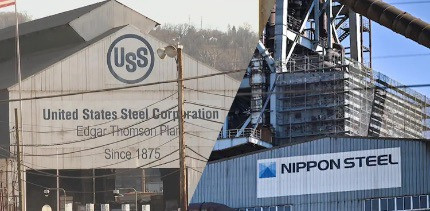
Not only that, he’s reframing it as a “partnership” that will supposedly create 70,000 jobs, bring $14 billion in investment, and help “revive American manufacturing.”
If that sounds familiar, you’re not alone—it’s almost a copy-paste of what he said back when Foxconn was building a factory in Wisconsin.
But is this really the start of a manufacturing comeback? I’d argue the opposite. It looks more like a high-stakes political and financial compromise.
What exactly is this deal about
Simply put, Japan’s Nippon Steel wants to buy 100% of U.S. Steel at $55 per share, beating out other bidders with a $14.1 billion offer.
Their plan goes beyond just acquiring the company—they also want to pour money into upgrading old plants, including major facilities in Indiana and near Pittsburgh. They’ve also pledged to build a new, modern steel mill somewhere in the U.S.
In short, Nippon Steel isn’t just buying U.S. Steel—they’re investing heavily to rebuild it.
Why the deal was so controversial from the start
There were two main opponents: Donald Trump and the United Steelworkers union (USW).
Trump’s stance was straightforward: “U.S. Steel” should stay American. That fits with his long-standing “economic nationalism” narrative. Back in January, he even pushed the Biden administration to block the deal.
The union’s objections were more grounded:
• Japanese steel companies have a history of undercutting U.S. prices with cheap exports
• The acquisition could lead to job losses and factory closures
In other words, they feared another case of foreign competition hurting American workers.
So why did Trump suddenly change his mind
Here’s my take: he wants to spin this deal into a “Trump-style manufacturing revival story.”
On Truth Social, he called it a “partnership between the United States and Japan” that would keep the company’s headquarters in Pittsburgh and deliver 70,000 jobs and $14 billion in investment.
He even added, “The name U.S. Steel will once again stand for greatness.”
But here’s the reality:
• Nippon Steel is still aiming for full ownership—it’s just being repackaged as a “partnership”
• The 70,000 job figure has no clear basis in data—most likely a political talking point
• Commitments to keep the HQ and appoint American executives are responses to regulatory pressure, not wins Trump negotiated
In other words, this is not a deal Trump shaped. It’s a deal Nippon Steel reshaped to get across the finish line.
How did this pass the national security test
This is where things get interesting.
U.S. Steel isn’t a military supplier, but it does produce steel used in cars, appliances, and construction—core industries tied to infrastructure resilience. That’s why the deal triggered a national security review by CFIUS (the Committee on Foreign Investment in the U.S.).
To get approval, Nippon Steel offered a series of concessions:
• Creating a separate U.S. board to oversee American operations
• Ensuring the board has a majority of American citizens
• Installing a mostly U.S. citizen executive team
• Accepting government oversight via an independent federal monitor
• Agreeing not to cut jobs or shut down plants until at least the end of the current labor contract in 2026
These steps ticked all the boxes—national security, labor concerns, and political optics.
What the market thinks about all this
The market responded immediately. U.S. Steel’s stock jumped more than 21% after Trump’s post, nearly matching the deal’s offer price. That’s a strong signal investors now see the deal as highly likely to go through.
Meanwhile, rivals took a hit:
• Cleveland-Cliffs fell 7%
• Steel Dynamics dropped 3.5%
Why? If U.S. Steel gets a $14 billion boost and upgrades its aging infrastructure, it could quickly become a much stronger competitor—bad news for others in the industry.
This deal shows what happens when global capital steps in to rescue aging industries
U.S. Steel’s decline isn’t new. Years of losses, outdated plants, and weak productivity have dragged it down. But with no direct government bailout in sight, finding a foreign buyer willing to invest—and play by U.S. political rules—was the most practical way out.
Nippon Steel wants access to the U.S. market. U.S. Steel wants capital and a second chance. Trump wants a storyline about “reviving American industry.”
This deal is less about negotiation and more about mutual needs—each side gets something, even if it’s not perfect.
Will this become a playbook for other international companies
Honestly, probably not.
Nippon Steel made this work because:
• It accepted a U.S.-style “political acquisition” with intense oversight
• It committed real money to physical investment
• It could fit into a narrative of geopolitical partnership, not rivalry
But for companies from more politically sensitive countries, replicating this strategy would be much harder due to stricter scrutiny and tighter regulatory barriers.
Still, this case shows one thing clearly: if you’re willing to play by the rules, embrace transparency, and meet the host country’s political and strategic demands, deals like this can move forward.
Just be prepared—the real price goes far beyond money.