
Auto Stocks Tumble as BYD Reignites Price War — What’s Behind the Sell-Off?

Shearing sheep
May 26, 2025
GoGPT Summarizes Articles
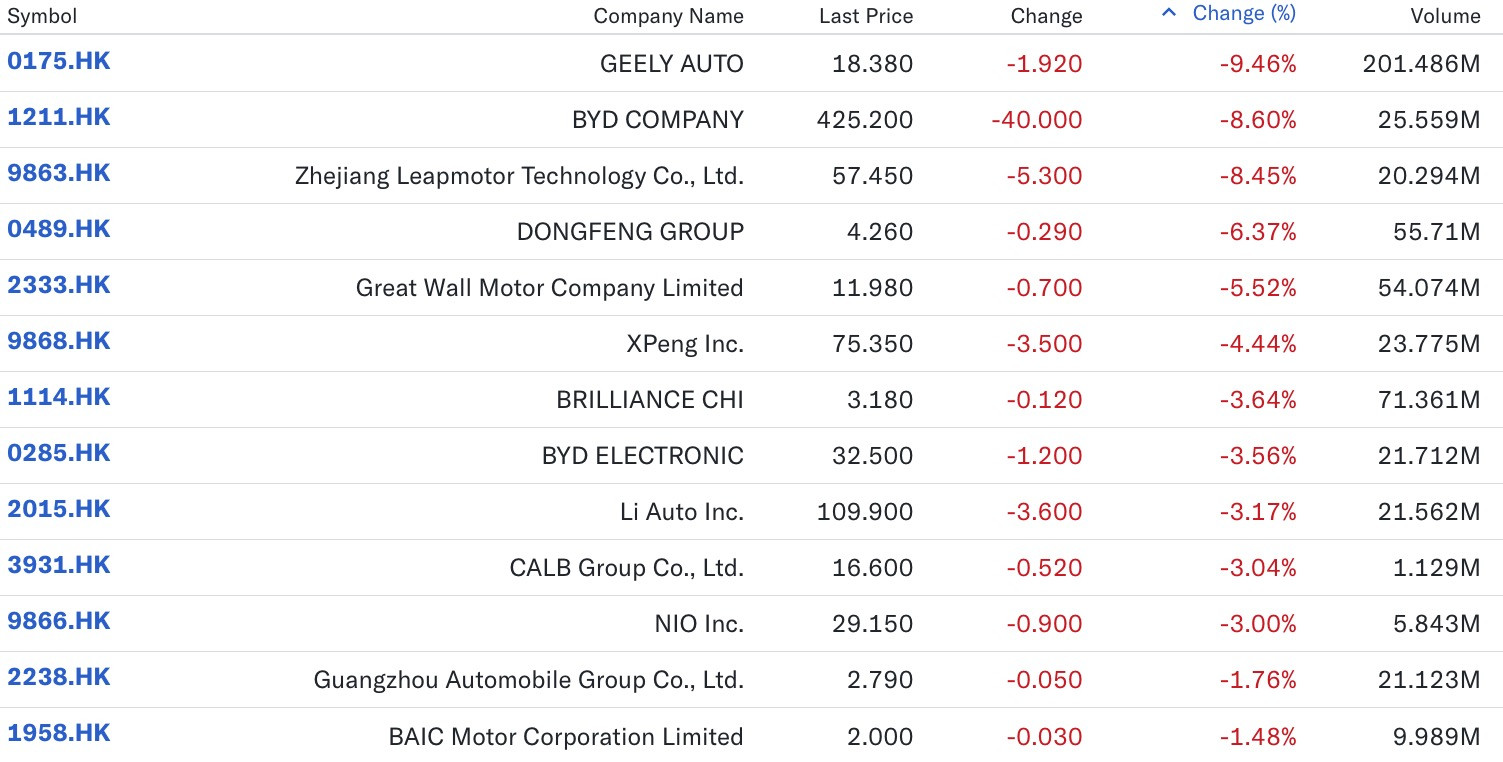
Markets in China and Hong Kong took a hit today, with the Hang Seng Index dropping 319 points (-1.35%), the China Enterprises Index down 146 points (-1.70%), and the Hang Seng Tech Index losing 89 points (-1.70%). Leading the drag? Auto stocks — particularly EV makers.
Geely (00175.HK) plunged over 9% at one point, its biggest single-day drop in over a month. BYD (01211.HK) and Great Wall Motor (02333.HK) were also deep in the red, sliding more than 8% and 5% respectively. EV startups like Leapmotor, Li Auto, XPeng, and NIO didn’t escape the sell-off either. Over on the A-share side, auto names fell too, though losses were more moderate.
So, what’s going on?
In a word: pricing pressure — and lots of it.
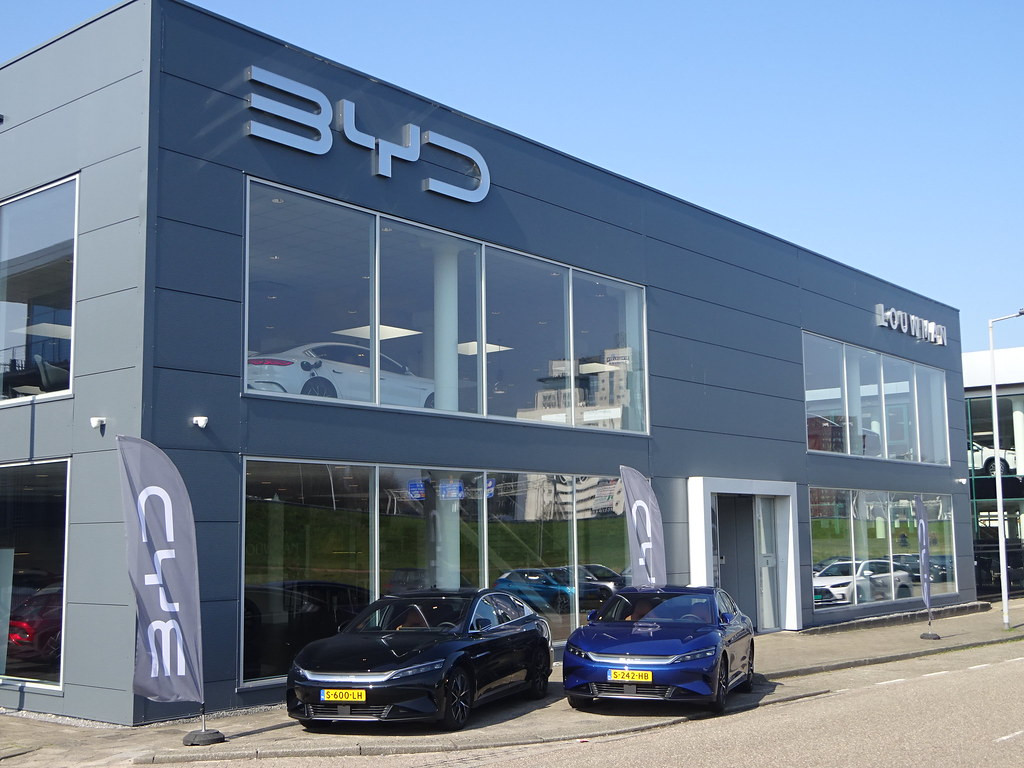
On May 23, BYD announced sweeping discounts across 22 models in its Ocean and Dynasty series. Some markdowns go as high as ¥53,000 (roughly $7,300). Entry-level models like the Seagull and Dolphin are now priced below ¥80,000 (around $11,000), including subsidies. Even mid-range DM-i hybrids and EVs like the Song Plus, Han EV, and Tang DM-i are getting deep cuts.
This marks BYD’s third major price-cut since March — but this round is the most aggressive yet, both in scope and scale. With the 6.18 shopping festival approaching, it looks like a volume play — but also a possible sign that demand, especially for intelligent driving versions, may be weakening.
And the rest of the industry is watching closely.
Toyota’s Levin has reportedly rolled out ¥40,000 discounts in Shanghai, and several domestic players are expected to respond in kind.
Unsurprisingly, investors are spooked.
Analysts warn that this could signal the start of another full-blown price war in China’s already saturated EV market. Morgan Stanley’s Tim Hsiao noted that while some discounting had been quietly happening at the dealer level since April, BYD’s formal move shows just how much pressure is building at the retail end. The concern: shrinking margins — especially when many automakers are still chasing consistent profitability.
CICC echoed those concerns, noting that while some level of promotions was expected due to lackluster demand for smart-driving models in lower-tier cities, the scale of this campaign caught the market off guard. Even well-established brands aren’t immune to the squeeze.
What does this mean for the industry?
Stepping back, the EV market is clearly moving into a consolidation phase. In the short term, aggressive discounting is hurting sentiment and clouding earnings visibility. In the long term, though, optimism remains — particularly in areas like autonomous driving and robotics.
Tesla is set to unveil its long-awaited Robotaxi on June 1. Chinese players like Pony.ai and WeRide are expanding their robotaxi pilot programs, suggesting the commercialization of AVs in restricted operational domains is inching closer. Meanwhile, humanoid robots are starting to enter the auto value chain. Tesla’s Optimus, XPeng’s robotics program, and BMW’s factory deployments are early signs of this crossover.
If successful, this fusion of EVs, AI, and robotics could lower production costs, improve efficiency, and open new revenue streams. But right now? The market’s laser-focused on one thing: profitability. And price wars do not help that narrative.
Bottom line
BYD’s new round of price cuts might drive short-term sales, but they’ve also reignited fears over shrinking margins and cutthroat competition. Until demand catches up — or companies pivot successfully to higher-margin, tech-heavy offerings — volatility will likely remain the name of the game.
China’s EV sector is still a long-term bet on AI-driven mobility. But today’s sharp sell-off reflects very real short-term pain.
What to watch next:
-
Rival reactions: Will Tesla or NIO slash prices too?
-
June sales figures: Will discounts lift demand?
-
Policy signals: Any signs of new subsidies or trade-in incentives?
#Chinese Equity Markets: Insights, News & Trading Signals