
Masayoshi Son Puts Forward a Bold Idea: Establish a US-Japan Joint Sovereign Wealth Fund!

According to media reports, Masayoshi Son, the founder of Japan's SoftBank Group, has proposed the idea of establishing a US-Japan joint sovereign wealth fund, aiming to make large-scale investments in the technology and infrastructure sectors of the United States.
According to three informed sources, this idea has been put forward at the highest political levels of the United States and Japan and may become a model for other national governments to establish closer investment relations with the United States.
The above-mentioned informed sources said that Masayoshi Son and US Treasury Secretary Besent have directly discussed the plan and outlined it to other senior officials of the two governments, but it has not yet become a formal proposal.
It is reported that in recent weeks, as Japanese negotiators and the Trump administration have moved towards reaching a trade agreement, the idea of a joint sovereign fund has been put forward several times. Japan's position is to promote zero tariffs, while the US side has clearly stated that it will not lower the 10% benchmark tariff.
After Trump talked on the phone with Japanese Prime Minister Ishibashi Shigeru last Friday, the latter told the Japanese domestic media that he now expects the meeting between the two scheduled for the middle of June during the G7 meeting in Canada to be a "milestone" in the negotiations.
How will the joint fund operate?
According to the proposed structure of the wealth fund, the US Treasury Department and the Japanese Ministry of Finance will become the co-owners and operators of the fund, each holding a large number of shares. Subsequently, they will open the fund to other limited partner investors and may allow ordinary US and Japanese citizens to participate in the investment.
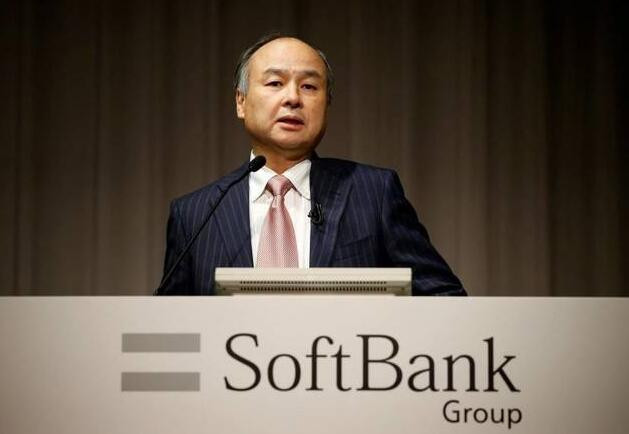
A person familiar with the discussions said that to effectively achieve its investment goals, the fund must be "huge in scale"-with an initial capital of up to $300 billion and operate with high leverage.
According to people familiar with the details of the fund, the attractiveness of the joint fund lies in that it can provide a source of income for the two governments.
A person familiar with the situation said, "Theoretically, Besent is looking for a source of income for the Treasury Department that does not involve tax increases, and no matter how remote this joint fund may sound, theoretically it can provide such a source of income."
The person added that the proposal aims to break through the traditional strategic framework. Besent wants something that can become a blueprint for a new inter-sovereign financial architecture, while Japan wants a standardized governance mechanism to protect Japan from the ad-hoc decisions of the White House politics.
The person also said that in the past, the US government or various states would provide tax incentives for large-scale direct investors to build factories or infrastructure projects. The expectation behind this strategy is that the government will ultimately obtain tax revenue indirectly. The investment of the envisioned joint fund, however, will directly bring profits proportional to the original investment.
Masayoshi Son Acts as a Go-between
Masayoshi Son has always had a close relationship with Trump. In December last year, he made a high-profile visit to Trump's Mar-a-Lago before Trump took office.
Two informed sources said that Masayoshi Son has been the central figure in the joint fund proposal and he may seek to play an important role in the future investment decisions of the fund.
The founder of SoftBank, known for his high-risk investments, jointly announced the $50-billion "Stargate" plan with Trump in January this year, planning to cooperate with OpenAI and Oracle to build data centers and artificial intelligence infrastructure in the United States.
According to people familiar with Masayoshi Son's ideas, such projects are likely to become the investment targets of the newly established wealth fund.
In February this year, Trump instructed to prepare for the establishment of one of the world's largest sovereign wealth funds and proposed that the fund could be funded by liquidating government assets for key mineral projects or strategic investments.
However, last week, US Treasury Secretary Besent said that the Trump administration has suspended the plan to establish a sovereign wealth fund and instead focused on repaying the national debt.