
Trump Delays the Blow but the EU’s Real Problem Is Bigger Than Tariffs

On Sunday, Trump announced a delay to the 50% tariffs he had threatened on the European Union, pushing the deadline from June 1 to July 9.
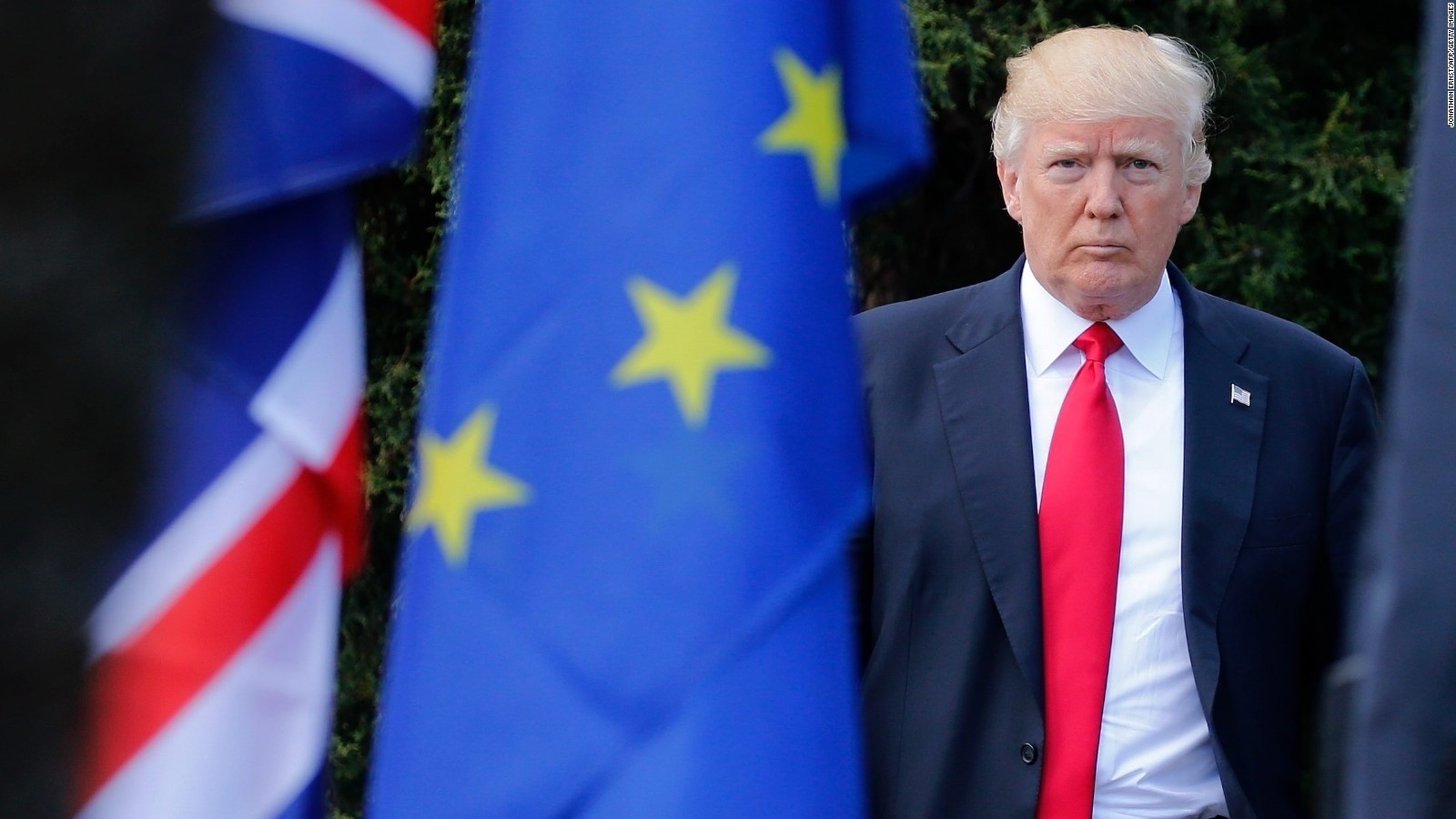
At first glance, it looks like a simple trade pause. But the bigger story here is about Europe’s deeper dilemma: as tensions between the US and China escalate, the EU is running out of room to stay neutral.
This isn’t just about tariffs. It’s a sign that the EU is being forced to answer a question it’s been avoiding—which side are you really on?
The US wants Europe to pick a side
Let’s start with the American perspective.
The US isn’t just trying to slap tariffs on goods. It’s trying to redesign the global trade and tech system in a way that limits China’s influence—and that effort only works if allies fall in line.
Why the pressure?
Because Washington believes that Europe is trying to have it both ways: enjoy America’s military protection and market access, while keeping close economic ties with China. That, in the US view, undermines the entire Western front against China.
Here’s how that pressure shows up:
• On supply chains: The US is rebuilding “safe” supply chains for chips, clean energy, and critical minerals—and it expects Europe to join in.
• On policy alignment: Washington wants Europe to match its tech restrictions, investment screening, and subsidy rules to avoid loopholes China can exploit.
• On geopolitics: From Ukraine to Taiwan, the US is pushing allies to show clearer positions and stronger coordination.
In short, America no longer sees EU neutrality as acceptable. It wants alignment—not ambiguity.
Europe can’t just walk away from China
So why doesn’t the EU just lean fully into the US camp?
Because, to put it simply, it can’t afford to lose China—not yet, and not easily.
Here’s a breakdown of why China still matters so much to Europe:
1. Export dependence runs deep
China is the EU’s second-largest trading partner (and used to be the first), and for countries like Germany, it’s absolutely critical.
German automakers like Volkswagen, Mercedes, and BMW rely on China for 30–40% of their global sales. These aren’t side markets—they’re core revenue streams.
These companies build for China, design for China, and hire in China. They’re embedded.
2. Green transition needs Chinese supply chains
Europe’s push for green energy—electric vehicles, solar power, batteries—depends on a supply chain China dominates.
Even if the EU stops buying Chinese finished products, it still needs Chinese raw materials, components, and processing capacity.
European firms may lead in engineering, but many still rely on Chinese factories to get products out the door—especially at scale.
3. Chinese capital matters too
China has also invested heavily in Europe—especially in infrastructure, ports, and technology. That capital has been key for some smaller EU economies.
All in all, Europe needs China economically, even as it becomes more nervous about the political risks of that relationship.
Europe doesn’t want to be pushed around either
Here’s the twist: while the EU is reluctant to turn its back on China, it also doesn’t want to be dragged around by Washington.
That’s where the idea of “strategic autonomy” comes in—a policy goal the EU has been talking about for years.
What does that mean?
The EU wants to be a power in its own right—not just a follower of US strategy. And that desire has only grown stronger.
Trump’s first term scared many in Europe. He questioned NATO, imposed steel tariffs, and pulled out of global agreements. Even under Biden, the US has stayed very “America first”—with subsidy-heavy policies like the IRA that hurt EU industries.
Add to that the fact that EU countries often disagree internally—France pushes for more independence, Germany worries about exports, smaller states align more with Washington—and you’ve got a bloc that talks about unity but struggles to act quickly.
So even if the EU shares many values with the US, it’s still resisting being treated as a junior partner.
What this delay really says about Trump’s strategy
Now back to the latest move—Trump’s decision to delay the tariffs.
This isn’t a gesture of goodwill. It’s a classic Trump move: create pressure, then offer time for a deal—but only on his terms.
By giving the EU just over a month, Trump is signaling: “I’m serious, so you’d better come up with something I like.”
And right now, Europe isn’t in a strong position to respond:
• EU officials are still debating among themselves;
• They’d rather not commit to anything before the US election;
• And frankly, they’re not sure if Trump—or Biden, for that matter—will even stick to any deal long-term.
That’s the core of the EU’s problem. It’s not just reacting to one tariff threat—it’s dealing with a changing world where the old balance no longer works.
Europe is running out of space to stay neutral
Here’s how I see it: the EU has spent years trying to balance between the US and China. That’s getting harder by the day.
• The “grey zone” between the two powers is shrinking fast. Neither Washington nor Beijing is willing to tolerate middle ground anymore.
• The EU’s internal divisions make quick strategic decisions nearly impossible.
• And if Trump returns to the White House, the pressure won’t just be about tariffs—it could mean a whole new level of decoupling.
The tariff delay may seem like a breather. But it’s really just a reset on the countdown.
The bigger question remains: Can Europe still chart its own path between two global giants? Or will it be forced to choose?
Let me know what you think—how long can the EU keep walking this tightrope?