
Nvidia Earnings Preview: What to Watch as AI Demand Remains Hot, but Margins Take a Hit

Shearing sheep
May 27, 2025
GoGPT Summarizes Articles
All eyes are on Nvidia ($NVDA) again this week. The chipmaker, now one of the most influential players in the market, reports its FY2026 Q1 earnings after the market close on May 28 — and expectations are sky-high.
The Numbers: Big Growth, but Signs of Moderation
Consensus estimates call for revenue of $43.2 billion, up a massive 65% year-over-year, and EPS of $0.814, a 36% YoY increase. That reflects Nvidia’s dominant position in the AI hardware race. Among 44 analysts covering the stock, 85% rate it a Buy, with just one outlier still saying Sell.
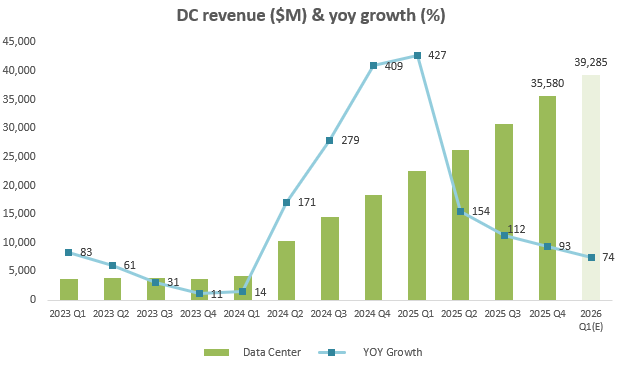
As usual, the data center segment will be the real driver. Bloomberg data pegs expected revenue at $39.2 billion (+74% YoY, +10.4% QoQ). HSBC breaks that down as:
-
$13.38B from standalone GPUs
-
$20.98B from rack-scale server sales (largely GB200 NVL systems)
-
$3.5B from Mellanox networking chips
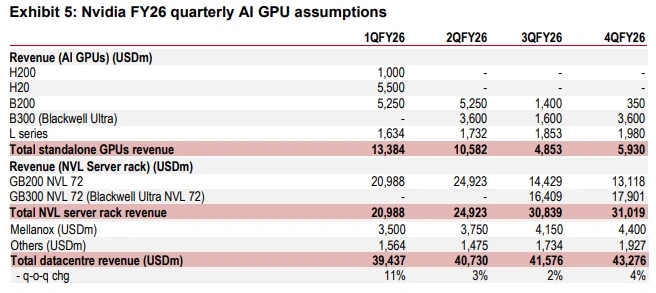
That said, HSBC is already flagging slower QoQ growth ahead — a sign that momentum may cool off as the year progresses.
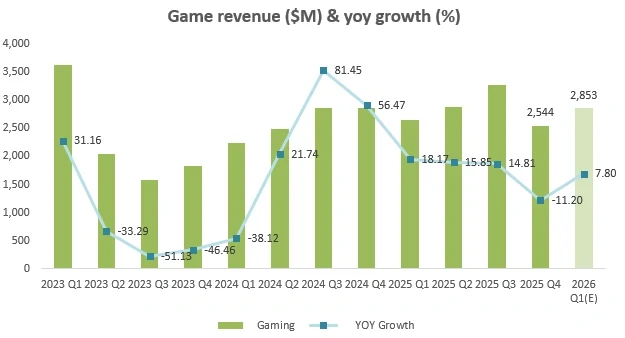
On the gaming side, revenue is expected to tick up to $2.8 billion, thanks to the RTX 50 series launch. But with gaming now accounting for just a small share of overall revenue, it’s increasingly a sideshow for investors.
Margin Watch: H20 Write-Down Weighs on Q1
One red flag this quarter is gross margin. Nvidia is expected to take a $5.5 billion inventory write-down related to the China-specific H20 product. That could drag gross margins down to around 58% — a sharp drop from the ~70% norm.
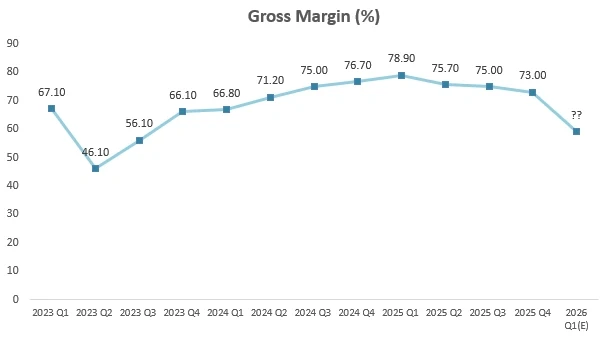
However, both Wells Fargo and HSBC expect this to be a one-off hit, with margins rebounding back to ~71% in Q2, barring any new disruptions. It's a margin blip, not a structural issue — but still worth watching closely.
Blackwell Ramps Up, Inference Takes Off
On the positive side, demand for Nvidia's new Blackwell architecture looks strong. Taiwan’s top three ODMs shipped around 1,500 GB200 racks in April, up from 1,000 in Q1 — a sign of improving supply and robust demand.
CEO Jensen Huang described Blackwell demand as “staggering.” Full-year shipments are projected at 3.5 million units, far ahead of last year’s 1.3 million Hopper GPUs — a data point that may ease investor concerns around oversupply.
Meanwhile, AI inference has become a key growth driver. It now accounts for more than 40% of Nvidia’s data center revenue. Blackwell’s performance upgrades — 25x throughput and 20x lower cost per inference compared to H100 — could accelerate adoption across the board.
Geopolitics: From China to the Gulf
The near-term outlook in China is murky. Due to tightened US restrictions, Nvidia has paused new product sales to the Chinese market. That’s a clear negative.
But Nvidia is finding new opportunities elsewhere. Middle Eastern nations are ramping up sovereign AI infrastructure projects. The UAE alone is reportedly planning to buy over 1 million AI chips (including Blackwell) through 2027 — a potential offset to the China loss.
Platform Play: NVLink Fusion vs. UALink
At Computex, Nvidia revealed its NVLink Fusion platform — an initiative to integrate third-party CPUs and AI chips into Nvidia's rack-scale solutions. Launch partners include MediaTek, Qualcomm, Marvell, Alchip, and others.
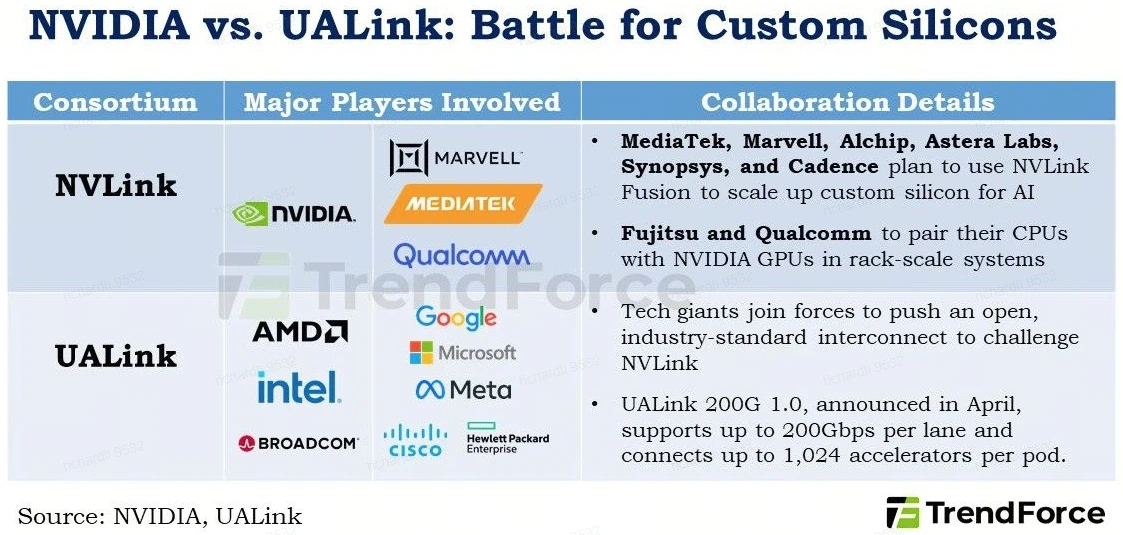
The timing is interesting. This comes as Broadcom, AMD, and Intel push UALink — an open interconnect standard designed to compete directly with NVLink. This could mark the early days of a new ecosystem battle in the data center.
Whether customers prefer Nvidia’s vertically integrated approach or opt for UALink’s open standard could shape the company’s longer-term market share in AI infrastructure.
Final Thoughts: The AI Supercycle Continues, but Risks Are Rising
The big picture hasn’t changed: Nvidia is still riding the AI infrastructure supercycle, and demand remains strong for both training and inference compute.
But the key questions from here are:
1. Is AI compute demand still accelerating — or nearing a plateau?
2. Will cloud giants stick with Nvidia or shift more capex toward in-house ASICs?
So far, the signs point to broad, healthy demand and even new geopolitical tailwinds. But investors should stay alert to margin pressures, a potential slowdown in quarter-on-quarter growth, and the longer-term risks from custom silicon development at Nvidia’s biggest customers.
#🏦 earnings season begins! what to watch? 👀#$Nvidia Corp(NVDA)#nvidia