
U.S. Private Equity Firm Plans to Acquire Darwin Port Lease from China's Lanqiao Group

According to the report, Cerberus, a U.S. private equity firm with close ties to the Trump administration, is preparing to bid for the Darwin Port currently owned by Chinese companies.
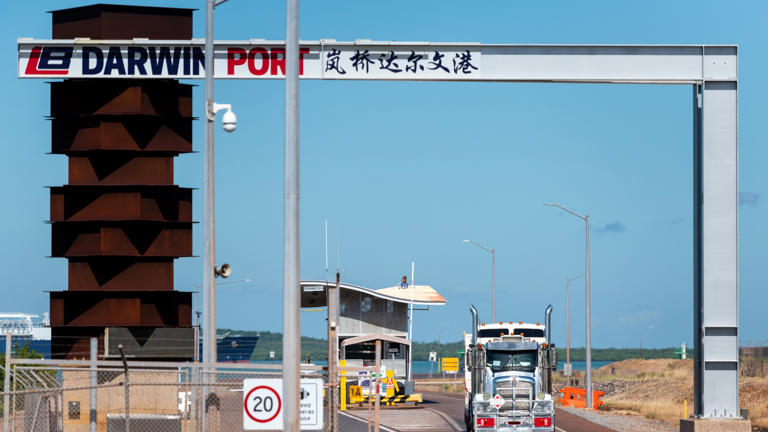
Rumor has it that Cerberus is ready to propose a deal to acquire the 99-year lease from Lanqiao Group at a price slightly higher than the A$506 million (US$328 million) the Chinese company paid in 2015.
The Darwin Port is a strategic chokepoint connecting the Indian and Pacific Oceans, and it is Australia’s closest port to Asia.
If U.S. military forces were to conduct operations here, they could form a triangular linkage with bases in Guam and Diego Garcia, enabling rapid intervention in matters relating to the South China Sea, Southeast Asia, and the Indian Ocean. It is truly a vital strategic hub.
The Darwin Port’s Resurgence
A decade ago, officials in Australia’s Northern Territory frowned at the Darwin Port’s financial statements.
Located just 2,500 kilometers from the South China Sea, the port had an annual throughput of less than 5 million tons, outdated facilities, and rusty dock equipment. Even locals viewed it as a "hot potato."
All that changed when China’s Lanqiao Group arrived with A$506 million. The Northern Territory government handed over the perpetually loss-making "mess" of the Darwin Port to Lanqiao on a 99-year lease.
Over the next decade, Lanqiao invested more than A$1 billion in upgrades, transforming the "dilapidated dock on the northern wasteland" into a golden port with an annual throughput of 30 million tons. The company also created over 3,000 local jobs and built schools and roads for the community.
A Political Football
However, the Darwin Port project has repeatedly become a "political football" in Australia, used as a "bargaining chip" in political campaigns. Over the past 10 years, the port’s operations have undergone at least three political and security reviews. This current controversy stems from the same dynamic.
During the just-concluded election campaign, incumbent Prime Minister Albanese, in a bid to outdo his rivals in taking a tough stance against China, attempted to renege on the contract and threatened to reclaim the port from Lanqiao on national security grounds.
The opposition Australian Coalition Party has demanded that Lanqiao voluntarily sell its lease within six months, or face a forced sale.
Some Thoughts
Currently, the Trump administration is wielding "tariff sticks" against countries worldwide, and Australia has not been immune to these threats.
The Darwin Port appears to be Australia’s chosen "offering of submission." As a former Australian diplomat noted, "Albanese needs to prove to Washington that Australia remains a loyal pawn on the Indo-Pacific chessboard."
This issue is far from simple. The importance of ports in today’s world needs no elaboration. If a nation lacks overseas ports of its own, trade fairness becomes a myth.
Not long ago, it was revealed that Chinese business magnate Li Ka-shing plans to sell ports—clearly, this has become a game of rivalry between China and the U.S. After all, whoever controls more ports gains greater influence and initiative in global trade.