
Transatlantic Trade at the Brink: Can Europe Withstand Trump’s 50% Tariff Threat?

In a dramatic escalation of trade tensions, U.S. President Donald Trump has threatened to impose a 50% tariff on all goods imported from the European Union effective June 1. Financial analysts warn such a move could slice up to 1.5% off Eurozone GDP—five times the estimated drag from a 10% levy.
With negotiations stalled and uncertainty mounting, markets are braced for volatility and the European Central Bank may feel compelled to deliver another rate cut to support growth.
Europe’s largest economies—Germany and Italy—stand to absorb the greatest shock, particularly in export-intensive sectors like automotive and pharmaceuticals.
Brussels has outlined a two-track response: accelerate high-level talks with Washington while preparing retaliatory duties on $95 billion of U.S. goods. Yet internal divisions among member states risk delaying any collective action.
Against this fraught backdrop, Brussels trade chief leading political negotiations in steel, aluminium, autos, semiconductors, and civil aircraft, even as technical discussions on non-tariff barriers proceed in parallel.
Whether this dual approach will defuse the threat or merely buy time remains unclear—and markets may judge progress too slowly to avert renewed turbulence.
Key Points
- Trump Threatens 50% Tariff: A proposed 50% U.S. tariff on EU goods could reduce Eurozone GDP by 1.5%, according to HSBC’s extrapolated estimates.
- Germany and Italy Most Exposed: Export-heavy economies, especially in autos and machinery, would be hardest hit.
- ECB May Cut Rates Further: Trade uncertainty could push the ECB to lower interest rates below 2.00%, deepening accommodative policy.
- EU Retaliation in Play: The EU is considering counter-tariffs on €95 billion of U.S. products, but internal consensus is not yet reached.
- Talks Accelerated—but Fragile: The EU is rushing to negotiate with the U.S., focusing on six key sectors, though major disagreements remain.
- Market Volatility Likely: Delays or failure in talks could trigger financial market disruption and broader economic consequences.
What’s at Stake for the Eurozone?
Europe’s aggregate welfare hinges critically on unfettered access to the U.S. market. Under a 10% duty, HSBC estimates a 0.3% hit to Eurozone GDP; a 50% levy multiplies that impact five-fold to roughly 1.5%.
Such a contraction would shave tens of billions off annual output, weighing heavily on employment and investment decisions across the region.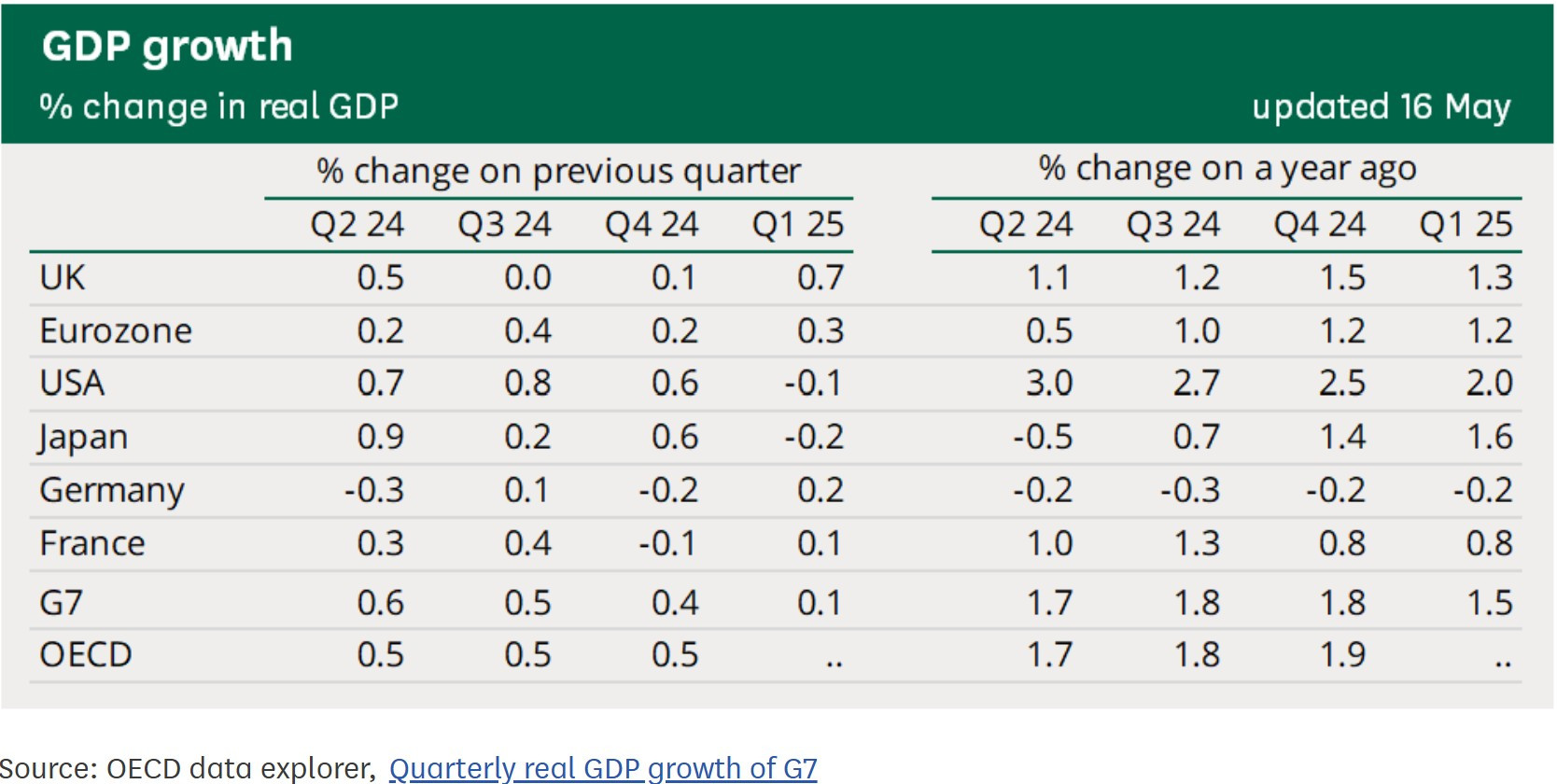
Inflationary pressures could initially spike as import costs rise, but over time diminished demand and weakened price pressures might nudge headline inflation lower—potentially forcing the European Central Bank (ECB) to cut its deposit rate towards 2.00% in June, with scant room for further easing.
The prospect of sub-neutral rates could deepen concerns over a policy impasse, weakening the euro and complicating the ECB’s inflation-targeting mandate.
Major Exporters Feel the Heat
Germany and Italy lead the pack in U.S.-bound exports, and both face acute vulnerability. German auto manufacturers, whose U.S. sales exceed €40 billion annually, would see profit margins squeezed by higher duties on cars and parts.
Italy’s machinery and fashion industries—already hit by supply-chain disruptions—could struggle to reroute output to alternative markets.
Pharmaceuticals, currently exempt from reciprocal U.S. tariffs, remain at risk if Brussels opts for blanket retaliation. Small and mid-sized exporters across France, Spain, and the Netherlands may lack the scale to absorb higher costs, prompting corporate belt-tightening and dampened hiring.
In aggregate, rising trade frictions could erode competitiveness and delay recovery from pandemic-induced slowdowns.
How Is Brussels Responding?
Faced with Trump’s ultimatum, EU institutions have pursued a dual strategy. On one hand, trade chief is coordinating high-level political talks on steel, aluminium, autos, semiconductors, and civil aircraft, aiming to reach sector-specific compromises before the June 1 deadline.
Technical working groups are simultaneously addressing non-tariff barriers—regulatory alignment, mutual recognition of standards, and judicial reforms.
On the other hand, the European Commission has drafted retaliatory tariffs on €95 billion of U.S. imports, spanning bourbon whiskey, motorcycles, agricultural products, and machinery.
Although member states are yet to reach consensus on these measures, the mere prospect of swift counter-duties is intended to raise the political cost for Washington. Yet internal disagreements—particularly over the scope and targets—threaten to undermine a united front.
Policy Implications and Outlook
The unfolding drama underscores the fragility of the post-war trade order. High tariffs of this magnitude risk triggering tit-for-tat escalation, roiling financial markets and draining business confidence on both sides of the Atlantic.
For Europe, the calculus is stark: concede on key regulatory and tax matters or brace for a deep hit to growth and stability.
The ECB, mindful of slowing global demand, may need to cut rates further into “supportive” territory below 1.75%, potentially restarting quantitative easing to shore up liquidity. Meanwhile, businesses must accelerate diversification of supply chains and explore new markets beyond the U.S. and China.
Ultimately, whether Trump’s tariff threat serves as a catalyst for meaningful concessions—or simply a lever to extract unilateral gains—will shape the trajectory of transatlantic relations.
If Brussels and Washington cannot bridge their differences swiftly, the specter of prolonged trade warfare looms large, threatening to derail Europe’s recovery and test the resilience of the global economy.
This content is provided for informational or educational purposes only and does not constitute investment advice.