
Appeals Court Puts Trump Tariffs Back in Effect While Legal Fight Continues

In late May 2025, a quiet but consequential legal battle began unfolding in the United States—and it could reshape the way presidents wield power over trade. A federal trade court ruled that President Donald Trump’s use of emergency powers to impose sweeping tariffs was illegal. But within 24 hours, an appeals court temporarily blocked that ruling from taking effect.
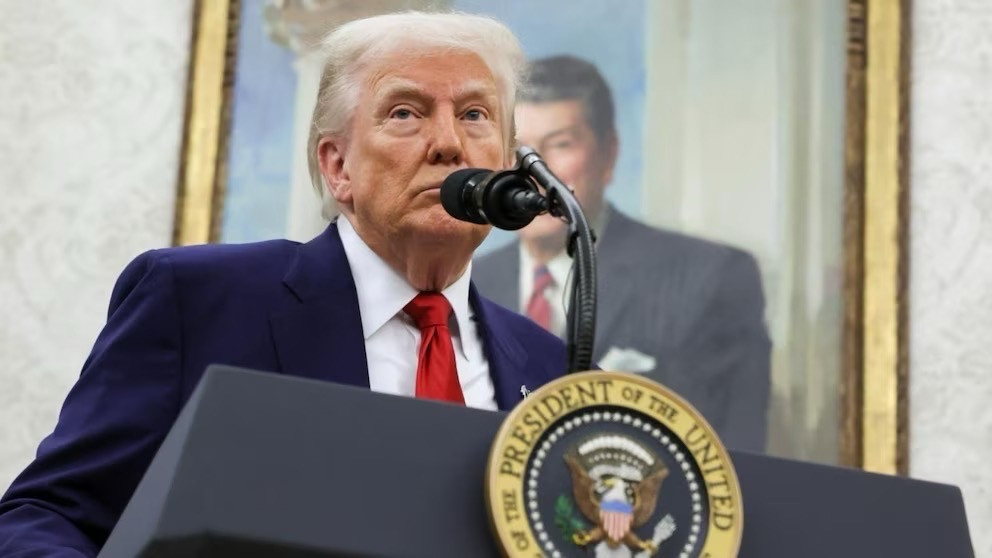
It’s more than just a legal technicality. This case strikes at the core of a long-standing tension in U.S. governance: how far can a president go in using “national security” as a justification to reshape economic policy?
Here’s what happened, why it matters, and what could come next for markets.
The Law in Question Was Never Meant for This
The legal showdown centers on the International Emergency Economic Powers Act (IEEPA), a law passed in 1977. It was designed to give presidents authority to act during genuine national emergencies—typically involving foreign threats—to freeze assets, block transactions, or impose sanctions.
Historically, IEEPA has been used to target hostile regimes, terrorist groups, and specific geopolitical threats. But Trump pushed its boundaries.
Starting in his second term, Trump began using IEEPA to impose broad-based tariffs on imports from China, Mexico, Canada, and others—often justifying them as responses to fentanyl trafficking or as part of broader efforts to rebalance trade. The problem? Tariffs have traditionally been the domain of Congress.
The Court Said This Went Too Far
On May 28, the U.S. Court of International Trade ruled that Trump had overstepped his authority. The court found that using IEEPA to impose tariffs—especially in the absence of a clear national security emergency—was beyond what the law allows.
In short, the issue wasn’t whether tariffs were effective, but whether the president had the legal right to impose them this way.
The judges noted that since IEEPA was passed, no president had used it to impose taxes or tariffs—until Trump. They made it clear: the law wasn’t written to be a tool for day-to-day trade policy or economic retaliation.
A separate federal judge in Washington, D.C. also issued a similar ruling, blocking the government from collecting tariffs on certain educational goods, citing the same legal concerns.
The Appeals Court Stepped In Fast
The Trump administration immediately pushed back, filing for an emergency stay. On May 29, the Federal Circuit Court granted the request, meaning the lower court’s ruling is on hold while the appeal moves forward. Tariffs remain in place for now.
The court has asked companies challenging the tariffs to file briefs by June 5, with the Justice Department set to respond by June 9. Trump’s legal team has also made it clear they’re willing to take the case all the way to the Supreme Court if necessary.
This Is Really About the Limits of Presidential Power
The core issue here isn’t just about tariffs—it’s about the structure of power in the U.S. system.
Trump has argued that unilateral action is necessary to protect American jobs and pressure trading partners. But critics say allowing a president to sidestep Congress using emergency powers opens the door to unchecked authority.
The White House press secretary called the ruling “a dangerous overreach by activist judges,” warning that courts should not interfere in sensitive trade negotiations.
This isn’t just a Trump-versus-court story. It’s an institutional clash between the executive and judicial branches—and it may set a precedent that outlasts any one administration.
Markets Are Watching for Clarity Not Just Outcomes
In the short term, markets took the legal news in stride. The appeals court’s quick response avoided immediate disruptions. But the episode added another layer of uncertainty for companies exposed to global supply chains—especially in sectors like consumer goods, education, and manufacturing.
The bigger issue for investors isn’t whether a specific tariff survives. It’s the unpredictability of U.S. trade policy going forward. If IEEPA can be used to reshape trade rules, and if courts keep intervening, the risk premium on global exposure goes up.
A Few Takeaways From This Legal Battle
• IEEPA is being stretched beyond its original intent. Using it to fight fentanyl or trade imbalances blurs the definition of “emergency”—and creates long-term legal ambiguity.
• The courts are testing the brakes on presidential power. Their willingness to push back is a sign of institutional resilience, but it also exposes growing friction in how U.S. governance works.
• For markets, uncertainty is the biggest problem. Even though tariffs remain in place for now, the legal process could take months—or longer—if the Supreme Court gets involved.
• Other countries are watching too. The concern isn’t just about tariff levels, but about the U.S. becoming a less predictable trade partner. That’s a long-term credibility issue, not just a policy one.
What’s your take on Trump’s use of emergency powers for tariffs? Strategic leverage or legal overreach? Let’s talk.