
Dell’s AI Server Orders Skyrocket to $12.1B, but Traditional Segments Show Strain

Shearing sheep
May 30, 2025
GoGPT Summarizes Articles
There’s a lot going on in Dell’s latest quarterly earnings. AI server demand is booming, giving the company fresh momentum—but its traditional PC business is clearly under pressure.
In its fiscal Q1 2026 results, Dell reported $12.1 billion in AI-optimized server orders—surpassing the company’s entire AI server revenue for fiscal 2025. With the AI order backlog now reaching $14.4 billion, it’s clear that Dell is emerging as a serious player in the data center infrastructure race, joining the likes of Supermicro among NVIDIA’s key hardware partners.
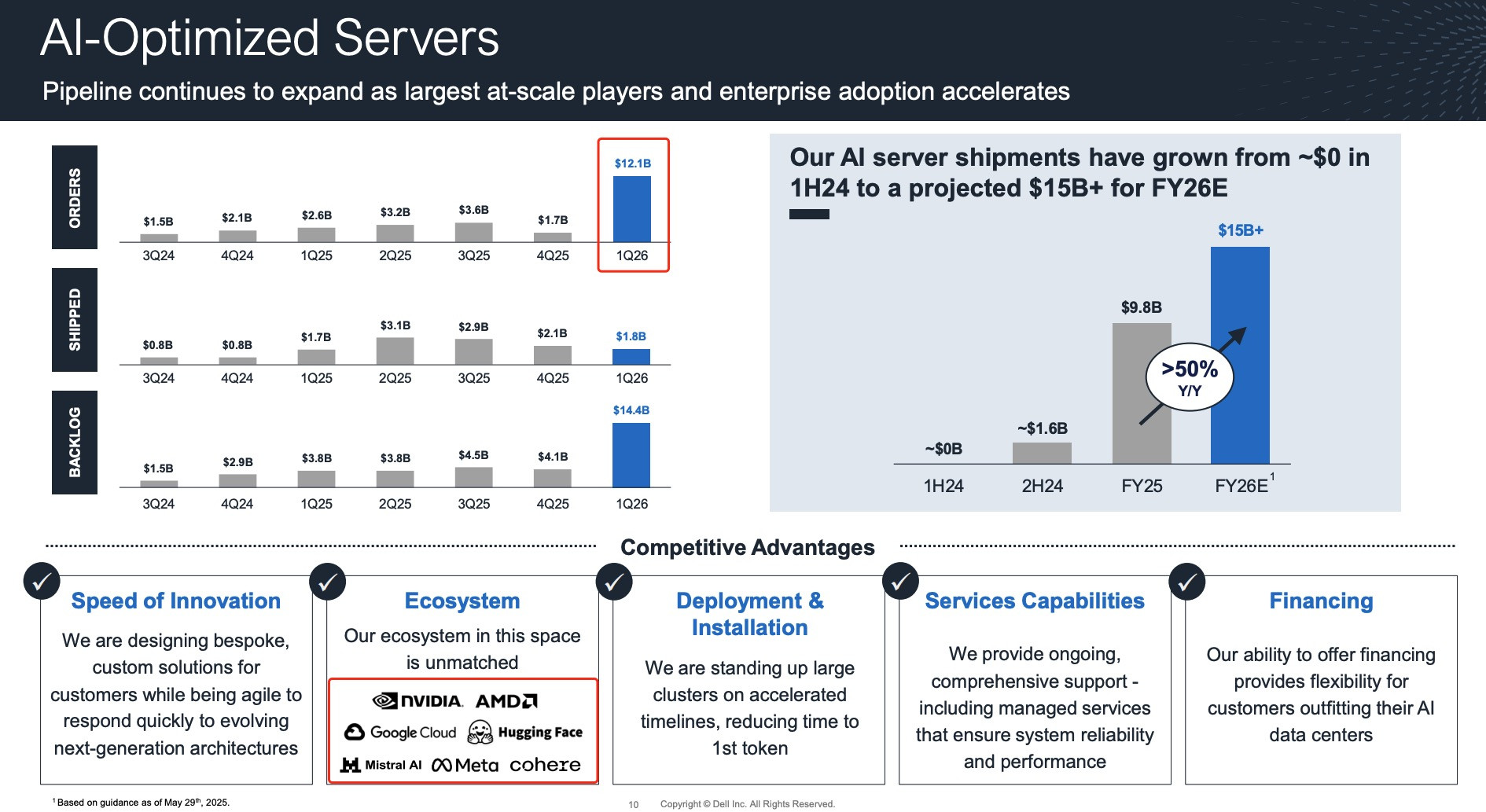
The company now expects $15 billion in AI server revenue for FY2026, a 50% jump from last year. Key customers reportedly include xAI (Elon Musk’s AI startup) and CoreWeave—suggesting that demand is coming from some of the fastest-scaling AI firms in the game.
But it's not all smooth sailing.
A Strong AI Narrative, But Margins Under Pressure
Despite the buzz, Dell’s adjusted EPS came in at $1.55, missing estimates of $1.69. Revenue was slightly ahead at $23.4 billion, up 5% YoY. The AI boom is real—but it hasn’t been enough to fully offset weakness in other parts of the business.
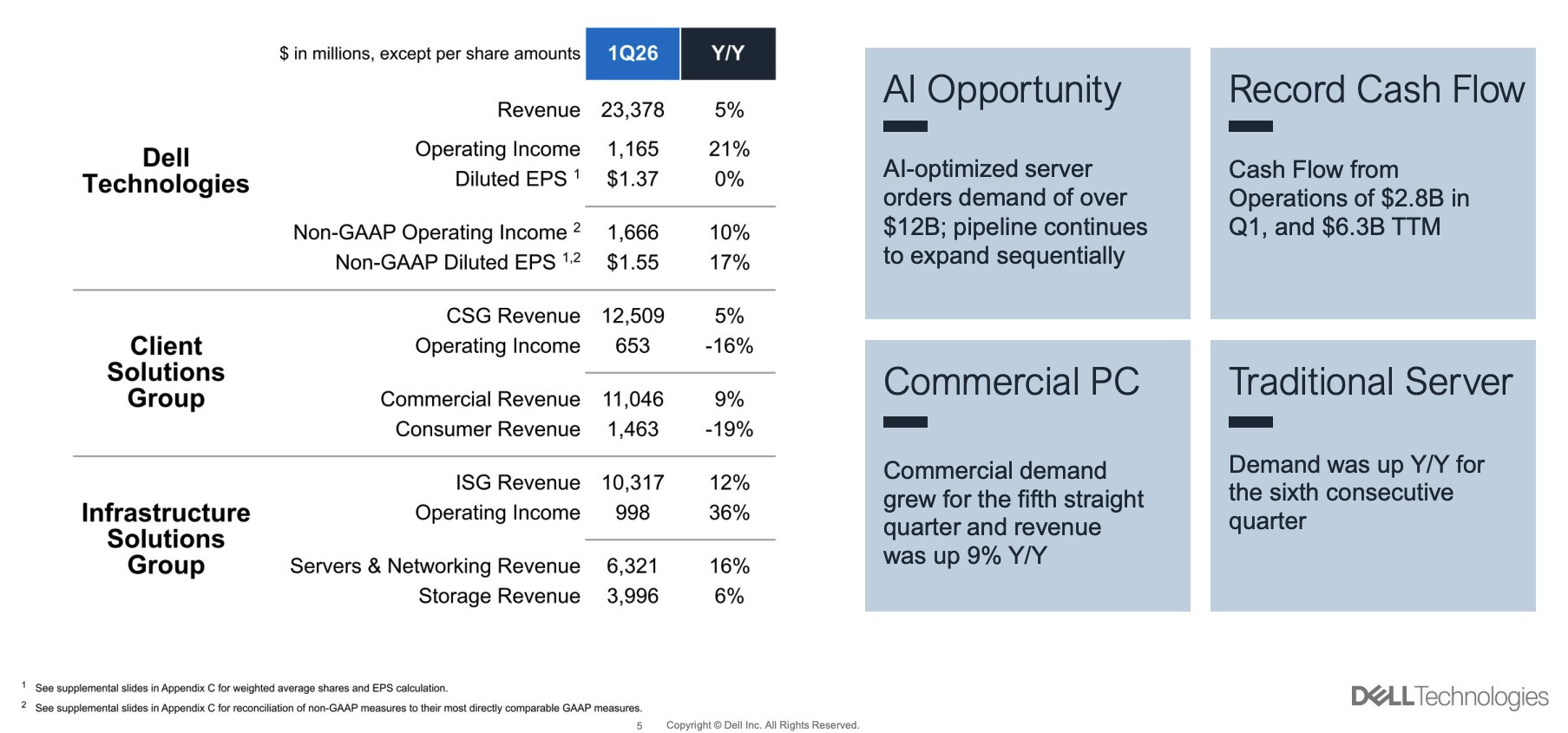
Most notably, consumer PC revenue fell 19%, and the company admitted it's under pricing pressure. Operating income for the Client Solutions Group dropped 16%, reinforcing concerns that PCs just aren’t the growth engine they once were.
COO Jeff Clarke also offered a dose of realism on the AI front, warning that “the customer deployments we have in front of us are large, and they’re complex,” and that they rely heavily on data center readiness—including power, cooling, and supply chain infrastructure.
Investors Excited, But Cautious
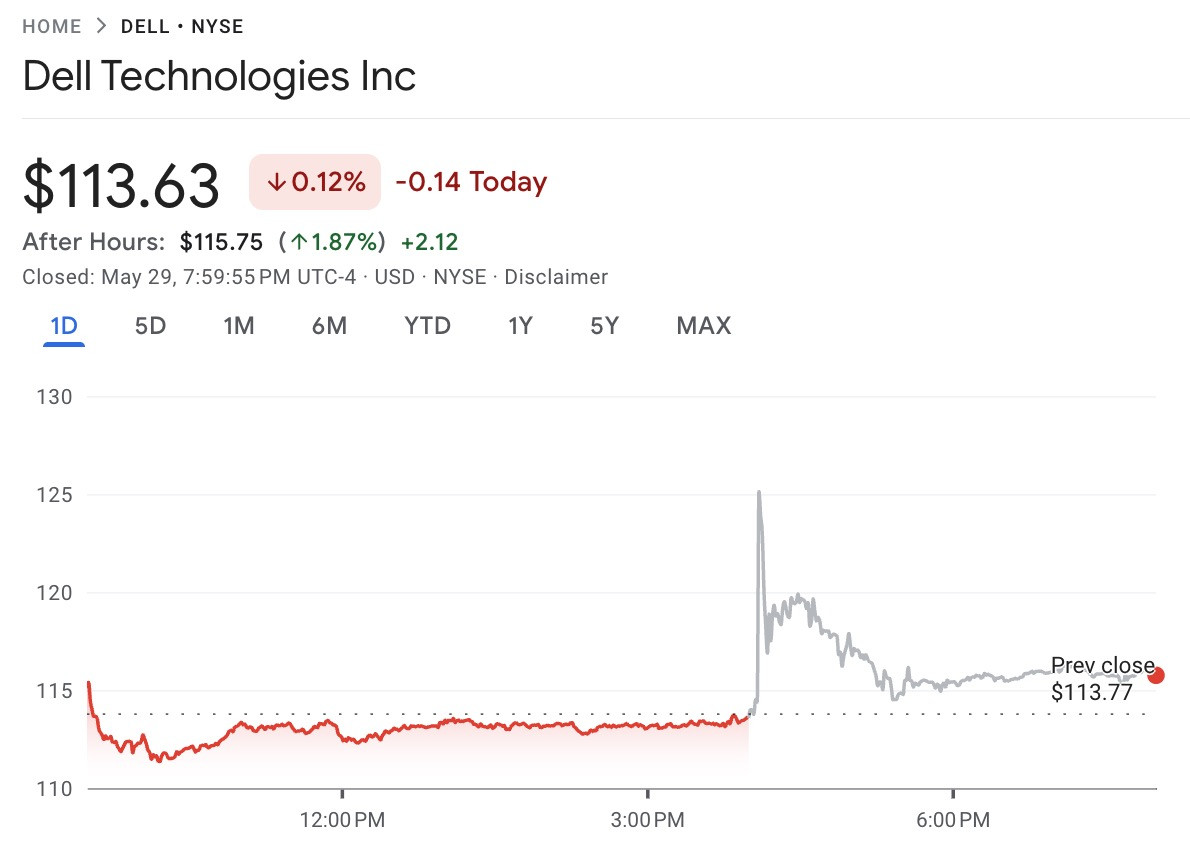
Following the earnings release, Dell shares spiked more than 9% in after-hours trading, before paring gains to around 2%—a sign that investors are impressed by the AI momentum but wary of the execution risks.
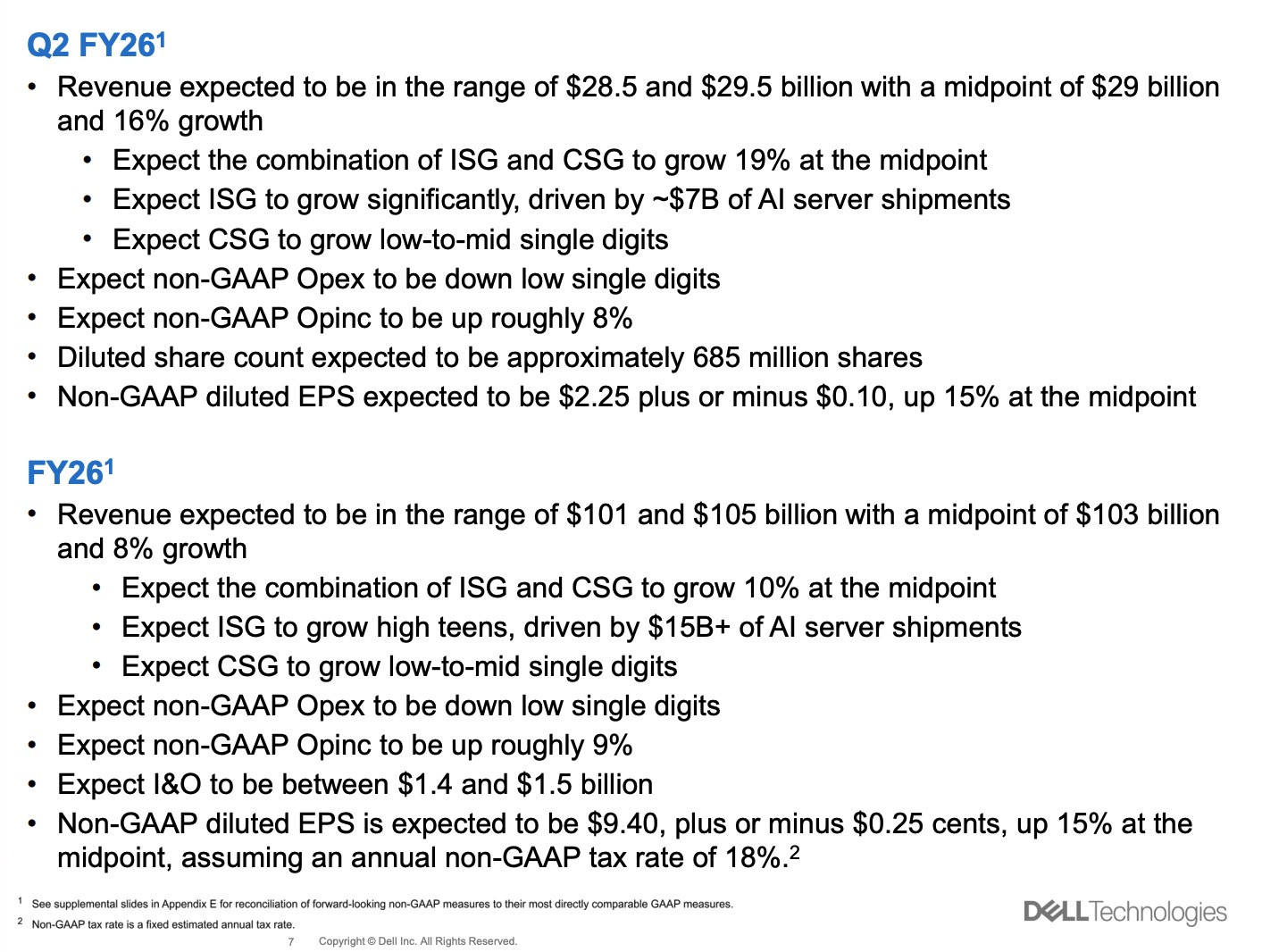
The company did raise its full-year guidance: FY2026 adjusted EPS is now expected to be $9.40, above analysts’ expectations of $9.21. It also forecasts Q2 EPS at $2.25 on $29 billion in revenue, both ahead of consensus.
Still, questions remain. Can Dell maintain margins as AI infrastructure costs rise? Can it manage the PC business decline without damaging overall profitability? And how exposed is it to cyclical swings in AI capex?
Final Thoughts
Dell’s story right now is one of reinvention. Dell is making clear progress in AI infrastructure. However, the continued underperformance of its traditional PC business remains a concern. The decline in consumer PC revenue and operating income underscores the challenges Dell faces in maintaining its market position in the face of intense competition and pricing pressures.
The company's ability to manage the complexities of the AI infrastructure supply chain will be crucial in sustaining its growth in this area. While the surge in AI server orders is promising, investors will be closely watching Dell’s execution and cost management to ensure profitability holds up.
In the short term, Dell's stock price may continue to experience volatility as investors weigh the potential of its AI business against the risks associated with its traditional operations. In the long term, Dell's success will depend on its ability to effectively navigate the transition from a traditional hardware manufacturer to a leading AI infrastructure solutions provider. The upcoming quarters will be critical in determining whether Dell can successfully balance its growth in AI with the challenges of its traditional business.
#🏦 earnings season begins! what to watch? 👀#$Dell Technologies Inc.(DELL)