
Global Markets Plunge: What’s Driving the Triple Shock?

Global equity markets fell sharply on Monday as investors grappled with three converging risks: escalating U.S. tariff threats, renewed Russian-Ukrainian tensions, and mounting Middle East instability. Major Asian and European indices opened deep in the red, while U.S. futures signaled further declines. The combination of trade, geopolitical, and security concerns rattled markets across the board.
Equity benchmarks in Tokyo, Hong Kong, and Taipei all tumbled. Japan’s Nikkei 225 dropped nearly 1.5% early on, while Taiex fell about 1%. Hong Kong’s Hang Seng and Hang Seng Tech indices each plunged over 2% by midday. China’s A50 futures also slid more than 2%. U.S. stock index futures weakened alongside global sentiment.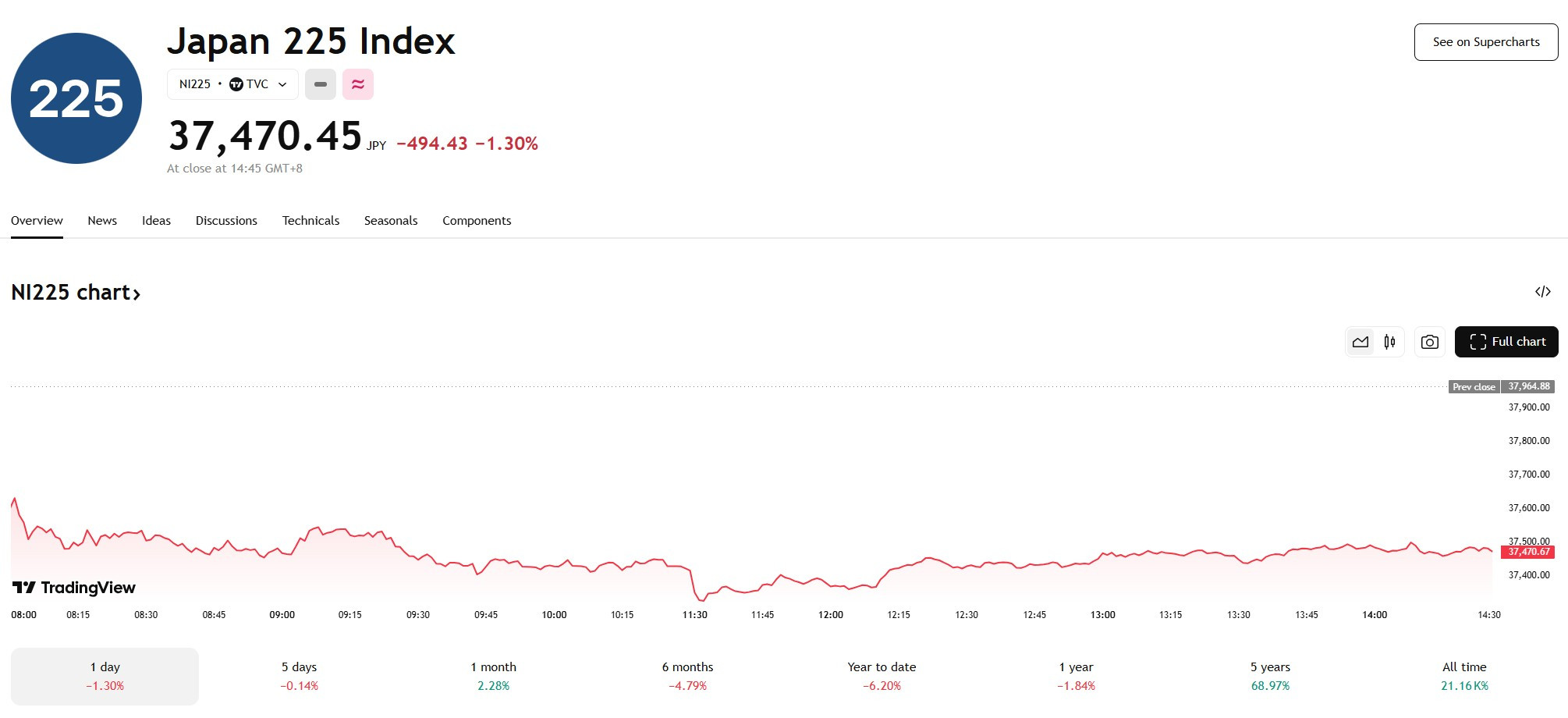
Key Points:
- Stocks fell as U.S. tariff hikes, renewed Russia-Ukraine drone strikes, and potential Israeli action on Iran stoked risk aversion.
- Trump plans to raise steel/aluminum tariffs to 50% on June 4; the “Bigger and Better Act” would add up to 5 ppt tax on “discriminatory foreign” investors, risking a ~100 bp drop in Treasury demand.
- On June 1, Ukraine’s drones hit five Russian airbases, claiming damage to $2 billion of aircraft; Russia contests the scale but markets fear escalation.
- U.S. intel warns Israel readies strikes on Iran’s nuclear sites; Iran’s air force remains on alert—Brent rose above $64/bbl (+2%), gold topped $1,315/oz (+0.8%), Asian/HK indices dropped 1–3%, and U.S. yields climbed.
Tariff Tsunami: How High Will U.S. Duties Soar?
The primary headwind is U.S. trade policy. President Trump announced plans to raise steel and aluminum tariffs from 25% to 50% starting June 4. The European Commission responded on May 31, warning it would impose retaliatory duties. Such tit-for-tat moves heighten fears of a full-scale trade war.
Moreover, the U.S. House passed the “Bigger and Better Act,” which would significantly alter tax rules for foreign investments in U.S. assets. Section 899 targets investors from “discriminatory foreign” jurisdictions—those taxing U.S. companies via digital service levies. The bill proposes a 5 percentage point hike (up to 20%) on U.S.-sourced income from these entities.
Deutsche Bank analysts warn that this measure could reduce demand for U.S. Treasuries, potentially reducing yields by almost 100 basis points. At a time when the U.S. needs financing for twin deficits, any downturn in Treasury purchases could pressure rates higher. Notably, Monday’s session saw U.S. bond yields spike again, underscoring investor anxiety—though the Senate must still approve the legislation.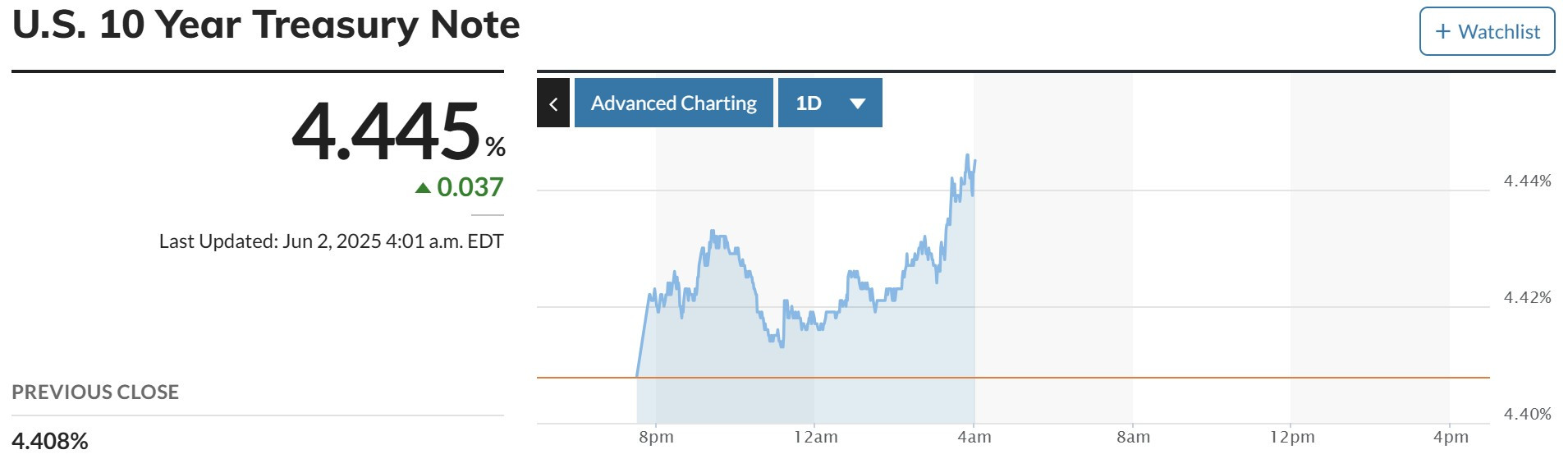
Ukraine Strikes: Did Drone Attacks Shake Confidence?
A second major factor is renewed volatility on the Russia-Ukraine front. Just as peace talks were set to resume, Ukrainian drones attacked multiple Russian military airbases on June 1. The strikes reportedly damaged over 40 aircraft, including A-50, Tu-95, and Tu-22M3 bombers, with estimated losses around $2 billion.
Ukraine’s Security Service sources claim hits at five airfields across Russia’s territory, including the remote Belaya base in eastern Siberia. The Russian Defense Ministry confirmed drone attacks in five oblasts, though Moscow disputes the full extent of Ukrainian damage claims. Regardless, the assault marked a sharp escalation just before planned negotiations.
Investors fear that any breakdown in talks could intensify the conflict, disrupting energy supplies and raising geopolitical premiums. Markets sold off as traders priced in a prolonged, risk-off environment. With Russia’s air force potentially weakened—if only temporarily—energy security in Europe may face renewed uncertainties, pushing oil and gas prices higher.
Middle East Flashpoint: Is an Israeli Strike on Iran Imminent?
Simultaneously, heightened tensions between Israel and Iran fueled further concern. U.S. intelligence suggests that Israel is preparing for a potential strike on Iran’s nuclear facilities. Reports indicate Israeli air force exercises and munitions staging aimed at deterrence—or readiness for unilateral action.
Iranian Air Force commander Amir Vahidi stated on June 1 that Iran’s military remains on high alert, ready to defend national airspace “at any time, under any circumstances.” Israel has signaled it might act alone if U.S.-Iran negotiations yield an outcome deemed “unacceptable” to Israeli security interests. The possibility of a pre-emptive strike raised fears of a broader regional conflict.
As a result, Brent crude jumped over 2%, climbing above $64 per barrel. Gold rallied 0.8%, topping $1,315 per ounce, as investors sought safe havens. Reflecting deep unease, energy and precious metals outperformed riskier assets, underscoring the market’s shift toward defense amid geopolitical uncertainties.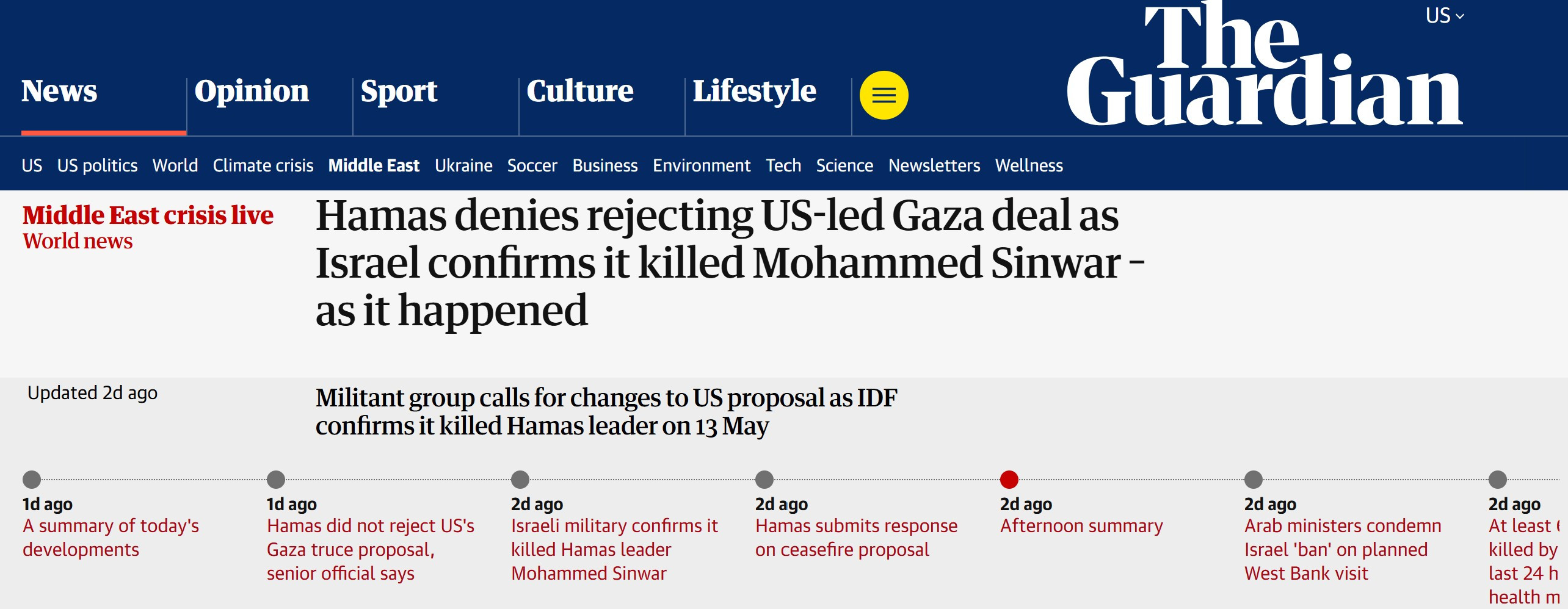
Market Fallout: How Are Investors Reacting?
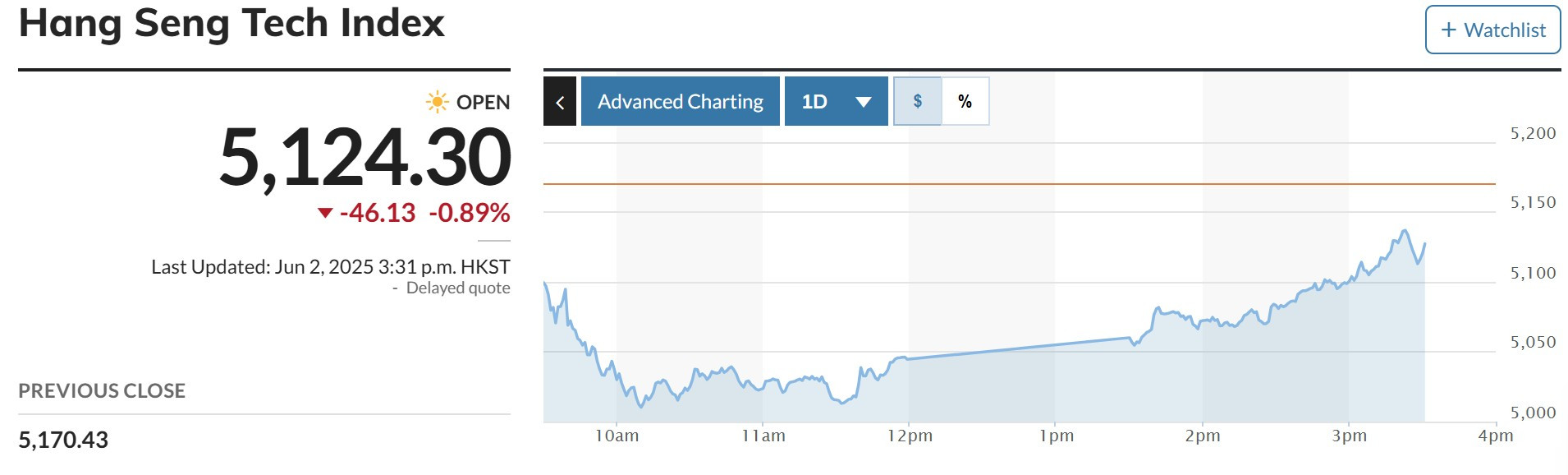
The interplay of these three variables—trade, Ukraine, and the Middle East—has prompted a global risk-off wave. Asian equities opened sharply lower; Hong Kong’s Hang Seng fell 2.2% by midday, while its tech-focused counterpart slid 2.43%. Regional heavyweights like BYD, Xiaomi, and Kuaishou lost nearly 3–5% each on heightened selling pressure.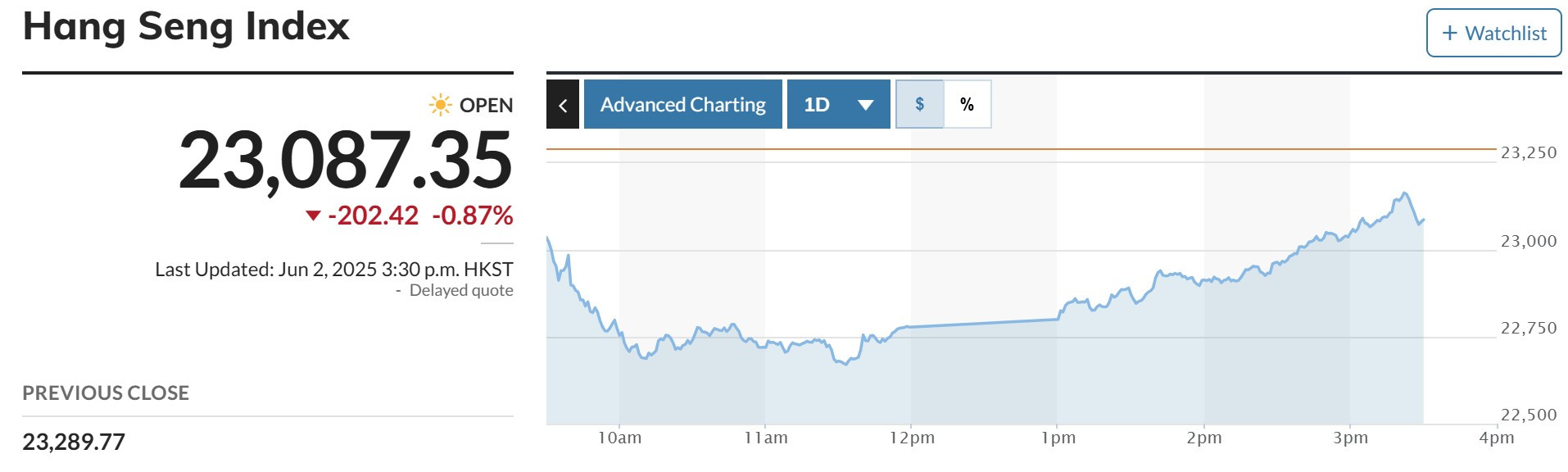
In the bond market, U.S. Treasury yields surged, reflecting rising inflation and fiscal concerns. Higher yields can drain liquidity from equity markets, compounding selling momentum. Traders also noted that proposed tax changes targeting foreign bondholders could dampen demand for U.S. debt, potentially exacerbating rate volatility.
Commodities rallied as well. Brent crude’s over 2% gain to above $64 per barrel underscores fears of supply disruptions. Likewise, gold’s near 1% advance toward $1,315 per ounce highlights its perennial safe-haven appeal. With oil and gold moving higher, broad commodity indices outperformed, while risk assets remained under pressure.
Political Uncertainty: Could Trump’s Strategy Escape Control?
Underlying these shocks is ongoing uncertainty about U.S. foreign policy. Both the Ukraine conflict and Middle East tensions remain unresolved under President Trump, despite his campaign pledges to resolve them swiftly. Rather than easing, both theaters of conflict appear to be intensifying.
Analysts warn that Trump’s unpredictable approach may exacerbate turmoil. Will his administration escalate tariffs further and ignite a full-blown trade war? Could deeper involvement in Ukraine or a surprise intervention in Iran upend markets entirely? As these questions linger, investors remain cautious, selling first and asking questions later.
This content is provided for informational or educational purposes only and does not constitute investment advice.